Senator Allen Taylor Caperton
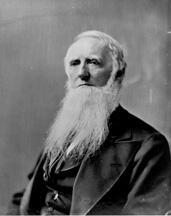
Here you will find contact information for Senator Allen Taylor Caperton, including email address, phone number, and mailing address.
| Name | Allen Taylor Caperton |
| Position | Senator |
| State | West Virginia |
| Party | Democratic |
| Status | Former Representative |
| Term Start | December 6, 1875 |
| Term End | March 3, 1877 |
| Terms Served | 1 |
| Born | November 21, 1810 |
| Gender | Male |
| Bioguide ID | C000130 |
Editorial and Source Notes
Last reviewed: January 1, 2026
We prioritize official government pages and published records. Information can change after publication.
Primary records and source links are added as they are verified.
Report a correction: see our Editorial Policy.
About Senator Allen Taylor Caperton
Allen Taylor Caperton (November 21, 1810 – July 26, 1876) was an American politician who served as a United States senator from the State of West Virginia from 1875 to 1876. A member of the Democratic Party, he represented West Virginia in the United States Senate during one term in office, from March 4, 1875, until his death in 1876, contributing to the legislative process during a significant period in American history. Before his service in Congress, he had a long career in Virginia state politics and served as a Confederate States senator during the Civil War.
Caperton was born on November 21, 1810, near Union, Monroe County, Virginia (now Union, Monroe County, West Virginia), to Jane Erskine and Hugh Caperton. Raised in what was then western Virginia, he received an early education that reflected both family means and ambition. At the age of fourteen, he traveled by horseback to Huntsville, Alabama, to attend school, an early indication of his determination to pursue advanced study. He later enrolled at the University of Virginia at Charlottesville, one of the leading institutions in the South, and subsequently completed his collegiate education at Yale College, from which he graduated in 1832.
After graduating from Yale, Caperton studied law under Briscoe Baldwin in Staunton, Virginia, a prominent jurist who later served on the Supreme Court of Appeals of Virginia. Under Baldwin’s tutelage, Caperton read law in the traditional manner of the period and was admitted to the bar. He then commenced the practice of law, establishing himself as an attorney while also developing interests in public affairs and internal improvements, including service as a director of the James River and Kanawha Canal, an important transportation and commercial artery in antebellum Virginia.
Caperton entered public life as a member of the Virginia House of Delegates, serving from 1841 to 1842. He advanced to the Virginia Senate in 1844 and sat in that body until 1848, participating in state legislative debates during a time of growing sectional tension in the United States. In 1850 he was chosen as a delegate to the Virginia state constitutional convention, which addressed issues of representation, suffrage, and governance within the Commonwealth. He returned to the Virginia House of Delegates for another term of service from 1857 to 1861. In 1861 he was a member of the Virginia Secession Convention, which deliberated on the question of the state’s withdrawal from the Union on the eve of the Civil War.
During the Civil War, Caperton aligned with the Confederacy and was elected by the legislature of Virginia to the Confederate States Senate, in which he served until the collapse of the Confederate government in 1865. His tenure in the Confederate Senate placed him at the center of the legislative apparatus of the Confederate States during the conflict. After the war, as the former Confederate states underwent Reconstruction and political realignment, Caperton resumed his legal and political activities in the region that had become the new state of West Virginia.
In the postwar era, Caperton emerged as a significant figure in West Virginia politics. He was elected as a Democrat to the United States Senate from West Virginia and took his seat on March 4, 1875. His election was notable in that he was the first ex-Confederate to be elected to the United States Senate following the Civil War, symbolizing a measure of political reconciliation between North and South. As a member of the Senate, he participated in the democratic process and represented the interests of his West Virginia constituents during a period marked by the final phases of Reconstruction and the nation’s adjustment to the consequences of the war.
Caperton married Harriet Echols, the sister of Confederate general and later jurist John Echols. The couple had five children: Lin, Lizzie, a daughter who became Mrs. William A. Gordon, Mary, and Allen T. Caperton Jr. His daughter Lin married James French Patton and, after his death, married Judge Edward Franklin Bingham, thereby linking the Caperton family to other prominent legal and political families of the region. Caperton maintained his residence near Union, known as “Elmwood,” which later gained recognition for its historical significance and was listed on the National Register of Historic Places in 1976.
Allen Taylor Caperton died of heart disease in his room on I Street NW in Washington, D.C., on July 26, 1876, while still serving in the United States Senate, making him one of the members of Congress who died in office in the nineteenth century. He was interred in Green Hill Cemetery in Union, West Virginia. His career, spanning service in the Virginia legislature, the Confederate Senate, and finally the United States Senate from West Virginia, reflected the profound political transformations of his era and the complex realignment of loyalties and institutions in the American South before, during, and after the Civil War.