Senator Allen Ellender
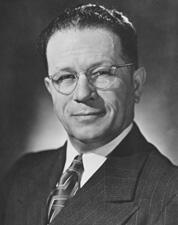
Here you will find contact information for Senator Allen Ellender, including email address, phone number, and mailing address.
| Name | Allen Ellender |
| Position | Senator |
| State | Louisiana |
| Party | Democratic |
| Status | Former Representative |
| Term Start | January 5, 1937 |
| Term End | July 27, 1972 |
| Terms Served | 18 |
| Born | September 24, 1890 |
| Gender | Male |
| Bioguide ID | E000112 |
Editorial and Source Notes
Last reviewed: February 17, 2026
We prioritize official government pages and published records. Information can change after publication.
Primary records and source links are added as they are verified.
Report a correction: see our Editorial Policy.
About Senator Allen Ellender
Allen Joseph Ellender (September 24, 1890 – July 27, 1972) was an American lawyer and politician who represented Louisiana in the United States Senate from 1937 until his death in 1972. A member of the Democratic Party and originally an ally of Huey Long, he served six full terms in the Senate and was repeatedly re-elected, gaining substantial seniority and influence. Over the course of his long tenure, he developed a generally conservative record on domestic issues, voting approximately 77 percent of the time with the Conservative Coalition. He was a staunch segregationist who signed the Southern Manifesto in 1956, opposed federal civil rights and anti-lynching legislation, and voted against the Voting Rights Act of 1965, while at the same time distinguishing himself from many fellow Democrats by opposing the Vietnam War and taking a less hawkish stance on foreign policy.
Ellender was born in the town of Montegut in Terrebonne Parish, Louisiana, the son of Victoria Marie (Javeaux) and Wallace Richard Ellender Sr. He attended both public and private schools before enrolling at St. Aloysius College, a Roman Catholic institution in New Orleans, from which he graduated in 1909 with a Bachelor of Arts degree; the school was later reorganized as Brother Martin High School. He went on to study law at Tulane University Law School in New Orleans, earning an LL.B. in 1913. Admitted to the Louisiana bar later that year, he established his legal practice in Houma, Louisiana, where he began to build the local and regional connections that would underpin his subsequent political career.
During World War I, Ellender sought to enter military service despite having received a draft deferment. Initially rejected on medical grounds after being diagnosed with a kidney stone, he underwent surgery and continued to pursue an opportunity to serve. He inquired through his congressman about a commission in the Army’s Judge Advocate General’s Corps, and was instead offered a commission as an interpreter and translator in the United States Marine Corps, which he declined out of concern that his Louisiana French might not meet the standards of formal French required. While taking courses to improve his French, he applied for and was accepted into the Student Army Training Corps at Tulane University in October 1918 and reported to Camp Martin on the Tulane campus. The Armistice of November 11, 1918, led to the rapid disbanding of the SATC, and Ellender was released from service in December 1918 before completing his training. His later efforts, extending into the late 1920s, to obtain an honorable discharge as proof of military service were unsuccessful; instead, the commander of Camp Martin confirmed only that “Private Allen J. Ellender” had been released in compliance with an order prohibiting new SATC enlistments after the Armistice. Despite this record, some later biographical accounts erroneously claimed that he had served as a sergeant in the United States Army Artillery Corps during the war.
Ellender entered public life as a delegate to the Louisiana constitutional convention of 1921, which produced a state constitution that remained in effect until it was replaced in 1974, two years after his death. He was elected to the Louisiana House of Representatives in 1924 and served there until 1936. From 1928 to 1932 he was the House floor leader, and in 1929 he played a prominent role in defeating impeachment efforts against Governor Huey Long, led by Ralph Norman Bauer and Cecil Morgan, who charged Long with multiple abuses of power. Ellender was a strong defender of Long, later writing that “if dictatorship in Louisiana, such as was charged to Huey Long, will give to the people of our nation what it gave to the people of my native state, then I am for such a dictatorship.” Elevated to Speaker of the Louisiana House in 1932, he held that post until 1936, when he successfully sought election to the United States Senate.
In 1937 Ellender took the Senate seat that had been associated with Huey Long and was originally slated for Long ally Oscar Kelly Allen Sr. of Winnfield, in Long’s home parish of Winn. Allen had secured the Democratic nomination for the seat by a plurality exceeding 200,000 votes but died shortly thereafter, opening the way for Ellender’s election. In the one-party political environment of Louisiana at the time, where the Democratic primary was effectively decisive due to the disfranchisement of most Black voters at the turn of the century, Ellender’s primary victory assured his place in the Senate. Early in his Senate career, in July 1937, he was among twenty liberal Democratic senators who voted against killing President Franklin D. Roosevelt’s Judicial Procedures Reform Bill of 1937, the controversial “court-packing” proposal advanced after several Supreme Court decisions adverse to New Deal legislation.
Over his six terms in the Senate, Ellender became a powerful figure in agricultural and fiscal policy. He served as chairman of the Senate Agriculture Committee from 1951 to 1953 and again from 1955 to 1971, using that position to champion the interests of Louisiana’s sugar cane industry and other agricultural constituencies. He was a leading sponsor of the federal free lunch program, enacted in 1945, which provided meals to schoolchildren and became a lasting component of federal welfare policy aimed at assisting poor students. On August 31, 1964, at the signing of the Food Stamp Act of 1964, President Lyndon B. Johnson publicly acknowledged Ellender as one of the members of Congress who had played an important role in securing passage of the legislation. In 1971 Ellender assumed the chairmanship of the Senate Appropriations Committee, one of the most powerful posts in Congress, and, by virtue of his seniority, he also became President pro tempore of the Senate from 1971 to 1972, an honorific position that placed him high in the line of presidential succession.
Ellender’s long Senate career was also marked by his consistent and vigorous opposition to federal civil rights initiatives. In addition to signing the Southern Manifesto in 1956, he voted against the Civil Rights Acts of 1957, 1960, 1964, and 1968, as well as against the 24th Amendment to the Constitution, which abolished the poll tax in federal elections. He opposed the Voting Rights Act of 1965, designed to enforce Black citizens’ constitutional rights in voting after decades of disfranchisement in the Deep South. In the aftermath of the Duck Hill lynchings, he helped block a proposed federal anti-lynching bill that had passed the House of Representatives, declaring on the Senate floor, “We shall at all cost preserve the white supremacy of America.” Although he supported some state-level measures sought by civil rights advocates, such as the repeal of Louisiana’s poll tax, his overall record placed him firmly among the leading segregationist senators of his era. In 1946, as chair of a Senate committee investigating charges that Mississippi Senator Theodore Bilbo had incited violence against Black voters during his re-election campaign, Ellender defended the attacks on Black citizens attempting to vote as the product of “tradition and custom” rather than Bilbo’s rhetoric; the committee’s Democratic majority, including Ellender, voted to clear Bilbo, over the dissent of two Republican members.
In foreign and defense policy, Ellender often diverged from the more aggressively anti-communist wing of his party. He was an opponent of Republican Senator Joseph McCarthy of Wisconsin, who in the early 1950s gained national prominence through investigations and speeches alleging widespread communist infiltration of the federal government, the military, and educational institutions. Ellender was also less hawkish than many contemporaries on broader Cold War issues and ultimately opposed the Vietnam War. In March 1952 he publicly discussed the possibility that the House of Representatives might be called upon to elect the president in that year’s general election, speculating that a third-party candidacy by Georgia Senator Richard Russell Jr. could prevent either President Harry S. Truman or Republican Senator Robert A. Taft from securing an Electoral College majority. Later, in late 1962, Ellender undertook a tour of East Africa. While in Southern Rhodesia, he was reported by local media as having said that African territories were not ready for self-governance, that Africans were “incapable of leadership” without white assistance, and that apartheid in South Africa was an appropriate policy that should have been instituted earlier. Ellender denied making these remarks, but Uganda and Tanganyika barred him from entering their countries in response to the reports.
Ellender’s final campaign unfolded in 1972, when former state senator J. Bennett Johnston Jr. of Shreveport, who had been the Democratic gubernatorial runner-up in December 1971, challenged him for renomination. Ellender was widely expected to defeat Johnston and secure a seventh term, but he suffered a fatal heart attack on July 27, 1972, at the age of 81, while at Bethesda Naval Hospital in Maryland. His name remained on the ballot, and nearly 10 percent of Democratic voters nonetheless cast their votes for the deceased senator. In the immediate aftermath of his death, Governor Edwin Edwards appointed his then-wife, Elaine S. Edwards, to fill Ellender’s Senate seat from August 1, 1972, to November 13, 1972. Johnston won the subsequent election, and six days later he was appointed to serve out the remainder of Ellender’s unexpired term, thereby gaining a seniority advantage over other incoming senators. The Ellender family, resentful of Johnston’s decision to challenge the aging incumbent, endorsed another candidate, former Governor John J. McKeithen, in the 1972 general election. Ellender’s long service, including his roles as chairman of the Senate Agriculture and Appropriations Committees and as President pro tempore, ensured his place among the most influential Southern Democrats of the mid-twentieth century, even as his segregationist record and opposition to civil rights legislation drew enduring controversy.