Representative Alphonzo Bell
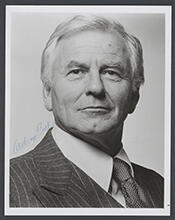
Here you will find contact information for Representative Alphonzo Bell, including email address, phone number, and mailing address.
| Name | Alphonzo Bell |
| Position | Representative |
| State | California |
| District | 27 |
| Party | Republican |
| Status | Former Representative |
| Term Start | January 3, 1961 |
| Term End | January 3, 1977 |
| Terms Served | 8 |
| Born | September 19, 1914 |
| Gender | Male |
| Bioguide ID | B000330 |
Editorial and Source Notes
Last reviewed: February 17, 2026
We prioritize official government pages and published records. Information can change after publication.
Primary records and source links are added as they are verified.
Report a correction: see our Editorial Policy.
About Representative Alphonzo Bell
Alphonzo Edward Bell Jr. (September 19, 1914 – April 25, 2004) was a Republican United States Representative from California who served eight consecutive terms in the U.S. House of Representatives from January 3, 1961, to January 3, 1977. Known to friends as “Al Bell,” he represented Malibu and the influential Westside region of Los Angeles, including the 28th and, after redistricting, the 27th Congressional District, which stretched along the California coast from Malibu to the Palos Verdes Peninsula and encompassed all or part of Santa Monica, Pacific Palisades, Brentwood, Bel-Air, and West Los Angeles. His sixteen-year tenure in Congress coincided with a significant period in American history, during which he became recognized for a blend of conservative and moderate-to-liberal positions and for his active participation in the legislative process on behalf of his constituents.
Bell was born into a prominent Southern California family whose name and enterprises were deeply intertwined with the region’s development. He was the son of Alphonzo Bell Sr., a pioneering rancher, oilman, and real estate developer whose oil company profits financed the creation of upscale Westside communities, including parts of Westwood, Beverly Hills, Pacific Palisades, and Bel-Air. The Bell family gave its name to the communities of Bell, Bell Gardens, and Bel-Air. The younger Bell grew up on his father’s extensive estate and ranch just north of Los Angeles, on acreage that would later become Bel Air and Pacific Palisades. Among his closest childhood friends and frequent horseback-riding companions was Will Rogers Jr., whose father, humorist and actor Will Rogers, owned a large ranch adjacent to the Bell property. This privileged yet outdoors-oriented upbringing helped shape Bell’s lifelong interest in land use, conservation, and public affairs.
Bell began his formal education at the Webb School of California in the early 1930s. He went on to attend Occidental College in Los Angeles, where he earned a degree in political science in 1938. Originally attracted to the ideals of President Franklin D. Roosevelt, Bell joined the Young Democrats while in college, and Roosevelt remained his early political idol and inspiration for public service. Over time, however, he shifted his political allegiance, later registering as a Republican. By the early 1950s he was actively supporting General Dwight D. Eisenhower’s presidential campaign in 1952, reflecting his evolving views on national leadership and governance.
During World War II, Bell served in the United States Army Air Forces from 1942 to 1945. After the war, he returned to Southern California and entered the family oil business, assuming the presidency of the company in 1947. He served as company president until 1959, overseeing operations during a period of postwar growth. In addition to his work in oil, Bell was a rancher and cattleman, maintaining ties to the agricultural and ranching traditions of his family. In his autobiography, he later stated that he sold the oil company in 1975. His business career and management experience provided a foundation for his later legislative interests in economic policy, land use, and environmental protection.
Bell’s formal entry into politics came in the mid-1950s through Republican Party organizational work. He served as chairman of the Republican Central Committee of Los Angeles County and rose quickly in state party leadership. From 1956 to 1959 he was chairman of the Republican State Central Committee of California and, concurrently, a member of the Republican National Committee. These roles placed him at the center of party strategy and candidate recruitment in a period when California was emerging as a pivotal state in national politics. His growing prominence within the party, combined with his personal wealth, easy-going manner, and cross-party appeal, positioned him as a strong candidate for elective office.
In 1960, Bell was elected as a Republican to the Eighty-seventh Congress and was subsequently re-elected to the seven succeeding Congresses, serving from January 3, 1961, to January 3, 1977. His coastal district, though considered a Republican stronghold, had only 40 to 49 percent Republican voter registration, making bipartisan support essential for electoral success. Bell’s personal style—wealthy, friendly, handsome, and mild-mannered—helped him attract voters from both parties. In his first primary race for Congress he won by a margin of 50 percent to 12 percent over his opponent. His endorsements reflected his broad appeal: in his initial run for Congress he was endorsed both by former First Lady Eleanor Roosevelt and by future California Governor and President Ronald Reagan, who, still a nominal Democrat in 1960, chaired a “Democrats for Al Bell” committee.
In Congress, Bell developed a reputation as a legislator who combined conservative positions on foreign policy and defense with more moderate or liberal stances on domestic issues. He supported the Vietnam War through three presidential administrations, aligning with hawkish elements on national security. At the same time, he backed open housing laws, major civil rights legislation, environmental and preservation initiatives, and education policy and reform. A 1972 Ralph Nader study of his voting record observed that Bell leaned toward conservatives on economic regulation but was liberal on “people issues,” particularly those affecting the downtrodden in American society. Bell himself described his philosophy as “middle-ground,” stating that he voted according to principle and on the merits of each issue rather than political expediency. He remarked that a moderate “has to study harder” because, unlike ideological extremists, he did not approach issues with predetermined positions.
Bell’s committee assignments reflected his broad policy interests. As a ranking member of the House Committee on Science and Astronautics and of the Committee on Education and Labor, he earned bipartisan respect for his work on a wide range of legislation. He played roles in the development and passage of the Older Americans Act, the Elementary and Secondary Education Act, and the Housing and Urban Development Act of 1968. He also supported laws improving labor standards, worker safety, veterans’ benefits, and environmental protection, including ecosystem and wildlife preservation programs. Bell backed the Family Assistance Plan, the Comprehensive Child Development Act of 1971, and the Equal Rights Amendment, underscoring his willingness to support social policy initiatives that many in his party opposed.
One of the defining aspects of Bell’s congressional career was his strong and consistent support for civil rights. He supported every major piece of civil rights legislation considered during his tenure, often at odds with significant elements of the Republican Party. He became an early and tireless advocate for the legislation that culminated in the Civil Rights Act of 1964. Recognizing that the bill required substantial Republican backing to overcome opposition from many Democrats, Bell worked actively to secure the necessary GOP votes in the House. In this effort he collaborated closely with Clarence Mitchell Jr. of the NAACP, with whom he developed a close personal friendship. Bell and Mitchell walked side by side during the 1963 March on Washington for Jobs and Freedom with Martin Luther King Jr., and both were honored with seats behind the podium at the Lincoln Memorial as King delivered his “I Have a Dream” speech. Reflecting later on the Civil Rights Act, Bell wrote that he was proud to have supported the bill from the outset, describing it as a measure that embraced “the goal of equal opportunity for all people” and a consensus “based on the compelling principle of non-discrimination for all individuals, no matter what their race, religion ethnicity, or sex.”
Despite his long record in the House and his popularity in his district, Bell was unable to translate his congressional success into higher office. He made two major attempts: a 1969 bid for mayor of Los Angeles and a 1976 campaign for the United States Senate seat held by Democrat John V. Tunney. In the nonpartisan 1969 mayoral race, Bell ran against incumbent Mayor Sam Yorty, whom he considered “temperamentally unsuited” to govern Los Angeles and whose contentious relationship with federal authorities, Bell argued, had cost the city needed funds. Bell was also deeply offended by Yorty’s racially charged campaign tactics against challenger Tom Bradley and by earlier smear campaigns against other opponents. After losing in the primary, Bell took the unusual step, for a Republican, of actively campaigning for Bradley in the general election. Though Bradley lost that race, he defeated Yorty in the next mayoral contest, with Bell’s earlier support having helped elevate Bradley’s profile. Bell’s backing of Bradley, a Democrat, angered some conservative Republicans, including fellow oilman and Yorty supporter Henry Salvatori, who helped recruit Republican attorney John LaFollette to challenge Bell for his congressional seat in 1970. Bell nevertheless prevailed and continued to serve three more terms in the House.
In 1976, Bell chose not to seek re-election to the House in order to run in the Republican primary for the U.S. Senate seat held by John V. Tunney. Despite endorsements from figures as diverse as Los Angeles Mayor Tom Bradley and actor-director John Wayne, Bell lost the Republican primary to S. I. Hayakawa, who went on to defeat Tunney in the general election. With his Senate defeat and his decision not to run again for the House, Bell’s congressional career came to an end on January 3, 1977. His sixteen years in Congress, marked by a willingness to cross party lines and to vote his conscience, later drew praise from national leaders. In a 1998 tribute, former President George H. W. Bush said of Bell: “He served and he served with honor. For sixteen years he served in Congress, always voting his conscience, but always serving the people of his district, never forgetting who sent him to Washington. We need more Al Bell’s, with his flawless service in the U.S. Congress. He showed his state and nation a lot of class.”
Bell’s personal life reflected both his family’s prominence and his own wide-ranging associations. In 1940, he married Elizabeth Jane Helms, daughter of Paul Hoy Helms, a leading executive in the baking industry and a noted sports philanthropist. Paul Helms founded the Helms Bakery in 1931 at Venice and Washington in Los Angeles and, with Bill Schroeder, established the Helms Athletic Foundation in 1936. Bell and Elizabeth Jane Helms later divorced. In 1970, he married television and film actress Marian McCargo, a former tennis champion and Wightman Cup winner, whom he described in his autobiography as the love of his life. They met while she was starring in the film “The Undefeated” with his longtime close friend, actor John Wayne. Through this marriage Bell became stepfather to actor William R. (Billy) Moses, and his family circle extended into the entertainment industry; actress Kathy Coleman, known for her role on the television series “Land of the Lost,” became his daughter-in-law.
Once divorced and twice widowed, Bell was the father of a large blended family. He had one daughter, Fonza, and nine sons: Stephen, Matthew, Phonzo, Robert, and Tony Bell; and Rick, Graham, Harry, and Billy Moses. His youngest son, Tony Bell, went on to serve as Assistant Chief Deputy and spokesman for Los Angeles County Supervisor Mike Antonovich, continuing the family’s involvement in public service. Bell’s extended family also included his father, Alphonzo Bell Sr., and his grandfather, James George Bell, both of whom were significant figures in Southern California’s early development, as well as his wife Marian McCargo Bell and his stepson William R. Moses.
Alphonzo Edward Bell Jr. died on April 25, 2004, of complications of pneumonia, just eighteen days after the death of his wife Marian from pancreatic cancer. His passing marked the end of a life that spanned the transformation of Southern California from ranchland to metropolis and that included distinguished service in business, party leadership, and sixteen years in the United States Congress. Throughout his career, Bell participated actively in the democratic process, representing the interests of his coastal California constituents while often seeking bipartisan solutions on some of the most consequential domestic and civil rights issues of his era.