Senator Arthur Pue Gorman
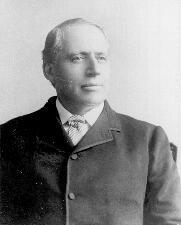
Here you will find contact information for Senator Arthur Pue Gorman, including email address, phone number, and mailing address.
| Name | Arthur Pue Gorman |
| Position | Senator |
| State | Maryland |
| Party | Democratic |
| Status | Former Representative |
| Term Start | December 5, 1881 |
| Term End | March 3, 1907 |
| Terms Served | 4 |
| Born | March 11, 1839 |
| Gender | Male |
| Bioguide ID | G000326 |
Editorial and Source Notes
Last reviewed: January 1, 2026
We prioritize official government pages and published records. Information can change after publication.
Primary records and source links are added as they are verified.
Report a correction: see our Editorial Policy.
About Senator Arthur Pue Gorman
Arthur Pue Gorman (March 11, 1839 – June 4, 1906) was an American politician who became one of the most influential Democratic leaders of his era and a long-serving United States senator from Maryland. Born near Woodstock, Howard County, Maryland, he came of age in a period of sectional tension that would culminate in the Civil War. As a young man, he moved to Washington, D.C., where he entered federal service and also became involved in the emerging national pastime of baseball, experiences that helped shape his early public profile and network of political connections.
Gorman’s formal education was limited, and he entered government work at a young age. He secured a position as a page in the United States Senate, beginning a lifelong association with that body. His work in the Senate and subsequent clerkships and administrative posts in Washington introduced him to leading political figures and the mechanics of national politics. At the same time, he played a prominent role in the early development of baseball in the capital. He was a founding member of the original Washington Nationals of the National Association, often described as the first American baseball team, and by 1864 he had become one of the nation’s star players. His prominence in baseball, combined with his growing experience in federal service, gave him a public reputation that extended beyond Maryland.
By the late 1870s, Gorman had firmly entered partisan politics in his home state. Alongside Isaac Freeman Rasin, he became leader of the powerful Gorman–Rasin organization, a political machine that controlled the Maryland Democratic Party from the late 1870s until his death in 1906. Within Maryland, this organization dominated patronage, nominations, and legislative strategy, and it made Gorman the central figure in state Democratic politics. Decades later, in 1952, The Baltimore Sun would describe him as “easily the most powerful political figure [Maryland] has ever known,” a retrospective assessment of the influence he wielded over state and national affairs.
Gorman’s national prominence grew through his work in presidential politics and his leadership within the Democratic Party. A prominent leader of the Bourbon Democrat faction, he advocated limited government, low tariffs, and conservative fiscal policies. In 1884 he became chairman of the Democratic National Committee and served as campaign manager for Democratic presidential candidate Grover Cleveland in his contest against Republican James G. Blaine. Operating from Democratic headquarters in New York, Gorman orchestrated a highly disciplined and effective campaign. When the Rev. Samuel D. Burchard, speaking at a Blaine meeting with Protestant clergymen in New York City on October 29, 1884, denounced the Democrats as the party of “rum, Romanism and rebellion,” Gorman had already dispatched a stenographic reporter to cover the event. Recognizing the explosive potential of the slur against Catholics, he quickly arranged for cities with large Catholic populations to be blanketed with posters and handbills emblazoned with “R.R.R.” and ensured that newspapers across the country carried the story. Blaine’s belated efforts to distance himself from the remark failed, and Cleveland carried New York by only 1,149 votes, a margin of 0.1 percent of the total vote. Gorman’s handling of the episode and the broader campaign was widely credited as decisive in securing Cleveland’s victory.
Arthur Pue Gorman served as a senator from Maryland in the United States Congress from 1881 to 1899 and again from 1903 until his death in 1906, for a total of four terms in office. A member of the Democratic Party, he contributed to the legislative process during a significant period in American history, participating in debates over tariffs, finance, and federal power during the Gilded Age and the early Progressive Era. First elected to the Senate by the Maryland legislature in 1880, he took his seat in March 1881 and was reelected in 1886 and 1892. During this initial tenure he rose rapidly in influence, serving as Democratic caucus chairman from 1890 to 1898. In the Senate he chaired the Committee on Printing during the 53rd Congress and later served on the Committee on Private Land Claims in the 55th Congress. He played a major role in financial and tariff legislation, most notably in shaping the Wilson–Gorman Tariff of 1894, which reduced the high duties imposed by the McKinley Act of 1890. Although the measure lowered tariffs, it fell short of President Cleveland’s goal of near–free trade, reflecting Gorman’s skill at compromise and his alignment with conservative Democratic economic views.
Gorman’s Senate career was not uninterrupted. In 1898 he was defeated for reelection by Republican Louis E. McComas, temporarily ending his service in the chamber. He remained an active force in Maryland politics, however, and soon turned his attention to the state’s other Senate seat. Campaigning vigorously within the legislature, he secured election again in 1902 and returned to the Senate in March 1903. Upon his return he was once more chosen as Democratic caucus chairman, a position he held from 1903 until his death in 1906. During this later period he continued to be regarded as a key strategist and party leader, and at various points he was briefly mentioned as a potential Democratic presidential candidate, notably in 1892 and again in 1904, though his candidacies never fully materialized. Throughout his Senate service he represented the interests of his Maryland constituents while also exerting broad influence on national party policy and legislative priorities.
Gorman’s family life intersected with his political legacy. His only son, Arthur Pue Gorman Jr., attended Lawrenceville Preparatory School and later played football as a fullback for the Maryland Agricultural College team in 1892 and 1893. In 1898 the younger Gorman founded the Piedmont Mining Company in Maryland and West Virginia with his uncle William and Thomas L. Marriott. He married Grace Norris on November 28, 1900, and followed his father into public service, serving as a Maryland state senator from 1904 to 1910, acting as president of the state senate in his final year. In 1911 he was nominated for governor of Maryland but narrowly lost to Republican Phillips Lee Goldsborough. He later served as a state tax commissioner until his death in 1919 from complications of diabetes, extending the Gorman family’s political presence in Maryland into the early twentieth century.
In his later years, Arthur Pue Gorman remained active both in politics and in the world of baseball. Drawing on his early experience as a player, he served as a member of the Mills Commission, which was convened in the first decade of the twentieth century to investigate the origins of the sport. His health, however, began to decline. He suffered from stomach trouble and, by mid-January 1906, had largely withdrawn to his Washington residence. Gorman died of a heart attack in Washington, D.C., on June 4, 1906, while still serving in the United States Senate. He was interred at Oak Hill Cemetery in Washington, D.C. His wife, who became ill soon after his death, died on June 21, 1910. Gorman’s long career as a senator, party strategist, and state political leader left a lasting imprint on Maryland and on the Democratic Party during a transformative period in American political history.