Representative Chapman Freeman
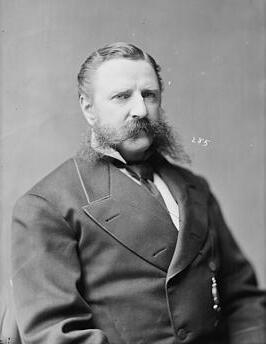
Here you will find contact information for Representative Chapman Freeman, including email address, phone number, and mailing address.
| Name | Chapman Freeman |
| Position | Representative |
| State | Pennsylvania |
| District | 1 |
| Party | Republican |
| Status | Former Representative |
| Term Start | December 6, 1875 |
| Term End | March 3, 1879 |
| Terms Served | 2 |
| Born | October 8, 1832 |
| Gender | Male |
| Bioguide ID | F000361 |
Editorial and Source Notes
Last reviewed: January 1, 2026
We prioritize official government pages and published records. Information can change after publication.
Primary records and source links are added as they are verified.
Report a correction: see our Editorial Policy.
About Representative Chapman Freeman
Chapman Freeman (October 8, 1832 – March 22, 1904) was a Republican member of the U.S. House of Representatives from Pennsylvania who served two terms in Congress from 1875 to 1879. His congressional service took place during a significant period in American history, in the decade following the Civil War, when the nation was grappling with Reconstruction, industrial expansion, and evolving political realignments. As a member of the House of Representatives, he participated in the legislative process and represented the interests of his Pennsylvania constituents as part of the Republican Party.
Freeman was born in Philadelphia, Pennsylvania, where he spent his early life. He was educated in the city’s public schools and attended Central High School, one of the leading secondary institutions in Philadelphia. In 1851, he graduated from Central High School as a “distinguished student” of the 26th session. At his graduation ceremony, held at the Musical Fund Hall in Philadelphia, he delivered a speech, reflecting both his academic achievement and his early promise as an orator.
After completing his formal schooling, Freeman began the study of law, but he initially turned to mercantile pursuits rather than immediately entering the legal profession. He engaged in business activities in Philadelphia during the 1850s and early 1860s, gaining experience in commerce at a time when the city was a major industrial and commercial center. His early legal studies, combined with his business background, would later inform his public service and legislative work.
During the American Civil War, Freeman entered national service. In 1863, he joined the United States Navy as an acting assistant paymaster, a position that involved responsibility for financial accounts and the payment of naval personnel. His naval service, however, was cut short; in 1864 he resigned his commission due to impaired health. Following his resignation, he returned to civilian life in Philadelphia and resumed the formal study of law, devoting himself to the profession he had first contemplated as a young man.
Freeman was admitted to the bar in 1867 and commenced the practice of law in Philadelphia. His legal career developed alongside his growing involvement in civic and international affairs. In 1873, he was appointed one of the commissioners of the Centennial Exposition in Vienna, Austria, where he represented the city of Philadelphia. In this role he helped advance the city’s interests abroad during an era of expanding international exhibitions and industrial showcases, underscoring his prominence in local public life and his capacity for diplomatic and organizational work.
Freeman entered national politics as a Republican and was elected in 1874 to the Forty-fourth Congress from Pennsylvania. He took his seat on March 4, 1875, and served through the Forty-fifth Congress, completing two consecutive terms that ended on March 3, 1879. As a Representative from Pennsylvania in the United States Congress from 1875 to 1879, he contributed to the legislative process during this important postwar period. A member of the Republican Party, he participated in debates and votes on issues central to the era’s political agenda, and he worked to represent the interests of his constituents in Pennsylvania. In 1878, he declined to be a candidate for renomination, thereby bringing his congressional career to a close after four years of service.
After leaving Congress, Freeman returned to private life, resuming his legal and civic activities in Philadelphia. He remained a respected figure in the city where he had been born, educated, and had built his professional and political career. Chapman Freeman died on March 22, 1904, closing a life that spanned from the antebellum period through the Civil War and into the early twentieth century, marked by service in commerce, law, the Navy, international exposition work, and the United States Congress.