Representative Charles Chapman
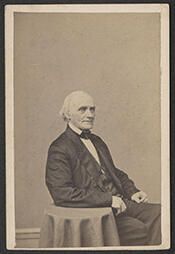
Here you will find contact information for Representative Charles Chapman, including email address, phone number, and mailing address.
| Name | Charles Chapman |
| Position | Representative |
| State | Connecticut |
| District | 1 |
| Party | Whig |
| Status | Former Representative |
| Term Start | December 1, 1851 |
| Term End | March 3, 1853 |
| Terms Served | 1 |
| Born | June 21, 1799 |
| Gender | Male |
| Bioguide ID | C000310 |
Editorial and Source Notes
Last reviewed: January 1, 2026
We prioritize official government pages and published records. Information can change after publication.
Primary records and source links are added as they are verified.
Report a correction: see our Editorial Policy.
About Representative Charles Chapman
Charles Chapman was born on June 2, 1799, in New London, Connecticut. Little is recorded about his early family background, but his formative years unfolded in a coastal New England community that was deeply involved in maritime trade and early American commerce. Growing up in the decades immediately following the American Revolution, Chapman came of age in a period marked by the establishment of new political institutions and the emergence of distinct party identities, influences that would shape his later public life.
Chapman pursued a course of study that prepared him for the legal profession, a common pathway into politics in the early nineteenth century. After receiving his preliminary education in Connecticut, he studied law and was admitted to the bar, establishing himself as an attorney. His legal training provided him with a grounding in constitutional and statutory interpretation at a time when the young nation was still defining the balance of power between federal and state governments. Practicing law in Connecticut, Chapman became familiar with the concerns of local citizens, including issues of commerce, infrastructure, and governance, which would later inform his legislative priorities.
Before his election to Congress, Chapman built a career in public life within his home state. As a lawyer and civic figure, he participated in the political culture of Connecticut during an era when the Whig Party was a leading force in national and state politics. The Whig Party, generally supportive of congressional supremacy, economic development, and internal improvements, attracted professionals and businessmen who favored a strong but constitutionally constrained federal government. Chapman’s alignment with the Whigs placed him within a political tradition that advocated for legislative solutions to the economic and sectional challenges facing the United States in the mid-nineteenth century.
Chapman was elected as a Whig to the Thirty-second Congress and served as a United States Representative from Connecticut from March 4, 1851, to March 3, 1853. His single term in the House of Representatives coincided with a significant and turbulent period in American history, following closely on the Compromise of 1850 and amid intensifying national debate over slavery, territorial expansion, and states’ rights. As a member of the House, Chapman participated in the democratic process by debating and voting on legislation, and he represented the interests of his Connecticut constituents in the federal legislature. While specific committee assignments and individual bills associated with his name are not extensively documented, his service contributed to the broader legislative work of the Whig Party during the final years before its national decline.
During his tenure in Congress, Chapman took part in the routine but consequential functions of the House of Representatives, including consideration of appropriations, infrastructure measures, and questions of federal authority that were central to Whig ideology. Serving only one term, he was part of a congressional cohort navigating the shifting political landscape that would soon give rise to new party alignments, including the emergence of the Republican Party. His participation in this period placed him among those legislators who attempted, through the existing party framework, to manage growing sectional tensions and preserve the Union through legislative compromise and institutional deliberation.
After leaving Congress in March 1853, Chapman returned to private life in Connecticut. He resumed his legal and civic activities, remaining a figure within the state’s professional and political circles as the nation moved toward the crises of the late 1850s and the Civil War. Although no longer a member of the national legislature, his earlier congressional experience and continued engagement in public affairs reflected the pattern of many nineteenth-century American politicians, who alternated between public office and professional practice.
Charles Chapman died on June 25, 1869, in Hartford, Connecticut. His life spanned a transformative era in American history, from the early republic through the Civil War era. Remembered primarily for his service as a Whig Representative from Connecticut from 1851 to 1853, Chapman’s career illustrates the role of mid-level national legislators who, though not always prominent in the historical record, contributed to the functioning of representative government during a time of mounting national division.