Representative David L. Hobson
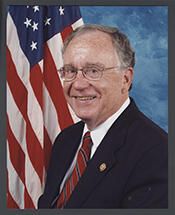
Here you will find contact information for Representative David L. Hobson, including email address, phone number, and mailing address.
| Name | David L. Hobson |
| Position | Representative |
| State | Ohio |
| District | 7 |
| Party | Republican |
| Status | Former Representative |
| Term Start | January 3, 1991 |
| Term End | January 3, 2009 |
| Terms Served | 9 |
| Born | October 17, 1936 |
| Gender | Male |
| Bioguide ID | H000666 |
Editorial and Source Notes
Last reviewed: February 17, 2026
We prioritize official government pages and published records. Information can change after publication.
Primary records and source links are added as they are verified.
Report a correction: see our Editorial Policy.
About Representative David L. Hobson
David Lee Hobson (October 17, 1936 – October 6, 2024) was an American lawyer and Republican politician who served as a U.S. representative from Ohio’s seventh congressional district from 1991 to 2009. Over nine consecutive terms in the United States House of Representatives, he contributed to the legislative process during a significant period in American history, participating in the democratic process and representing the interests of his constituents in central and western Ohio.
Hobson was born in Cincinnati, Hamilton County, Ohio, and graduated from Withrow High School in 1954. He pursued higher education at Ohio Wesleyan University in Delaware, Ohio, receiving a Bachelor of Arts degree in 1958. He then studied law at The Ohio State University in Columbus, earning his law degree in 1963. In addition to his academic training, Hobson served in the Ohio Air National Guard from 1958 to 1963, an experience that informed his later interest in military and veterans’ issues. In recognition of his service and contributions, he was inducted into the Ohio Veterans Hall of Fame.
After completing his legal education, Hobson practiced law in Ohio and entered public service at the state level. He was elected to the Ohio Senate in 1982 and served there until 1990. During his tenure in the Ohio General Assembly, he rose to key leadership positions, serving as majority whip and later as President of the Ohio Senate from 1988 to 1990. As a state legislator, Hobson was responsible for Ohio’s first AIDS law and for securing grants for treatments for Alzheimer’s disease, reflecting an early and sustained interest in public health policy and care for vulnerable populations.
Hobson’s transition to national office came in 1990, when Representative Mike DeWine vacated his seat in the U.S. House of Representatives to become lieutenant governor of Ohio. Hobson was elected to succeed DeWine in the seventh congressional district, marking the second time he followed DeWine in public office, having earlier succeeded him in the Ohio Senate. Hobson took his seat in the 102nd Congress in January 1991 and was reelected eight times without serious difficulty, serving continuously until January 2009. During his House career, he was identified with the Republican Main Street Partnership and was generally regarded as a moderate Republican.
In Congress, Hobson focused on improving health care, controlling government spending, balancing the federal budget, and strengthening national security. He was particularly attentive to the economic challenges facing former industrial communities in Ohio that had lost manufacturing jobs, and he advocated for policies to stimulate their local economies. Reflecting his background in the Air National Guard and his district’s strong military presence, he worked to privatize military housing and to secure funding for military research at Wright-Patterson Air Force Base, which lay within his district. He also played a role in establishing the Ohio Western Reserve National Cemetery and supported the Glenn Research Center, a NASA facility in Ohio, underscoring his interest in both veterans’ affairs and scientific research.
Hobson became a senior member of the House Committee on Appropriations, one of the most influential panels in Congress. Within Appropriations, he served on the Subcommittee on Defense; the Subcommittee on Energy and Water Development, where he rose to become the ranking Republican member; and the Subcommittee on Military Construction, where he served as chair. In these roles, he helped shape funding priorities for defense installations, energy and water projects, and military infrastructure. He opposed several efforts by the administration of President George W. Bush to fund a new “bunker buster” nuclear weapon, reflecting his willingness at times to break with his party on specific defense spending initiatives. During the 110th Congress, he also served as an assistant majority whip, contributing to the Republican leadership’s efforts to manage floor activity and party strategy.
Hobson’s work on military and veterans’ issues extended beyond domestic installations. He was instrumental in securing funding for a memorial and interpretive center at the Normandy American Cemetery and Memorial in France, honoring American soldiers killed in World War II. In August 2004, he led a congressional delegation to Normandy for the groundbreaking of the interpretive center. A 2006 Wall Street Journal article reported that during this seven-day trip the delegation attended private dinners hosted by defense-related entities, including Northrop Grumman and the PMA Group, and that on a 2005 trip to visit nuclear fuel processing plants in France, Hobson and his delegation attended a dinner hosted by Areva SA near Avignon. The article cited outside ethics experts who speculated that aspects of the travel might have raised questions under House gift rules, but no legal or ethics charges were brought, and no impropriety was alleged by legal or congressional ethics authorities.
On October 14, 2007, Hobson announced that he would retire at the end of his term in January 2009, concluding eighteen years in the U.S. House of Representatives. After leaving Congress, he entered the private sector while remaining engaged in public policy, becoming president of Vorys Advisors LLC, a lobbying and strategic consulting firm affiliated with the Ohio-based law firm Vorys, Sater, Seymour and Pease. In this role, he drew on his long experience in legislative affairs, appropriations, and regulatory issues to advise clients on navigating federal and state government.
David Lee Hobson died on October 6, 2024, at Miami Valley Hospital in Dayton, Ohio, at the age of 87. His career spanned service in the Ohio Air National Guard, leadership in the Ohio Senate, and nine terms in the U.S. House of Representatives, during which he represented Ohio’s seventh congressional district and played a significant role in appropriations, defense, health care, and economic policy.