Representative Earl B. Ruth
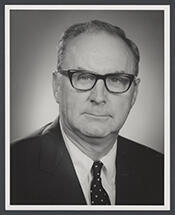
Here you will find contact information for Representative Earl B. Ruth, including email address, phone number, and mailing address.
| Name | Earl B. Ruth |
| Position | Representative |
| State | North Carolina |
| District | 8 |
| Party | Republican |
| Status | Former Representative |
| Term Start | January 3, 1969 |
| Term End | January 3, 1975 |
| Terms Served | 3 |
| Born | February 7, 1916 |
| Gender | Male |
| Bioguide ID | R000545 |
Editorial and Source Notes
Last reviewed: February 17, 2026
We prioritize official government pages and published records. Information can change after publication.
Primary records and source links are added as they are verified.
Report a correction: see our Editorial Policy.
About Representative Earl B. Ruth
Earl Baker Ruth (February 7, 1916 – August 15, 1989) was a three-term United States Representative from North Carolina and later served as governor of American Samoa. He was born in Spencer, Rowan County, North Carolina, and grew up in the state’s Piedmont region. He attended the public schools and graduated from Central High School in Charlotte, North Carolina, in 1934. An accomplished young athlete, he won the North Carolina high school tennis championship (singles) in 1933, foreshadowing a collegiate career marked by athletic distinction as well as academic achievement.
Ruth enrolled at the University of North Carolina at Chapel Hill, where he earned a Bachelor of Arts degree in 1938 and a Master of Arts degree in 1942. While at UNC he became a standout on the men’s basketball team, playing for the Tar Heels and serving as team captain in both his junior and senior seasons, 1936–1937 and 1937–1938. His leadership on the court made him one of the prominent student-athletes of his era at the university. After completing his master’s degree, he continued his graduate studies at UNC and ultimately received a Ph.D. in 1955, reflecting a sustained commitment to higher education and academic work alongside his developing career in teaching and administration.
Between his undergraduate and advanced studies, Ruth began his professional life in education. From 1938 to 1940 he was a teacher and coach at Chapel Hill High School in Chapel Hill, North Carolina, where he taught and coached basketball, drawing on his collegiate athletic experience. With the onset of World War II, he entered military service and subsequently served in the United States Navy. His naval service, which interrupted his early career in education, placed him among the many Americans of his generation whose professional lives were shaped by wartime duty.
Following his military service, Ruth returned to North Carolina and joined Catawba College in Salisbury. From 1946 to 1960 he served as head basketball coach and director of athletics at Catawba College, overseeing the college’s athletic programs and coaching its basketball team. In 1960 he transitioned from athletics into academic administration at the same institution, becoming dean of students, a position he held until 1968. In that role he was responsible for student affairs during a period of growth and change in higher education, while continuing to be identified closely with Catawba’s campus life and community.
Ruth also entered local public service while still engaged in his academic career. He was elected to the Salisbury City Council, serving from 1963 to 1968. During his tenure on the council he was chosen as mayor pro tempore from 1967 to 1968, giving him a leadership role in municipal governance and providing experience in legislative and executive responsibilities at the local level. His work in Salisbury politics helped establish his reputation within the North Carolina Republican Party at a time when the party was gaining strength in the state.
Building on his local service, Ruth was elected as a Republican to the Ninety-first Congress and to the two succeeding Congresses, serving in the U.S. House of Representatives from January 3, 1969, to January 3, 1975. He represented a North Carolina district during a period marked by the Vietnam War, the civil rights era’s aftermath, and significant national political realignment. During his three terms in Congress he participated in the legislative work of the House as part of the emerging modern Republican presence from the South. In 1974 he was an unsuccessful candidate for re-election to the Ninety-fourth Congress, losing his seat amid the broader national political shifts associated with the Watergate scandal and the 1974 midterm elections.
After leaving Congress, Ruth was appointed by President Gerald R. Ford to serve as Governor of American Samoa, holding that office from 1975 to 1976. His tenure came at a time when opposition among American Samoans to the federal government’s practice of appointing territorial governors was growing stronger, as local leaders increasingly pressed for greater self-governance and local control. Within eighteen months of taking office, Ruth removed numerous Samoans from administrative posts who had been appointed by former Governor John Morse Haydon, a move that intensified local dissatisfaction with his administration. His period in office became controversial, and he was soon recalled to Washington, D.C. Ruth was reported to have referred to Samoans as “lazy, thieving liars,” a remark that further damaged his standing in the territory and underscored the tensions between the appointed governorship and local aspirations for autonomy.
Earl B. Ruth returned to private life following his recall from American Samoa. He remained associated with North Carolina, where his earlier careers in education, athletics, and politics had been centered. He died on August 15, 1989. His life reflected a trajectory from student-athlete and educator to local official, member of Congress, and territorial governor, with his public service marked by both achievement and controversy.