Senator Edward Henry Rollins
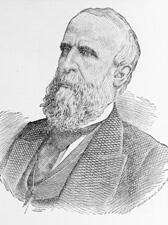
Here you will find contact information for Senator Edward Henry Rollins, including email address, phone number, and mailing address.
| Name | Edward Henry Rollins |
| Position | Senator |
| State | New Hampshire |
| Party | Republican |
| Status | Former Representative |
| Term Start | July 4, 1861 |
| Term End | March 3, 1883 |
| Terms Served | 4 |
| Born | October 3, 1824 |
| Gender | Male |
| Bioguide ID | R000411 |
Editorial and Source Notes
Last reviewed: January 1, 2026
We prioritize official government pages and published records. Information can change after publication.
Primary records and source links are added as they are verified.
Report a correction: see our Editorial Policy.
About Senator Edward Henry Rollins
Edward Henry Rollins (October 3, 1824 – July 31, 1889) was a United States Representative and Senator from New Hampshire and a prominent Republican legislator and businessman during the mid- to late nineteenth century. Over the course of his national legislative career, he served in the United States House of Representatives from 1861 to 1867 and in the United States Senate from 1877 to 1883, participating in the federal lawmaking process during a transformative period that encompassed the Civil War and Reconstruction. A member of the Republican Party, he contributed to the legislative process during four terms in Congress and represented the interests of his New Hampshire constituents in both chambers.
Rollins was born in a part of Somersworth, Strafford County, New Hampshire, on October 3, 1824, in an area that was later set off as the town of Rollinsford. He was educated in the common schools and at academies in Dover, New Hampshire, and South Berwick, Maine. After completing his schooling, he moved to Concord, New Hampshire, where he engaged in mercantile pursuits. His early involvement in business in the state capital helped establish his reputation as a capable and enterprising citizen and laid the groundwork for his later roles in finance and transportation.
Rollins entered public life through state politics. He served as a member of the New Hampshire House of Representatives from 1855 to 1857 and was chosen as speaker of the House during his tenure. In this role he gained legislative experience and visibility within the emerging Republican Party, which was consolidating its strength in New England in the years immediately preceding the Civil War. His service in the state legislature positioned him for election to national office as sectional tensions intensified.
In 1860 Rollins was elected as a Republican to the United States House of Representatives and took his seat in the Thirty-seventh Congress on March 4, 1861. He was subsequently reelected to the Thirty-eighth and Thirty-ninth Congresses, serving continuously from March 4, 1861, to March 3, 1867. During his House service, which coincided with the Civil War and the beginning of Reconstruction, he served as chairman of the Committee on Accounts in both the Thirty-eighth and Thirty-ninth Congresses, overseeing administrative and financial matters of the House. He was not a candidate for renomination in 1866, concluding his House career after three consecutive terms.
After leaving the House of Representatives, Rollins turned to major business enterprises closely linked to the nation’s postwar expansion. He became secretary and treasurer of the Union Pacific Railroad, one of the principal corporations involved in the construction of the first transcontinental railroad. His work with Union Pacific reflected his growing prominence in finance and transportation. In addition, he was a founder of the First National Bank of Concord, New Hampshire, and later established the banking house of E. H. Rollins & Sons in Boston, Massachusetts, further solidifying his standing as a leading businessman in New England.
Rollins returned to national office when he was elected by the New Hampshire legislature to the United States Senate in 1876. He served as a Senator from New Hampshire from March 4, 1877, to March 3, 1883. During his Senate tenure he continued his affiliation with the Republican Party and participated in the legislative process during the later Reconstruction and early Gilded Age years. He served as chairman of the Committee on Manufactures in the Forty-fifth Congress and was a member of the Committee on Enrolled Bills and the Committee on Public Buildings and Grounds in the Forty-seventh Congress. Although he sought to continue his service, he was an unsuccessful candidate for reelection at the end of his Senate term.
In his later years, Rollins remained active in business and regional economic development. From 1886 to 1889 he served as president of the Boston, Concord & Montreal Railroad, a key transportation line in northern New England. His leadership roles in banking and railroads reflected the close relationship between politics, finance, and infrastructure in the post–Civil War era and underscored his influence beyond elective office.
Edward Henry Rollins died on July 31, 1889, at the Isles of Shoals, New Hampshire. He was interred in Blossom Hill Cemetery in Concord, the city that had long been his home and the center of much of his professional and political activity. His family continued to play a role in New Hampshire public life; his son, Frank W. Rollins, served as Governor of New Hampshire from 1899 to 1901, extending the Rollins family’s influence into a new generation of state leadership.