Representative Fred Cramer Gilchrist
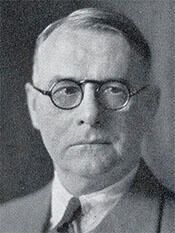
Here you will find contact information for Representative Fred Cramer Gilchrist, including email address, phone number, and mailing address.
| Name | Fred Cramer Gilchrist |
| Position | Representative |
| State | Iowa |
| District | 6 |
| Party | Republican |
| Status | Former Representative |
| Term Start | December 7, 1931 |
| Term End | January 3, 1945 |
| Terms Served | 7 |
| Born | June 2, 1868 |
| Gender | Male |
| Bioguide ID | G000181 |
Editorial and Source Notes
Last reviewed: January 1, 2026
We prioritize official government pages and published records. Information can change after publication.
Primary records and source links are added as they are verified.
Report a correction: see our Editorial Policy.
About Representative Fred Cramer Gilchrist
Fred Cramer Gilchrist (June 2, 1868 – March 10, 1950) was an American educator, lawyer, and Republican politician who served as a seven-term U.S. Representative from Iowa from 1931 to 1945. Over the course of his congressional career, he represented three different Iowa districts without changing his residence, and he contributed to the legislative process during a period marked by the Great Depression, the New Deal, and the Second World War.
Gilchrist was born in California, Pennsylvania, in Washington County, Pennsylvania, on June 2, 1868. In 1871 he moved with his parents to Cedar Falls, Iowa, where he attended the public schools. He pursued teacher training at the State Teachers’ College in Cedar Falls (later the University of Northern Iowa), from which he graduated in 1886. His early years in Iowa shaped his lifelong involvement with education and public service.
Following his graduation, Gilchrist embarked on a career in education. From 1886 to 1890 he worked as a teacher and superintendent of schools in two Pocahontas County, Iowa, school districts, serving in Laurens and Rolfe. Demonstrating administrative ability and a commitment to public education, he was elected superintendent of schools for Pocahontas County, a position he held from 1890 to 1892. His experience as a teacher and school administrator provided the foundation for his later roles in educational governance and legislative work.
Gilchrist left school administration to study law, enrolling at the University of Iowa College of Law in Iowa City. He graduated in 1893 and was admitted to the bar that same year. He then returned to Laurens, Iowa, where he commenced the private practice of law. Alongside his legal career, he remained deeply involved in local educational affairs, serving as president of the board of education of Laurens from 1905 to 1928, a lengthy tenure that reflected his sustained influence on local school policy and governance.
Gilchrist’s formal political career began in the Iowa General Assembly. He served one term in the Iowa House of Representatives from 1902 to 1904. After a period focused on his legal practice and local educational leadership, he returned to state-level legislative service as a member of the Iowa Senate, where he served from 1923 to 1931. Through these roles in both chambers of the state legislature, he gained experience in lawmaking and public policy that would inform his subsequent service in the United States Congress.
Between 1930 and 1944, Gilchrist served seven consecutive terms as a Republican U.S. Representative from Iowa, holding office in the House of Representatives from March 4, 1931, to January 3, 1945. He was first elected in 1930 from Iowa’s 10th congressional district, winning the seat vacated by L. J. Dickinson when Dickinson successfully ran for the U.S. Senate. During his tenure, Iowa’s House delegation was reduced in size—from eleven seats in 1931 to nine in 1933 and then to eight in 1943—prompting redistricting after the 1930 and 1940 censuses. As a result, although he remained in the same home in Pocahontas County, Gilchrist successively represented the 10th, 8th, and 6th congressional districts. After redistricting placed Pocahontas County in the 8th district, he was one of only three Iowa Republican House candidates to withstand the Franklin D. Roosevelt landslide of 1932, and he was re-elected four more times from that district, facing a notably close contest only in 1934. Following another round of redistricting, Pocahontas County was moved into the 6th district, from which he won re-election once more in 1942. His congressional service thus spanned seven terms during a significant period in American history, as he participated in the democratic process and represented the interests of his constituents through the economic crisis of the 1930s and the early years of World War II.
In 1944, Gilchrist’s long tenure in Congress came to an end when he was challenged for the Republican nomination by James I. Dolliver of Fort Dodge, Iowa. In a primary election marked by low voter turnout, Dolliver defeated Gilchrist and subsequently won the general election, concluding Gilchrist’s fourteen years in the U.S. House of Representatives. After leaving Congress in January 1945, Gilchrist returned to Laurens, Iowa, where he resumed the practice of law and remained a respected figure in the community he had long served.
Fred Cramer Gilchrist died in Laurens on March 10, 1950. He was interred in Laurens Cemetery, closing a life that had encompassed work as an educator, local school leader, state legislator, and seven-term member of the United States House of Representatives from Iowa.