Representative Frederick Nicholas Zihlman
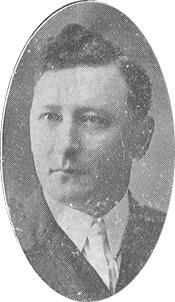
Here you will find contact information for Representative Frederick Nicholas Zihlman, including email address, phone number, and mailing address.
| Name | Frederick Nicholas Zihlman |
| Position | Representative |
| State | Maryland |
| District | 6 |
| Party | Republican |
| Status | Former Representative |
| Term Start | April 2, 1917 |
| Term End | March 3, 1931 |
| Terms Served | 7 |
| Born | October 2, 1879 |
| Gender | Male |
| Bioguide ID | Z000007 |
Editorial and Source Notes
Last reviewed: January 1, 2026
We prioritize official government pages and published records. Information can change after publication.
Primary records and source links are added as they are verified.
Report a correction: see our Editorial Policy.
About Representative Frederick Nicholas Zihlman
Frederick Nicholas Zihlman (October 2, 1879 – April 22, 1935) was an American politician and seven-term Republican member of the United States House of Representatives from Maryland’s 6th congressional district, serving from 1917 to 1931. He served as a Representative from Maryland in the United States Congress during a significant period in American history, contributing to the legislative process over seven consecutive terms and participating in the democratic process on behalf of his constituents.
Zihlman was born in Carnegie, Allegheny County, Pennsylvania, on October 2, 1879. In 1882 he moved with his parents to Maryland, where the family settled in Cumberland. He attended the public schools of Cumberland and, in 1890, entered a glass factory as an apprentice glass blower. His early experience in industrial labor shaped his later involvement in the labor movement and public affairs, grounding his political career in the concerns of working people in western Maryland.
Rising from the shop floor to labor leadership, Zihlman became president of the local flint-glass workers’ union from 1904 to 1909 and served on the national executive board of the union in 1905 and 1906. At the same time, he broadened his influence in organized labor as president of the Allegany Trades Council from 1904 to 1909 and as president of the Maryland State Federation of Labor in 1906 and 1907. These roles placed him at the center of statewide labor advocacy and gave him a platform from which to enter electoral politics. In 1912 he expanded his activities into business, engaging in the real estate and insurance business in Cumberland.
Zihlman’s formal political career began in the Maryland State Senate, where he served from 1909 to 1917. As a Republican legislator, he quickly assumed a leadership role, serving as Republican floor leader in 1914 and again in 1916. He first sought national office in 1914 as a candidate for the Sixty-fourth Congress but was unsuccessful in that bid. Undeterred, he ran again two years later and was elected as a Republican to the Sixty-fifth Congress, marking the beginning of his long tenure in the U.S. House of Representatives.
From March 4, 1917, to March 3, 1931, Zihlman represented Maryland’s 6th congressional district in the House of Representatives. Over the course of these seven terms, he served during World War I, the postwar period, and the onset of the Great Depression. In Congress, he held several important committee assignments. He was chairman of the Committee on Expenditures in the Post Office Department during the Sixty-sixth and Sixty-seventh Congresses, overseeing matters related to fiscal accountability in that department. He also served on the Committee on the District of Columbia in the Sixty-seventh Congress and again from the Sixty-ninth through the Seventy-first Congresses, and on the Committee on Labor in the Sixty-seventh and Sixty-eighth Congresses, reflecting his longstanding interest in labor issues. Notably, Zihlman was the only Representative from Maryland to vote for the Dyer Anti-Lynching Bill, aligning himself with federal efforts to combat racial violence.
Zihlman’s later congressional years were marked by controversy as well as continued public service. In 1929 he was accused of corruption and bribery, allegations that led to a formal inquiry. The investigation ultimately produced no evidence to substantiate the charges, and he was acquitted. Nevertheless, the accusations and the shifting political climate contributed to his electoral difficulties. He was an unsuccessful candidate for reelection in 1930 and again failed in his attempt to return to Congress in 1934 as a candidate for the Seventy-fourth Congress.
After leaving Congress in 1931, Zihlman returned to Cumberland, Maryland, where he resumed his former business pursuits in real estate and insurance. He remained in Cumberland until his death there on April 22, 1935. Frederick Nicholas Zihlman was interred in St. John’s Cemetery in Forest Glen, Maryland, closing the career of a labor leader, state legislator, and long-serving congressman who had played a role in Maryland and national politics during a transformative era in American history.