Senator George Cabot
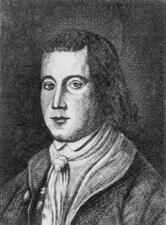
Here you will find contact information for Senator George Cabot, including email address, phone number, and mailing address.
| Name | George Cabot |
| Position | Senator |
| State | Massachusetts |
| Party | Federalist |
| Status | Former Representative |
| Term Start | October 24, 1791 |
| Term End | March 3, 1797 |
| Terms Served | 1 |
| Born | December 3, 1752 |
| Gender | Male |
| Bioguide ID | C000009 |
Editorial and Source Notes
Last reviewed: January 1, 2026
We prioritize official government pages and published records. Information can change after publication.
Primary records and source links are added as they are verified.
Report a correction: see our Editorial Policy.
About Senator George Cabot
George Cabot (born in Salem, Province of Massachusetts Bay, in either 1751 or 1752; died April 18, 1823, in Boston, Massachusetts) was an American merchant, seaman, and Federalist politician who represented Massachusetts in the United States Senate from 1791 to 1796. A leading figure in the Hamiltonian wing of the Federalist Party, he played a prominent role in the commercial and financial legislation of the early republic and later served as presiding officer of the Hartford Convention. Cabot’s life and career unfolded during a formative period in American history, and he was deeply engaged in both the revolutionary struggle and the subsequent debates over the structure and direction of the new federal government.
Cabot was born into a prominent mercantile family in Salem. His father, Joseph Cabot, was a ship merchant, and his mother was Elizabeth Higginson. George was the seventh of ten children, among them John Cabot (born 1745), Joseph Cabot Jr. (born 1746), and Samuel Cabot (born 1758). The Cabot family traced its origins to Jersey and to Norman-French ancestry, and the family’s maritime and commercial pursuits shaped George Cabot’s early environment. In 1766, he enrolled at Harvard College, but his formal education was cut short when his father died two years later. Inheriting 600 pounds and unwilling to become a charge on his father’s estate, Cabot left Harvard and went to sea, beginning as a cabin boy on the ship of his brother-in-law, Joseph Lee. By the age of 21, he had risen to captain his own vessel, and his extensive travels helped him become fluent in French and Spanish.
In 1775, on the eve of the American Revolution, Cabot and Joseph Lee formed a mercantile partnership in Beverly, Massachusetts, trading the same kinds of goods they had transported as sailors. During the Revolution, the Cabot family were ardent patriots; Cabot-owned ships served as privateers, raiding British merchant shipping both to support the revolutionary cause and to turn a profit, with some vessels commanded by the noted privateer Hugh Hill. Cabot’s political career began almost simultaneously with his commercial success. In 1775 he became a member of the Massachusetts Provincial Congress, and in 1777 he was elected Beverly town fire-ward and chosen as director and president of the Bridge Company, which was responsible for constructing the Essex Bridge across the Danvers River, the first bridge to connect Beverly and Salem. That same year, when the town of Beverly voted to reject the proposed Massachusetts Constitution of 1778, Cabot served on the committee tasked with drafting the town’s objections, opposing the proposed system of weighted representation and price controls, although the constitution was ultimately rejected by the voters for broader reasons.
Cabot remained active in Massachusetts constitutional politics in the 1780s. In August 1780, he was elected a delegate to the convention that framed a new Massachusetts Constitution. During this period, populist Governor John Hancock, who had supported the failed 1778 constitution, accused his more conservative opponents, including Cabot, of forming an “Essex Junto,” a term that soon became a popular label for a supposed cabal of eastern Massachusetts Federalists. In 1788, Cabot served as a delegate to the Massachusetts convention to ratify the United States Constitution, which he strongly supported. Working alongside Rufus King, Theophilus Parsons, and Fisher Ames, he helped secure Massachusetts ratification by persuading influential figures such as Hancock and Samuel Adams to endorse the new federal framework. Around this time, Cabot’s business interests brought him to New York City, where he became acquainted with Alexander Hamilton. The acquaintance developed into a lifelong friendship and political alliance, reinforcing Cabot’s preference for a strong central government and leading to his role as a founding member of the emerging Federalist Party. In 1789, President George Washington breakfasted with Cabot at his Beverly home while visiting the area to inspect the nation’s first cotton mill and the newly completed Essex Bridge.
In 1791, during the first presidential term of George Washington, Cabot was elected as a United States Senator from Massachusetts. A member of the Federalist Party, he served one term in the Senate, from 1791 until his resignation in 1796, and his tenure coincided with a crucial phase in the establishment of federal institutions. During his time in Congress, Cabot was principally concerned with finance and commerce and became a key supporter of Hamilton’s economic program as Secretary of the Treasury. In the First Congress, he served on the Committee on Appropriations and chaired the Committee on Fisheries. His bill to subsidize fishermen became a significant element of Hamilton’s broader economic strategy, reflecting Cabot’s commitment to maritime and commercial interests. Throughout his Senate service, he participated in the democratic process and represented the interests of his Massachusetts constituents during a period of intense partisan and ideological conflict.
Cabot’s congressional career unfolded against the backdrop of growing tensions between Federalists and the Jeffersonian opposition, as well as the polarizing effects of the French Revolution. A staunch Hamiltonian, he was an ardent Francophobe and corresponding Anglophile. After the Genêt affair, he called for the dismissal of the French ambassador and personally persuaded Vice President John Adams to urge President Washington to remove Edmond-Charles Genêt. In his second Congress, Cabot opposed Secretary of State Thomas Jefferson’s efforts to secure favorable trade arrangements with France and joined other Federalists in blocking the election of Jeffersonian Albert Gallatin of Pennsylvania to the Senate. He helped pass legislation laying the groundwork for a national navy and, in 1793, was named a director of the First Bank of the United States. As Anglo-American tensions mounted, Cabot joined Senators Rufus King, Oliver Ellsworth, and Caleb Strong in urging Washington to appoint Hamilton as special minister to negotiate a treaty with Great Britain. Public opposition to Hamilton’s appointment led to the selection of John Jay instead, but Cabot became one of the most uncompromising defenders of the resulting Jay Treaty, arguing that, though imperfect, it was the best possible compromise and that its rejection would risk a ruinous war and the potential dissolution of the Union. During the heated debates over the treaty, Jefferson accused Cabot of favoring the breakup of the Union and quoted him as advocating a “President for life and an hereditary Senate,” charges that reflected the intensity of partisan rhetoric rather than any formal proposal by Cabot.
In May 1796, disillusioned by what he regarded as the increasing bitterness and personal animosity of Philadelphia politics, Cabot resigned his Senate seat and returned to Massachusetts. He delayed his formal resignation until his friend Benjamin Goodhue had been elected as his successor, after which he promptly transmitted his resignation to the Massachusetts General Court; it took effect in June 1796. Although he left Congress, Cabot remained an influential Federalist voice. He supported John Adams in the presidential election of 1796 over Hamilton’s preferred candidate, Charles Cotesworth Pinckney, and continued to correspond with leading Federalists on national policy. Intensely hostile to the radicalism of the French Revolution and to what he viewed as the Francophile tendencies of Vice President Jefferson, Cabot wrote that “the first and highest duty of the electors was to prevent the election of a French President.” During the Quasi-War crisis of 1797–1798, Hamilton and Fisher Ames urged Washington and Adams to appoint Cabot as a member of a three-man mission to France, but both presidents declined, favoring Elbridge Gerry, whose reputation in France, particularly with Foreign Minister Charles Maurice de Talleyrand-Périgord, was more favorable. Cabot himself opposed the very idea of such a commission, believing that the time for negotiation had passed and that further diplomacy would only encourage Jacobin influence in the United States.
In the escalating conflict with France, Cabot emerged as one of the “war Federalists,” a faction led by Hamilton that included Timothy Pickering, Fisher Ames, Oliver Wolcott, and James McHenry. They advocated strong measures against France and opposed the moderate Federalists, largely from the South, and the Jeffersonian Republicans, who sought peace at almost any price. After President Adams announced in March 1798 that negotiations had failed and that the United States must arm for potential war, the revelation of the XYZ Affair silenced much opposition and enabled the Federalists to create a separate Department of the Navy. Adams appointed Cabot as the first United States Secretary of the Navy, but Cabot declined the post, and Benjamin Stoddert was appointed instead. Cabot also took part in debates over the organization of a provisional army. When former President Washington recommended that Hamilton, Pinckney, and former Secretary of War Henry Knox be appointed major generals in that order, Adams initially granted Knox the first rank. Cabot sided with Washington, Hamilton, and other leading Federalists in objecting to Knox’s elevation, and Adams ultimately reversed himself, though the episode deepened internal party divisions. In 1799, Adams, acting without consulting his cabinet, appointed William Vans Murray, Minister to the Netherlands, to head a new peace commission to France. Cabot, who believed no negotiations should occur until France made clear advances toward reconciliation, was disappointed but nonetheless worked to reconcile the warring Federalist factions, fearing that their division between the Adams and Pinckney–Hamilton camps would destroy the party.
In his later years, Cabot gradually withdrew from active public office but remained a respected elder statesman within New England Federalism. He continued to correspond with national leaders and to shape opinion within the conservative circles sometimes still labeled the “Essex Junto.” His most notable later public role came during the War of 1812, when he served as the presiding officer of the Hartford Convention, which met in Hartford, Connecticut, from December 1814 to January 1815. The convention gathered New England Federalists to air grievances over the war and the policies of the Madison administration, and although its recommendations stopped short of secession, its association with disunionist sentiment permanently damaged the Federalist Party’s national standing. Cabot, however, maintained that the convention’s purpose was to protect regional interests within the Union rather than to dissolve it. He spent his final years between Boston and his properties in Massachusetts, remaining engaged in commercial and financial affairs and in the intellectual life of his region. George Cabot died in Boston on April 18, 1823, leaving a legacy as a prominent merchant, influential Federalist strategist, and early architect of the nation’s commercial and constitutional order.