Representative George Holding
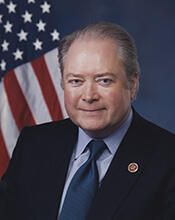
Here you will find contact information for Representative George Holding, including email address, phone number, and mailing address.
| Name | George Holding |
| Position | Representative |
| State | North Carolina |
| District | 2 |
| Party | Republican |
| Status | Former Representative |
| Term Start | January 3, 2013 |
| Term End | January 3, 2021 |
| Terms Served | 4 |
| Born | April 17, 1968 |
| Gender | Male |
| Bioguide ID | H001065 |
Editorial and Source Notes
Last reviewed: February 17, 2026
We prioritize official government pages and published records. Information can change after publication.
Primary records and source links are added as they are verified.
Report a correction: see our Editorial Policy.
About Representative George Holding
George Edward Bell Holding (born April 17, 1968) is an American politician, lawyer, and former federal prosecutor who served four terms as a Republican member of the United States House of Representatives from North Carolina from 2013 to 2021. He represented North Carolina’s 13th Congressional District from January 3, 2013, to January 3, 2017, and, following redistricting, North Carolina’s 2nd Congressional District from January 3, 2017, to January 3, 2021. The 2nd District he represented stretched from just southwest of Raleigh to just east of Rocky Mount. On September 9, 2025, Holding was nominated by President Donald Trump to be the U.S. Director of the European Bank for Reconstruction and Development.
The youngest of five children, Holding grew up in Raleigh, North Carolina, as a member of the prominent Holding family that founded First Citizens Bank in Smithfield, North Carolina. He attended the Groton School in Groton, Massachusetts, before enrolling at Wake Forest University in Winston-Salem, North Carolina, where he studied classics and earned a Bachelor of Arts degree. He then attended Wake Forest University School of Law, receiving his law degree. During law school he met his future wife, Lucy Herriott; the couple married after graduation and returned to Raleigh, where Holding began his legal career.
After law school, Holding practiced law with the firm Kilpatrick Stockton in Raleigh. In 1998, he left private practice to serve in Washington, D.C., as legislative counsel to U.S. Senator Jesse Helms of North Carolina, advising on legislative and legal matters. He returned to Raleigh in 2001 and joined the law firm Maupin Taylor, where he worked until 2002. That year, Holding entered federal service as an Assistant United States Attorney in the U.S. Attorney’s Office for the Eastern District of North Carolina, working under U.S. Attorney Frank DeArmon Whitney. During this period, the office pursued a series of high-profile public corruption cases, including prosecutions of former North Carolina Agriculture Commissioner Meg Scott Phipps, former North Carolina House Speaker Jim Black, and former U.S. Representative Frank Ballance.
On September 9, 2006, President George W. Bush nominated Holding to succeed Frank Whitney as United States Attorney for the Eastern District of North Carolina. The U.S. Senate confirmed his nomination by voice vote on September 13, 2006. Holding remained in that position for roughly two and a half years into the administration of President Barack Obama in order to complete several major political corruption and national security cases. During his tenure, former North Carolina Governor Mike Easley pleaded guilty to a campaign finance felony following a lengthy federal investigation. Holding also oversaw the prosecution of former U.S. Senator John Edwards on campaign-finance charges; in 2012 Edwards was acquitted on one count, and the jury deadlocked on five others, after which the Department of Justice declined to retry the case. In addition, Holding supervised the prosecution of Daniel Patrick Boyd and the so‑called “Raleigh jihad” group on charges including conspiracy to provide material support to terrorists. He resigned as U.S. Attorney in 2011, concluding his federal prosecutorial service.
Following his resignation, Holding announced his candidacy for Congress in North Carolina’s 13th Congressional District in the 2012 election. The district had been significantly redrawn to be more compact and Republican-leaning than its predecessor; whereas the old 13th District had stretched along part of the Virginia border and extended into Greensboro and Raleigh, the new configuration covered eastern Raleigh and suburban and exurban areas to the east. Holding received endorsements from several conservative business and civic leaders, including North Carolina Supreme Court Chief Justice I. Beverly Lake and former U.S. Senator Lauch Faircloth. He won the Republican primary in May 2012, defeating former Raleigh Mayor Paul Coble, and went on to win the general election with 57 percent of the vote. In 2014, he was unopposed in the Republican primary and was re-elected in November, defeating Democratic challenger Brenda Cleary, a registered nurse and former executive director of the North Carolina Center for Nursing, by a margin of 57 percent to 43 percent.
Court-ordered redistricting in 2016 substantially altered North Carolina’s congressional map, merging a large portion of the old 13th District into the neighboring 2nd District. Under the new lines, Holding’s residence fell within the 4th District, just outside the redrawn 2nd District, but the U.S. Constitution requires only that House members live in the state they represent. The new 2nd District encompassed outer portions of Raleigh, many of its northern and southern suburbs, and parts of rural Harnett, Johnston, Wilson, Nash, and Franklin Counties, and was geographically and demographically more similar to Holding’s old 13th District than to the prior 2nd District. Holding chose to run in the 2nd District and challenged incumbent Republican Representative Renee Ellmers in the June 2016 primary. During the campaign, he was endorsed by the American Conservative Union and the N.C. Values Coalition, and outside conservative groups such as the Club for Growth and Americans for Prosperity ran advertisements critical of Ellmers. Ellmers highlighted the fact that Holding lived about six miles outside the district’s border, but Holding prevailed in the primary with 53.4 percent of the vote, compared to 23.6 percent for Ellmers and 23.0 percent for Greg Brannon. In the November 2016 general election, he defeated Democratic nominee John McNeil, receiving 56.7 percent of the vote to McNeil’s 43.3 percent.
In the 2018 election cycle, the Cook Political Report rated the race in the 2nd District as “lean Republican,” reflecting increasing competitiveness. Holding was again the Republican nominee and won re-election with 51.3 percent of the vote, defeating Democratic challenger Linda Coleman, a former member of the North Carolina House of Representatives, who received 45.8 percent. Libertarian candidate Jeff Matemu received 2.9 percent. Coleman outpolled Holding in the Wake County portion of the district, its most populous area, but Holding led in the district’s other five counties. Outside groups spent at least $3.3 million in the contest, underscoring its status as a closely watched race. Holding’s service in Congress thus spanned a significant period in American political life, during which he participated in the legislative process and represented the interests of his constituents over four terms in office.
Another round of redistricting followed a 2019 decision by a North Carolina state court, which issued a preliminary injunction barring use of the 2016 congressional map for the 2020 elections. The state legislature subsequently drew a new map that made the 2nd District substantially more Democratic. The old 2nd District had covered most of northern and southern Wake County and exurban areas south and east of Raleigh; the new 2nd became a compact, Raleigh-centered district in southern Wake County that included almost all of the city. Under the new lines, Hillary Clinton would have carried the district with 60 percent of the vote in 2016, whereas Donald Trump had carried the old 2nd District with 53 percent, effectively transforming it from a Republican-leaning seat into one of the most Democratic white-majority districts in the South. Even before the new map was finalized, national and state Democrats had targeted the 2nd as a potential pickup opportunity, and three Democrats entered the race. After the new map was issued, former state representative and 2016 U.S. Senate candidate Deborah Ross announced her candidacy. In December 2019, Holding announced that he would not seek re-election in 2020 and would retire at the end of his term, citing the new district lines as a factor in his decision. Observers such as J. Miles Coleman of the University of Virginia Center for Politics also noted that Holding’s relatively weak fundraising prior to redistricting suggested he was likely to retire.
During his tenure in the House of Representatives, Holding served on several key committees. In the 113th Congress (2013–2015), he was a member of the Committee on Foreign Affairs and the Committee on the Judiciary. Beginning in the 114th Congress (2015–2017), he joined the Committee on Ways and Means, one of the chamber’s most influential panels, and continued to serve on Ways and Means in the 115th (2017–2019) and 116th (2019–2021) Congresses. In the 116th Congress he also served on the Committee on the Budget and the Committee on Ethics. Holding was active in several caucuses, including the Republican Study Committee, the Congressional Western Caucus, the International Conservation Caucus, and the U.S.-Japan Caucus. He served as the House Republican chair of the British-American Parliamentary Group, which maintains ties between the U.S. Congress and the Parliament of the United Kingdom, and was co-chair of the Congressional U.K. Caucus; in these roles, he led congressional delegations to Britain and publicly commented on issues such as Brexit.
Holding’s voting record and public positions placed him firmly within the conservative wing of the Republican Party. During President Donald Trump’s administration, he voted in line with the president’s stated position 90.5 percent of the time. He opposed abortion and, during his 2016 primary campaign against Representative Ellmers, received support from major anti-abortion organizations including the Susan B. Anthony List and the National Right to Life Committee. In 2017, he voted for legislation to ban abortion after the 20th week of pregnancy. Holding was also a consistent opponent of the Affordable Care Act (ACA), supporting the 2017 House Republican bill to repeal and replace the law. During his 2018 re-election campaign, he asserted that “we’re all paying 100 percent more” on health insurance premiums due to the ACA, a claim that was later shown to be inaccurate, as only an estimated 2 to 5 percent of Americans—those in the individual insurance market—were directly affected by such premium increases. On December 18, 2019, Holding voted against both articles of impeachment against President Trump; all 195 Republicans voting in the House opposed both articles.
After leaving Congress in January 2021, Holding remained a figure of interest in Republican and policy circles. On September 9, 2025, President Donald Trump nominated him to serve as the U.S. Director of the European Bank for Reconstruction and Development, a position that would draw on his legal, legislative, and international experience, including his prior work on foreign affairs and transatlantic parliamentary relations.