Senator George Tener Oliver
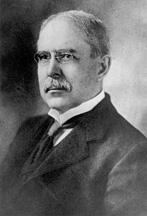
Here you will find contact information for Senator George Tener Oliver, including email address, phone number, and mailing address.
| Name | George Tener Oliver |
| Position | Senator |
| State | Pennsylvania |
| Party | Republican |
| Status | Former Representative |
| Term Start | March 15, 1909 |
| Term End | March 3, 1917 |
| Terms Served | 2 |
| Born | January 26, 1848 |
| Gender | Male |
| Bioguide ID | O000073 |
Editorial and Source Notes
Last reviewed: January 1, 2026
We prioritize official government pages and published records. Information can change after publication.
Primary records and source links are added as they are verified.
Report a correction: see our Editorial Policy.
About Senator George Tener Oliver
George Tener Oliver (January 26, 1848 – January 22, 1919) was an American lawyer, industrialist, newspaper publisher, and Republican Party politician from Pittsburgh, Pennsylvania, who represented Pennsylvania in the United States Senate from 1909 until 1917. His service in Congress, spanning two terms in office, occurred during a significant period in American history and reflected both his legal training and his deep involvement in the iron and steel industry that dominated the economy of his adopted city.
Oliver was born on January 26, 1848, in Dungannon, Ireland, while his parents were visiting there. Although born abroad, he was raised in the United States and became closely associated with western Pennsylvania, particularly Pittsburgh, which would be the center of his professional and political life. Details of his early youth are less fully documented than his later career, but his subsequent educational and professional achievements indicate a solid grounding in classical and legal studies and an early orientation toward public life and business.
Oliver pursued higher education at Bethany College in what is now West Virginia, receiving a Bachelor of Arts degree in 1868 and a Master of Arts degree in 1873. His education at Bethany College prepared him for the study of law, then commonly pursued through apprenticeship rather than formal law school. After leaving college, he read law in a Pittsburgh law office, following the customary route of legal training in the nineteenth century. This combination of liberal arts education and practical legal study provided the foundation for his initial professional career.
By 1871, Oliver had been admitted to the bar and commenced the practice of law in Pittsburgh. He practiced law there from 1871 to 1881, building a reputation in the city’s legal and business circles. After a decade in legal practice, he shifted his focus to industry, entering the iron and steel business at a time when Pittsburgh was emerging as a major center of American heavy manufacturing. In the iron and steel industry he accumulated a large fortune, aligning his personal economic interests with the dominant industrial sector of his region and establishing himself as a prominent figure in Pittsburgh’s commercial life.
Oliver’s success in industry led him into publishing and expanded his influence over public opinion and civic affairs. In 1900 he separately purchased two Pittsburgh newspapers, the morning Commercial Gazette and the evening Chronicle Telegraph. Six years later, in 1906, he merged the Commercial Gazette with The Pittsburg Times to form The Gazette Times, a major morning newspaper in the city. Through these publishing ventures, he became an important voice in regional journalism, with the ability to shape political discourse and public debate in western Pennsylvania. His combined experience as a lawyer, industrialist, and publisher positioned him as a significant Republican leader in the state.
A member of the Republican Party, Oliver entered national politics in the first decade of the twentieth century. In 1909, he was elected to the United States Senate from Pennsylvania to serve out the unexpired term of Senator Philander C. Knox, who had resigned to become Secretary of State under President William Howard Taft. Oliver’s initial service thus began by appointment to a vacancy, and he was subsequently reelected to a full six-year term beginning in 1911, serving continuously until 1917. During his tenure in the Senate, he contributed to the legislative process in a period marked by debates over tariffs, industrial regulation, and the role of the federal government in economic affairs. Reflecting his background in heavy industry, he focused particularly on tariff matters affecting the iron and steel industry, the chief employer in Pittsburgh and a critical component of both the Pennsylvania and national economies.
Oliver’s senatorial career also included involvement in issues of local and cultural significance to his constituents. In 1911, he played a notable role in helping to reverse a decision of the United States Board on Geographic Names that had standardized the spelling of “Pittsburg” without the final “h.” Through the efforts of Oliver and other Pittsburgh leaders, the historic spelling “Pittsburgh” with the final “h” was officially restored, a matter of considerable civic pride in the city he represented. His service in the Senate extended through the years immediately preceding the United States’ entry into World War I, and he remained an active participant in the democratic process and in representing the interests of Pennsylvania until the close of his term in 1917.
After leaving the Senate, Oliver returned to private life, maintaining his ties to Pittsburgh and to his business and publishing interests. He also owned a summer estate named Dungannon Hall in Hamilton Township, Ontario, just north of Cobourg, Canada. The property, named in honor of his birthplace in Ireland, reflected both his personal wealth and his attachment to the name Dungannon. The sideroad south of the estate was named Oliver’s Lane in his memory. Although Dungannon Hall was lost to fire in the mid-twentieth century, the gates to the estate still stand at the western end of Oliver’s Lane next to Ontario Street, serving as a physical reminder of his presence there.
George T. Oliver died at his home in Pittsburgh on January 22, 1919, just four days shy of his seventy-first birthday. At the time of his death, he was remembered as a prominent lawyer, industrialist, publisher, and Republican statesman who had risen from legal practice in Pittsburgh to the United States Senate. His career reflected the close interconnection of industry, the press, and politics in the late nineteenth and early twentieth centuries, and his senatorial service from 1909 to 1917 secured his place in the history of Pennsylvania’s representation in Congress.