Representative Harry Clay Ransley
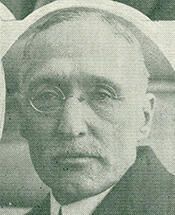
Here you will find contact information for Representative Harry Clay Ransley, including email address, phone number, and mailing address.
| Name | Harry Clay Ransley |
| Position | Representative |
| State | Pennsylvania |
| District | 1 |
| Party | Republican |
| Status | Former Representative |
| Term Start | May 19, 1919 |
| Term End | January 3, 1937 |
| Terms Served | 9 |
| Born | February 5, 1863 |
| Gender | Male |
| Bioguide ID | R000061 |
Editorial and Source Notes
Last reviewed: January 1, 2026
We prioritize official government pages and published records. Information can change after publication.
Primary records and source links are added as they are verified.
Report a correction: see our Editorial Policy.
About Representative Harry Clay Ransley
Harry Clay Ransley (February 5, 1863 – November 7, 1941) was a Republican member of the United States House of Representatives from Pennsylvania who served multiple terms in Congress during the early twentieth century. Born in Philadelphia, Pennsylvania, he came of age in a city that was a major center of industry, commerce, and political activity, influences that shaped his long career in public service. Details of his early education and private-sector pursuits are not extensively documented in the public record, but his early adult life led quickly into sustained involvement in state and municipal politics.
Ransley’s formal political career began at the state level. He served in the Pennsylvania House of Representatives from 1891 to 1894, entering public office at a time when the Commonwealth was grappling with issues related to industrialization, labor, and urban growth. His service in the state legislature provided him with experience in lawmaking and party organization and helped establish his reputation within Republican circles in Philadelphia and across Pennsylvania.
Following his tenure in the state legislature, Ransley became a prominent figure in Philadelphia municipal government. He was a member of the Select Council of Philadelphia for sixteen years, a body that functioned as part of the city’s bicameral council system, and he served as its president for eight of those years. In that role, he was involved in the oversight of city services, public works, and local ordinances during a period of significant urban expansion. His leadership in city government coincided with his growing influence within the Republican Party, and he was chosen as a delegate to the 1912 Republican National Convention, participating in a pivotal gathering marked by deep divisions within the party.
Ransley also held key executive and party posts at the county and city levels. He served as sheriff of Philadelphia County from 1916 to 1920, an office that combined law-enforcement responsibilities with important administrative and patronage functions in the local political system. At the same time, he was chairman of the Republican city committee from 1916 to 1919, placing him at the center of party organization, candidate selection, and campaign strategy in one of the nation’s largest cities. These roles further solidified his standing as a leading Republican figure in Philadelphia.
Ransley’s congressional career began in the context of a vacancy in Pennsylvania’s delegation to the U.S. House of Representatives. Running as a Republican in 1920, he sought election to the 66th United States Congress to fill the vacancy caused by the resignation of Representative J. Hampton Moore. He won the special election and entered Congress, with his initial service associated with the term beginning in 1919. He was subsequently reelected to the next seven sessions of Congress, serving continuously from 1921 to 1937. Over the course of these eight full terms—nine terms in total when including the vacancy he first filled—he represented his Pennsylvania district through the post–World War I era, the Roaring Twenties, and the onset and deepening of the Great Depression.
As a member of the House of Representatives, Ransley participated in the legislative process during a significant period in American history, contributing to debates over economic policy, Prohibition, and responses to the economic crisis of the 1930s. A loyal member of the Republican Party, he worked within the majority and minority party dynamics that shifted over his tenure, representing the interests of his Philadelphia constituents while engaging in national policy discussions. His long service reflected both his personal political durability and the strength of Republican organization in his district during much of this period.
Ransley’s congressional career concluded following the 1936 elections. He was an unsuccessful candidate for reelection that year, losing to Democrat Leon Sacks amid the broader national gains made by Democrats during the New Deal era. Leaving Congress in January 1937, he retired from federal office after nearly two decades of continuous service in the House and a much longer record in public life at the state and local levels.
Harry Clay Ransley died on November 7, 1941. He was interred at West Laurel Hill Cemetery in Bala Cynwyd, Pennsylvania, a resting place for many of the region’s prominent political and civic leaders. His career spanned half a century of public service, from the Pennsylvania House of Representatives and Philadelphia city government to the United States Congress, during a transformative era in both Pennsylvania and national history.