Senator Henry Styles Bridges
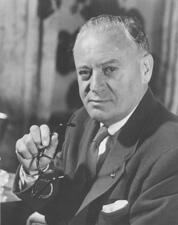
Here you will find contact information for Senator Henry Styles Bridges, including email address, phone number, and mailing address.
| Name | Henry Styles Bridges |
| Position | Senator |
| State | New Hampshire |
| Party | Republican |
| Status | Former Representative |
| Term Start | January 5, 1937 |
| Term End | November 26, 1961 |
| Terms Served | 5 |
| Born | September 9, 1898 |
| Gender | Male |
| Bioguide ID | B000823 |
Editorial and Source Notes
Last reviewed: January 1, 2026
We prioritize official government pages and published records. Information can change after publication.
Primary records and source links are added as they are verified.
Report a correction: see our Editorial Policy.
About Senator Henry Styles Bridges
Henry Styles Bridges (September 9, 1898 – November 26, 1961) was an American teacher, editor, and Republican Party politician from Concord, New Hampshire, who became a dominant figure in mid‑twentieth‑century national politics. He served one term as the 63rd governor of New Hampshire before a twenty‑four‑year career in the United States Senate, representing New Hampshire from 1937 until his death in 1961. Over the course of five Senate terms, he rose to the highest ranks of the Republican leadership and played a prominent role in legislative debates during a period that spanned the Great Depression, World War II, the early Cold War, and the dawn of the civil rights era.
Bridges was born on September 9, 1898, and spent his early years in New England before embarking on a career in education and journalism. Before entering elective office, he worked as a teacher and editor, occupations that helped establish his reputation in New Hampshire public life and provided him with experience in public communication and administration. His early professional activities in the state laid the groundwork for his rapid ascent in Republican politics and his eventual emergence as a leading figure in New Hampshire’s government.
By the mid‑1930s, Bridges had become a rising star in the Republican Party. In 1934, he ran for governor of New Hampshire and won, becoming, according to journalist John Gunther’s later account in Inside U.S.A., the nation’s youngest governor at the time. His tenure as the 63rd governor of New Hampshire, though limited to a single term, brought him national attention. In the run‑up to the 1936 presidential election, Republican nominee Alf Landon considered Bridges as a potential running mate, though the idea was reportedly set aside after aides warned that Democrats could exploit the slogan “Landon Bridges falling down.” Nonetheless, the fact that he was seriously considered for the vice‑presidential nomination underscored his growing prominence within the party.
Bridges transitioned to national office in the election of 1936, when he was elected to the United States Senate from New Hampshire. He took his seat in 1937 and would serve continuously until his death in 1961, a span of twenty‑four years that encompassed five terms in office. His service in Congress occurred during a significant period in American history, and as a member of the Senate he participated in the democratic process and represented the interests of his New Hampshire constituents while engaging in national and international policy debates. In 1937, the same year he entered the Senate, he retired from the Army Reserve Corps, in which he had served as a lieutenant since 1925. Bridges quickly became active in national politics beyond his own seat; in 1940 he sought the Republican nomination for President of the United States, though the nomination ultimately went to Wendell Willkie. That year he also received two delegates for the Republican vice‑presidential nomination, which went instead to Charles L. McNary. On New Year’s Eve 1941, he broke his hip, causing him to miss several months of the following Senate session, but he returned to continue his long legislative career.
Over the course of his Senate service, Bridges was reelected in 1942, 1948, 1954, and 1960, dying in office a year into his final term. As his seniority increased, he became the highest‑ranking Republican senator and held a series of influential leadership and committee posts. When Republicans controlled the Senate from 1947 to 1949, he served as chairman of the Joint Committee on Foreign Economic Cooperation and as chairman of the Committee on Appropriations, positions that placed him at the center of postwar foreign aid and federal spending decisions. He again chaired the Appropriations Committee during the Republican majority from 1953 to 1955. Bridges served as Senate Minority Leader from 1952 to 1953 and as President pro tempore of the United States Senate when Republicans controlled the chamber from 1953 to 1955. He also chaired the Joint Committee on Inaugural Arrangements for both inaugurations of President Dwight D. Eisenhower, overseeing congressional participation in those ceremonies. From 1954 until his death in 1961, he was chairman of the Republican Policy Committee, a key forum for shaping party strategy and legislative priorities in the Senate.
Bridges was deeply involved in major controversies of his era. In 1946, he served on a five‑member Senate committee that investigated racist, violent voter suppression in Mississippi associated with the state’s demagogic senator, Theodore G. Bilbo. The committee, composed of three Democrats and two Republicans, voted along party lines to exonerate Bilbo. Bridges, together with his fellow conservative Republican on the panel, Senator Bourke Hickenlooper of Iowa, dissented from the majority decision, arguing that Bilbo’s actions violated federal law and abused the protections of the First Amendment. In the postwar period, he also played a role on the first Senate Preparedness Investigating Subcommittee of the Armed Services Committee under the chairmanship of Lyndon B. Johnson. According to Johnson biographer Robert Caro, Bridges effectively allowed Johnson wide latitude in running the subcommittee in exchange for the hiring of two staff members who, while formally assigned to the subcommittee, in practice augmented Bridges’s own staff.
Ideologically, Bridges was widely regarded as a staunch conservative. John Gunther described him as “an aggressive reactionary on most issues” and noted that he was “pertinaciously engaged in a continual running fight with the CIO, the Roosevelt family and the Union of Soviet Socialist Republics,” reflecting his opposition to organized labor’s political power, New Deal liberalism, and Soviet communism. His record on civil rights legislation was mixed but significant for the period: he voted “present” on the Civil Rights Act of 1957 and voted in favor of the Civil Rights Act of 1960. In the early Cold War context, he was also involved in debates over the recruitment and naturalization of former Nazi scientists, engineers, and doctors by the United States government. On July 18, 1950, during Senate debate over resistance within the State Department to such programs, Bridges declared on the Senate floor that the department needed a “first‑class cyanide fumigating job” to eliminate opposition, invoking an extended “house cleaning” metaphor that referenced the then‑common use of cyanide as a fumigant.
Henry Styles Bridges remained an active and influential member of the Senate until his death in office on November 26, 1961. Over nearly a quarter century in the Senate and one term as governor of New Hampshire, he left a substantial imprint on Republican Party leadership, congressional procedure, and national policy during some of the most consequential decades of the twentieth century.