Representative Hosea Townsend
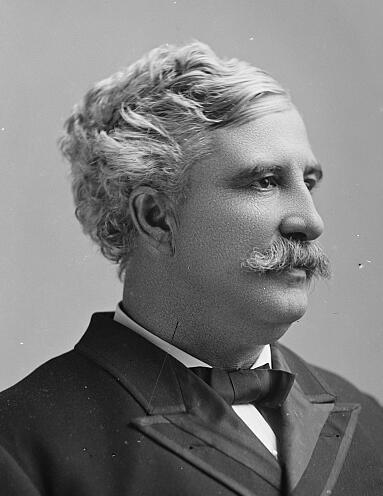
Here you will find contact information for Representative Hosea Townsend, including email address, phone number, and mailing address.
| Name | Hosea Townsend |
| Position | Representative |
| State | Colorado |
| District | 1 |
| Party | Republican |
| Status | Former Representative |
| Term Start | December 2, 1889 |
| Term End | March 3, 1893 |
| Terms Served | 2 |
| Born | June 16, 1840 |
| Gender | Male |
| Bioguide ID | T000334 |
Editorial and Source Notes
Last reviewed: January 1, 2026
We prioritize official government pages and published records. Information can change after publication.
Primary records and source links are added as they are verified.
Report a correction: see our Editorial Policy.
About Representative Hosea Townsend
Hosea Townsend (June 16, 1840 – March 4, 1909) was an American attorney, Civil War veteran, and Republican politician who served two terms as a U.S. Representative from Colorado from 1889 to 1893, and later as a United States judge for the southern district of the Indian Territory from 1897 to 1907. His congressional service occurred during a significant period in American history, and he played an active role in the legislative process and in representing the interests of his constituents.
Townsend was born on a farm in Greenwich, Huron County, Ohio, on June 16, 1840, the son of Hiram and Eliza Townsend. His father had migrated from Massachusetts to New London, Ohio, in 1816, and the family background was rooted in the agricultural life of the Western Reserve. Townsend attended the common schools of the area and later enrolled at Western Reserve College in Cleveland, Ohio, in 1860, pursuing higher education on the eve of the American Civil War.
At the outbreak of the Civil War, Townsend left his studies at Western Reserve College and enlisted in the Second Regiment, Ohio Volunteer Cavalry, in 1861. During his military service he rose to the rank of lieutenant and was stationed for part of the war at Fort Gibson in Indian Territory, an experience that would later shape his familiarity with the region in which he would serve as a federal judge. While in service he contracted typhoid fever, and as a result of the illness and resulting disability he resigned his commission in 1863.
After leaving the army, Townsend turned to the study of law. He read law and was admitted to the bar in Cleveland, Ohio, in 1864 or 1865. In 1865 he moved south to Memphis, Tennessee, where he began the practice of law. He quickly became involved in public affairs and served as a member of the Tennessee House of Representatives in 1869. Townsend continued to practice law in Memphis until 1881, building his legal career during the Reconstruction and post-Reconstruction era.
Seeking new opportunities in the West, Townsend moved to Colorado in 1879 and by 1881 had settled in the mining community of Silver Cliff. There he engaged in the mining business and, like many in that volatile industry, made and lost a fortune. His prominence in the community and his affiliation with the Republican Party led to his entry into national politics. Townsend was elected as a Republican to the Fifty-first and Fifty-second Congresses, serving as a U.S. Representative from Colorado from March 4, 1889, to March 3, 1893. During his two terms in the House of Representatives, he participated in the democratic process and contributed to the legislative work of the period, representing the interests of his Colorado constituents. He was an unsuccessful candidate for renomination in 1892 but remained active in party affairs, serving as a delegate to the Republican National Convention that same year.
Following his congressional service, Townsend returned to legal work and soon reentered federal service in the judiciary. He was appointed by President William McKinley as United States judge for the southern district of the Indian Territory in 1897, a position of considerable importance in a region undergoing rapid legal and political change. He also served on the Court of Appeals for the Indian Territory. President Theodore Roosevelt reappointed him in 1902 and again in 1906, reflecting continued confidence in his judicial performance. His tenure on the bench lasted until 1907, when Oklahoma achieved statehood and the Indian Territory courts were abolished. Known for a forceful personality on the bench, Townsend could be stern and uncompromising in matters of principle—once holding a Seventh-day Adventist in contempt for refusing Sunday jury duty and discharging a jury whose verdict he rejected with the remark that he never wished to see any of its members in his court again—yet he was also capable of leniency, as in a case where he tempered justice for a bootlegger whose family depended on his support.
After the dissolution of the Indian Territory court system in 1907, Townsend remained in Ardmore, in what became the state of Oklahoma, and continued to practice law. His family also played a notable role in the civic life of the community. On November 28, 1865, he had married Anna Augusta Barnes, and the couple had two children, John Barnes Townsend and Anna Bell Townsend. In Ardmore, Anna Townsend took a leading role in promoting public education and culture, concluding that the growing community needed a public library. Around 1903 she secured funding from philanthropist Andrew Carnegie for the establishment of a Carnegie library. The Ardmore Carnegie Library opened on October 1, 1906, with Anna and Hosea Townsend donating 800 books to help form its initial collection.
Hosea Townsend died in Ardmore, Oklahoma, on March 4, 1909. His remains were returned to his native state and interred in Woodlawn Cemetery in Norwalk, Ohio, linking his final resting place to the region where he had been born and educated. His wife, Anna Augusta Barnes Townsend, survived him by several years and died in 1915.