Senator John Middleton Clayton
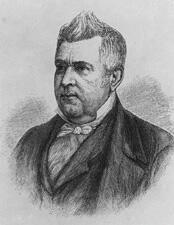
Here you will find contact information for Senator John Middleton Clayton, including email address, phone number, and mailing address.
| Name | John Middleton Clayton |
| Position | Senator |
| State | Delaware |
| Party | Independent |
| Status | Former Representative |
| Term Start | December 7, 1829 |
| Term End | March 3, 1857 |
| Terms Served | 4 |
| Born | July 24, 1796 |
| Gender | Male |
| Bioguide ID | C000496 |
Editorial and Source Notes
Last reviewed: January 1, 2026
We prioritize official government pages and published records. Information can change after publication.
Primary records and source links are added as they are verified.
Report a correction: see our Editorial Policy.
About Senator John Middleton Clayton
John Middleton Clayton (July 24, 1796 – November 9, 1856) was an American lawyer, jurist, and statesman from Delaware who became one of the leading Whig politicians of his generation. He served in the Delaware General Assembly, as Delaware secretary of state, as chief justice of the Delaware Superior Court, as a United States Senator from Delaware over multiple terms between 1829 and 1856, and as U.S. Secretary of State in the administration of President Zachary Taylor. John Middleton Clayton served as a Senator from Delaware in the United States Congress from 1829 to 1857. A member of the Independent Party, John Middleton Clayton contributed to the legislative process during 4 terms in office. His service in Congress occurred during a significant period in American history, and as a member of the Senate, John Middleton Clayton participated in the democratic process and represented the interests of his constituents.
Clayton was born in Dagsboro, Sussex County, Delaware, the son of Sarah (née Middleton) Clayton and James Clayton. He came from a prominent Delaware family deeply involved in state politics: his uncle, Dr. Joshua Clayton, had served as Governor of Delaware, and his cousin, Thomas Clayton, became a leading lawyer, U.S. Senator, and jurist. During his boyhood his parents moved to Milford, Delaware, and he also studied for a time in Berlin, Maryland. His Milford boyhood home, later known as the Parson Thorne Mansion, was eventually listed on the National Register of Historic Places in 1971, reflecting the historical significance of his early surroundings. About the time of his youth and early manhood, his father died, and Clayton assumed responsibility as the principal supporter of his immediate family, reportedly walking weekly between Dover and Milford to attend to their needs.
Clayton pursued higher education at Yale University, from which he graduated in 1815. While at Yale he was a member of the literary and debating society Brothers in Unity, an experience that helped develop the oratorical and argumentative skills for which he later became renowned in the Senate. After Yale he studied law at the Litchfield Law School in Connecticut, one of the foremost legal training institutions of the early nineteenth century. In 1819 he was admitted to the bar and began the practice of law in Dover, Delaware, quickly establishing himself as a capable advocate. In 1822 he married Sally Ann Fisher, granddaughter of former Delaware Governor George Truitt. The couple had two sons, James and Charles, but Sally Ann died two weeks after the birth of their younger son. Clayton never remarried and raised his two sons himself, a personal loss that marked his private life even as his public career advanced.
Clayton’s political career began in state government. He was elected to the Delaware House of Representatives for the 1824 session, entering public life at a time of transition between the old Jeffersonian factions and the emerging national party system. From December 1826 to October 1828 he served as Delaware secretary of state, an office to which he was appointed by the governor for a five-year term under the state’s constitutional arrangements, though he left before the full term expired. Conservative in background and outlook, he quickly became a leader of the Adams faction in Delaware, which evolved into the state’s Whig Party organization. During this period he played a central role in the convention that drafted the Delaware Constitution of 1831, helping to reshape the state’s basic law. Elections in Delaware were held on the first Tuesday of October, with members of the General Assembly taking office on the first Tuesday of January; state representatives served one-year terms, and the General Assembly chose U.S. Senators, who took office on March 4 for six-year terms.
In 1829, Clayton was elected by the Delaware General Assembly to the United States Senate, becoming at that time its youngest member. He served his first Senate term from March 4, 1829, until December 29, 1836. During these years he emerged as a prominent Whig voice in national debates. He distinguished himself with a notable speech during the debate on the Foote resolution, which, though nominally concerning the survey of public lands, opened a broad discussion of the doctrine of nullification and the nature of the Union. Clayton supported the extension of the charter of the Second Bank of the United States and conducted a searching investigation into the Post Office Department that led to its reorganization. Over the course of this first tenure he served on the Committees on Military Affairs, the Militia, the District of Columbia, and the Post Office, but his most significant assignment was as chairman of the Senate Judiciary Committee in the 23rd and 24th Congresses. After six years he declined re‑election, but the General Assembly chose him again despite his reluctance; he ultimately resigned, ending his first period of service.
Upon leaving the Senate, Clayton returned to Delaware and entered the judiciary. On January 16, 1837, he was appointed chief justice of the Delaware Superior Court, succeeding his cousin Thomas Clayton, who had been elected to the U.S. Senate. As chief justice he presided over the state’s highest trial court during a period of legal and political change, serving until September 19, 1839. He resigned that post to take an active role in the 1840 presidential campaign on behalf of Whig candidate William Henry Harrison, reflecting his deep engagement with national politics. In 1844 he developed a tract of land near New Castle, Delaware, which he named Buena Vista. There he built a substantial mansion and created one of the most productive estates in the region; Buena Vista was later listed on the National Register of Historic Places in 1971, further commemorating his legacy.
Clayton returned to the United States Senate in 1845, again elected by the Delaware General Assembly, and served from March 4, 1845, until February 23, 1849. During this second Senate tenure he opposed the annexation of Texas and was critical of the Mexican–American War, fearing its implications for sectional balance and the expansion of slavery. Nevertheless, once the war began, he advocated its vigorous prosecution, reflecting his strong nationalist convictions. His growing prominence in national Whig circles led to his selection for the cabinet when General Zachary Taylor, the Whig presidential candidate, won the election of 1848. Clayton resigned his Senate seat in February 1849 to accept this new role.
On March 8, 1849, Clayton became U.S. Secretary of State in President Zachary Taylor’s Whig administration. In this capacity he pursued an assertive foreign policy, marked by intense nationalism and a desire for commercial expansion. His most notable achievement was the negotiation of the Clayton–Bulwer Treaty of 1850 with the British minister, Sir Henry Bulwer-Lytton. The treaty provided for the neutrality and joint Anglo-American guarantee of any future canal or transit route across the Central American isthmus, particularly at Panama, and laid important groundwork for the eventual construction of the Panama Canal under U.S. auspices. At the same time, Clayton’s strict interpretation of international law and his firm positions produced diplomatic frictions with Spain, Portugal, and France. His tenure as secretary of state was relatively brief; it ended on July 22, 1850, shortly after President Taylor’s death and the accession of Millard Fillmore, under whom he did not continue in office.
Clayton returned once more to the Senate in 1853, elected for a final term that began on March 4, 1853. He served until his death on November 9, 1856, during one of the most turbulent periods in antebellum politics. In this last Senate service he strongly opposed the Kansas–Nebraska Act and the repeal of the Missouri Compromise, aligning himself with those who feared the spread of slavery into the western territories. One of his most noted speeches, delivered on June 15, 1854, attacked President Franklin Pierce’s veto of the Bill for the Benefit of the Indigent Insane, which would have granted public lands to support an asylum for the mentally ill; Clayton’s remarks reflected his concern for both constitutional principle and humanitarian policy. Throughout his Senate career, which spanned four separate terms between 1829 and 1857, he was regarded as one of the chamber’s most skilled debaters and orators, noted for his clear reasoning, forceful delivery, and genial disposition.
In his later years, personal tragedy struck when both of his sons died in their twenties, shortly before his own death. After the loss of his second son, Clayton moved his residence from Buena Vista back to Dover. He died in Dover on November 9, 1856, while still in office as a U.S. Senator, and was interred in the Old Presbyterian Cemetery in Dover, on the grounds of what is now the Delaware State Museum. His contemporaries remembered him as always accessible, with brilliant conversational powers and a warm, engaging manner that belied the often fierce partisanship of his era. Clayton’s legacy has been commemorated in numerous ways: Clayton Hall at the University of Delaware bears his name, as do towns in Delaware, New York, and North Carolina, and Clayton County in Iowa. In 1934 the state of Delaware donated a statue of John M. Clayton to the National Statuary Hall Collection in the United States Capitol, recognizing his long and influential service to both Delaware and the nation.