Representative John Kissig Cowen
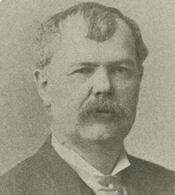
Here you will find contact information for Representative John Kissig Cowen, including email address, phone number, and mailing address.
| Name | John Kissig Cowen |
| Position | Representative |
| State | Maryland |
| District | 4 |
| Party | Democratic |
| Status | Former Representative |
| Term Start | December 2, 1895 |
| Term End | March 3, 1897 |
| Terms Served | 1 |
| Born | October 28, 1844 |
| Gender | Male |
| Bioguide ID | C000822 |
Editorial and Source Notes
Last reviewed: January 1, 2026
We prioritize official government pages and published records. Information can change after publication.
Primary records and source links are added as they are verified.
Report a correction: see our Editorial Policy.
About Representative John Kissig Cowen
John Kissig Cowen (October 28, 1844 – April 26, 1904) was an American lawyer, railroad executive, and Democratic politician who served as a U.S. Representative from Maryland. He represented Maryland’s 4th congressional district in the Fifty-fourth Congress from March 4, 1895, to March 3, 1897, completing one term in the House of Representatives during a significant period in American political and economic history. He later became president of the Baltimore and Ohio Railroad, one of the nation’s leading rail carriers, serving in that capacity from 1896 to 1901.
Cowen was born on October 28, 1844, near Millersburg, Holmes County, Ohio. His parents were natives of Pennsylvania, and his father, a blacksmith by trade, had learned his craft in Rising Sun, Maryland, a connection that presaged Cowen’s later move to that state. He attended local public schools and area academies, including the Vermillion Institute at Fredericksburg and schools at Hayesville, Ohio. From 1862 to 1863 he taught school in Millersburg, beginning a pattern of alternating work and study that characterized his early years.
In 1863, Cowen enrolled at Jefferson College (later Washington & Jefferson College) but was forced to withdraw due to illness. He subsequently entered the College of New Jersey (now Princeton University), where he formed a lasting friendship with Robert Garrett, a member of the prominent Baltimore banking and railroad family. Cowen graduated from Princeton in 1866 and that same year taught at a high school in Millersburg. He then pursued legal studies at the University of Michigan Law School for one year and was admitted to the bar of Ohio in 1868, formally beginning his legal career.
Cowen commenced the practice of law in Mansfield, Ohio, and also served as prosecuting attorney of Holmes County. He continued in private practice there until 1872. In February 1872, acting on an invitation from his Princeton friend Robert Garrett, he moved to Baltimore, Maryland. Almost immediately he entered the service of the Baltimore and Ohio Railroad, being appointed counsel to the company in 1872. He held that post until 1876, when he was elevated to general counsel. From 1876 to 1896 he served as general counsel of the Baltimore and Ohio Railroad, playing a central role in the company’s legal affairs during a period of rapid expansion and intense competition in the railroad industry.
A Democrat, Cowen was elected to the U.S. House of Representatives from Maryland’s 4th district in 1894, succeeding Isidor Rayner. He served in the Fifty-fourth Congress from March 4, 1895, to March 3, 1897. During his single term in Congress, he participated in the legislative process at a time when issues of currency, banking, and economic policy were at the forefront of national debate. He was a member of the Committee on Banking and Currency and was engaged in work on a plan to reorganize the nation’s treasury system. Although his existing biographical record notes his service from 1895 to 1897, some accounts describe his representation of the district as extending from 1895 to 1896 within that congressional term. He did not seek renomination in 1896, choosing instead to return to the railroad industry.
Cowen’s decision not to run for another term was closely tied to his growing responsibilities at the Baltimore and Ohio Railroad. In January 1896 he was chosen president of the company, succeeding Charles F. Mayer. He formally assumed the presidency while still completing his term in Congress and resigned from the House to devote himself fully to the railroad. As president of the Baltimore and Ohio Railroad from 1896 until June 1901, he presided over the company during a challenging era marked by financial pressures, restructuring efforts, and broader changes in American transportation and commerce. His leadership drew on his long experience as the railroad’s counsel and his familiarity with both corporate law and public policy.
In his personal life, Cowen married Helen Woods, and the couple had one daughter, Sara C. In 1903, after leaving the presidency of the Baltimore and Ohio Railroad, he traveled to Mexico in the company of several prominent Americans, including Admiral Winfield Scott Schley, former Senator James K. Jones, former Senator Matthew Butler, and Eugene Davis, reflecting his continued engagement with public figures and affairs beyond his formal offices.
Cowen died on April 25, 1904, at the home of his sister in Chicago, Illinois, though some records list his date of death as April 26, 1904. He was interred in Oak Hill Cemetery in his hometown of Millersburg, Ohio, returning in death to the community where he had been born, educated in his youth, and first embarked on his professional life.