Senator John Brown Francis
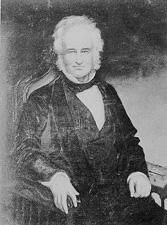
Here you will find contact information for Senator John Brown Francis, including email address, phone number, and mailing address.
| Name | John Brown Francis |
| Position | Senator |
| State | Rhode Island |
| Party | Law and Order |
| Status | Former Representative |
| Term Start | January 1, 1844 |
| Term End | March 3, 1845 |
| Terms Served | 1 |
| Born | May 31, 1791 |
| Gender | Male |
| Bioguide ID | F000336 |
Editorial and Source Notes
Last reviewed: January 1, 2026
We prioritize official government pages and published records. Information can change after publication.
Primary records and source links are added as they are verified.
Report a correction: see our Editorial Policy.
About Senator John Brown Francis
John Brown Francis (May 31, 1791 – August 9, 1864) was a governor and United States Senator from Rhode Island who also held numerous state offices and academic posts over the course of a long public career. He served as a Senator from Rhode Island in the United States Congress from 1844 to 1845 as a member of the Law and Order Party, contributing to the legislative process during one term in office and representing the interests of his constituents during a significant period in American history.
Francis was born in Philadelphia, Pennsylvania, on May 31, 1791, the son of John Francis and Abigail Brown. Through his mother he was a member of the prominent Brown family of Providence; his grandfather, John Brown, was a U.S. Representative from Rhode Island and a leading merchant and benefactor for whom Brown University was named. In childhood he moved to Rhode Island, where he attended the common schools of Providence. He entered Brown University and graduated in 1808, thus beginning a lifelong association with the institution that would later include service on its board of trustees and as its chancellor.
After completing his undergraduate studies, Francis engaged in mercantile pursuits before turning to legal training. He attended the Litchfield Law School in Connecticut, one of the earliest formal law schools in the United States, and was admitted to the bar. Although qualified to practice, he chose not to enter into active legal practice and instead devoted himself to business, public affairs, and educational and agricultural interests. His family connections and commercial experience helped position him for a career in Rhode Island politics.
Francis entered public life as a member of the Rhode Island House of Representatives, in which he served from 1821 to 1829. During this period he also began his formal involvement with Brown University, serving as a member of the board of trustees from 1828 to 1857. He advanced to the upper chamber of the state legislature as a member of the Rhode Island Senate in 1831, gaining further experience in state governance. In 1833 he was elected the 13th Governor of Rhode Island, a position he held until 1838. His five-year tenure as governor coincided with a time of gradual political change in the state, and he played a role in overseeing Rhode Island’s affairs under its colonial charter government.
In addition to his executive responsibilities, Francis maintained close ties to higher education. From 1841 to 1854 he served as chancellor of Brown University, the ceremonial head of the institution, guiding it through a period of growth and consolidation. He returned to the Rhode Island Senate in 1842, reflecting his continued influence in state politics on the eve of and during the Dorr Rebellion, a conflict over suffrage and constitutional reform that would soon give rise to the Law and Order Party with which he later affiliated at the national level.
Francis was elected to the United States Senate as a member of the Law and Order Party to fill the vacancy caused by the resignation of Senator William Sprague. He took his seat on January 25, 1844, and served until March 3, 1845, during the Twenty-eighth Congress. While in the Senate he was chairman of the Committee on Engrossed Bills, participating in the formal legislative process at a time when issues such as territorial expansion and sectional tensions were increasingly prominent in national debate. He was not a candidate for reelection at the conclusion of his term and returned to Rhode Island after his service in Washington.
Following his brief tenure in the U.S. Senate, Francis resumed state legislative service as a member of the Rhode Island Senate from 1845 to 1856. After this extended period in public office, he retired from active political life and devoted himself to agricultural pursuits at his estate, “Spring Green,” in Warwick, Rhode Island. His later years were marked by continued engagement with local affairs and the management of his property, reflecting the pattern of many New England statesmen of his generation who combined public service with agricultural and business interests.
Francis’s personal life was closely intertwined with the Brown and Francis families and other prominent American families of the era. In 1822 he married Anne Carter Brown, daughter of Nicholas Brown Jr. and granddaughter of Nicholas Brown Sr., further strengthening his ties to the family for whom Brown University was named. Before her death in 1828, they had three children: Abby Francis (1823–1841), who died unmarried; John Francis (1826–1827), who died in infancy; and Anne Brown Francis (1828–1896), who married Marshall Woods (1824–1899), son of Alva Woods and Almira Marshall, in 1848. In 1832 Francis married his cousin, Elizabeth Francis, widow of Henry Harrison and daughter of Thomas Willing Francis and Dorothy Willing. They had four children: Elizabeth Francis (1833–1901) and Sally Francis (1834–1904), neither of whom had children; Sophia H. Francis (1836–1860), who in 1860 married George William Adams (1834–1883), son of Seth Adams and Sarah Bigelow, and had no children; and John Brown Francis (1838–1870), who also did not have children.
John Brown Francis died at his estate “Spring Green” in Warwick, Rhode Island, on August 9, 1864, at the age of 73. He was interred in North Burial Ground in Providence, Rhode Island. His career encompassed service in both houses of the Rhode Island legislature, five years as governor, a term in the United States Senate, and long association with Brown University as trustee and chancellor, marking him as a significant figure in the political and educational history of Rhode Island in the first half of the nineteenth century.