Representative Judson Claudius Clements
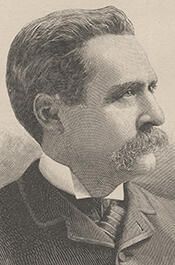
Here you will find contact information for Representative Judson Claudius Clements, including email address, phone number, and mailing address.
| Name | Judson Claudius Clements |
| Position | Representative |
| State | Georgia |
| District | 7 |
| Party | Democratic |
| Status | Former Representative |
| Term Start | December 5, 1881 |
| Term End | March 3, 1891 |
| Terms Served | 5 |
| Born | February 12, 1846 |
| Gender | Male |
| Bioguide ID | C000508 |
Editorial and Source Notes
Last reviewed: January 1, 2026
We prioritize official government pages and published records. Information can change after publication.
Primary records and source links are added as they are verified.
Report a correction: see our Editorial Policy.
About Representative Judson Claudius Clements
Judson Claudius Clements (February 12, 1846 – June 18, 1917) was a U.S. Representative from Georgia and, for a quarter century, a member of the Interstate Commerce Commission, on which he served one year as chairman. He was born near Villanow, Walker County, Georgia, the son of Dr. Adam Clements and Mary Wilson Hill Parks, both natives of Georgia. His father, Adam C. Clements, served in the Georgia House of Representatives from 1853 to 1854 and again from 1861 to 1862 under the Confederacy, providing an early example of public service that would influence his son’s career. Judson Clements attended local schools and an academy near Villanow, but his formal education was interrupted when, at age seventeen, he left school in January 1864 to join the Confederate States Army.
During the remainder of the Civil War, Clements served in the Confederate Army as a private and later as a first lieutenant in the First Regiment, Georgia State Troops, Stovall’s brigade. He saw active combat and was wounded at the Battle of Atlanta on July 22, 1864. After the war, he resumed his education and pursued legal studies. He enrolled at the Cumberland School of Law at Cumberland University in Lebanon, Tennessee, from which he graduated in 1868. The following year, in 1869, he was admitted to the bar and commenced the practice of law in La Fayette, Georgia. Around this time he married Bettie Wardlaw; she died after only a year of marriage, and Clements remained a widower for many years thereafter.
Clements quickly became active in local and state affairs. He practiced law in La Fayette from 1869 until 1887 and entered public service as school commissioner of Walker County in 1871 and 1872. He was elected to the Georgia House of Representatives, serving from 1872 to 1876, and then to the Georgia State Senate for the 44th Senatorial District, serving from 1877 to 1880. While a member of the Georgia General Assembly, he played a role in drafting Georgia’s railroad laws, an experience that foreshadowed his later national work in railroad regulation. His growing prominence in state politics set the stage for his election to Congress from Georgia’s Seventh District.
In 1880, Clements challenged the incumbent representative from the Seventh District, William Harrell Felton, an independent. Clements and his five brothers resided in six different counties within the district, a circumstance that exposed Felton to a wide range of local issues and helped Clements build a broad base of support. The campaign was notably non-confrontational and was described as one of the quietest ever known, yet Clements achieved a surprising victory by about 800 votes. Contemporary observers attributed his win to Felton’s overconfidence, Clements’s hard work, and solid support from Republican voters. His brothers were said to have kept his political “fences in good repair,” helping to secure his renomination in subsequent years.
A member of the Democratic Party, Clements was elected as a Democrat to the Forty-seventh and to the four succeeding Congresses, serving five consecutive terms in the U.S. House of Representatives from March 4, 1881, to March 3, 1891. During this decade in Congress, he represented the interests of his Georgia constituents and participated actively in the legislative process at a time of significant economic and political change in the United States. He contributed to the development of federal railroad regulation and helped write the legislation that authorized the creation of the Interstate Commerce Commission. His service in Congress thus coincided with, and helped shape, the early federal response to the challenges posed by the expanding railroad industry. Clements welcomed reconciliation between North and South; at an 1889 reunion of veterans, he remarked that Northern and Southern veterans had worked together to rebuild the South after the Civil War. Despite his influence, he was defeated for renomination in 1890 due to political maneuvering within his district.
During his congressional years, Clements’s personal life also evolved. On December 2, 1886, he married Lizzie Eleanor Dulaney in Louisville, Kentucky. She was the daughter of a wealthy real estate owner in that city. In 1887, he moved from La Fayette to Rome, Georgia, where he served for a year as president of the Chattanooga, Rome, and Columbus Railroad, further deepening his experience with railroad operations and regulation. After leaving Congress in 1891, President Benjamin Harrison appointed him as a special United States Attorney to negotiate the purchase of lands for the Chickamauga and Chattanooga National Military Park. Clements had represented the Chickamauga area in Congress and had worked vigorously for the passage of the bill authorizing the park. In an April 1891 interview, he reported that he had secured between 1,300 and 1,400 acres for the park, although progress was slowed by absentee landowners and by the reluctance of some residents to live under War Department regulations. He anticipated that most negotiations would be concluded by late 1891.
On March 6, 1892, President Harrison appointed Clements to the Interstate Commerce Commission (ICC) to fill the unexpired term of Commissioner Walter L. Bragg of Alabama, who had died. After Senate confirmation, Clements was sworn in as a commissioner on March 17, 1892. He was subsequently reappointed by Presidents Grover Cleveland, William McKinley, Theodore Roosevelt, and Woodrow Wilson, and he remained on the Commission until his death, serving approximately twenty-five years. With the resignation of longtime chairman Martin A. Knapp on December 12, 1910, Clements became acting chairman of the Commission, and in 1911 he was elected chairman for a one-year term. Although President William Howard Taft reportedly favored Republican commissioner Edgar Erastus Clark for the chairmanship, the Commission adhered to its tradition of elevating its senior member, and Clements was chosen. Unlike his predecessors, who generally remained chairman until leaving the Commission, Clements served only the single one-year term as chair.
As an ICC commissioner, Clements was regarded as a radical in the context of the era’s regulatory debates. He was among those commissioners who led the fight to secure real regulatory power for the Commission over the railroads, a struggle that nearly resulted in the ICC’s abolition but ultimately contributed to the passage of the Hepburn Act in 1906, which significantly strengthened federal control over railroad rates. Clements favored the physical valuation of railroads, a policy intended to facilitate fair taxation and enable the Commission to more accurately assess requests for rate increases. In 1916, he proposed that no worker be allowed to quit a railway company or urge others to do so until the Commission had an opportunity to investigate the dispute in a fair and equitable manner. This proposal was sharply criticized by the Locomotive Engineers Journal, particularly because it did not include any corresponding restriction on the ability of railroads to discharge workers at will. Over the course of his tenure, it was said that no opinion written by Clements was overturned in substance by the Supreme Court of the United States, and Railway Age Gazette, in urging his reappointment in 1913, acknowledged that although he had been criticized, his integrity and capacity for the position were beyond question. His twenty-five years on the Interstate Commerce Commission remained a record until surpassed by Balthasar H. Meyer, who served twenty-eight years from 1911 to 1939.
Judson Claudius Clements died in Washington, D.C., on June 18, 1917, while still serving as a member of the Interstate Commerce Commission. He was interred in Cave Hill Cemetery in Louisville, Kentucky. His long service in Congress and on the ICC, his early experience as a Confederate soldier, and his work in both state and federal railroad regulation made him a significant figure in the political and regulatory history of the late nineteenth and early twentieth centuries.