Representative Kathryn Ellen O’Loughlin McCarthy
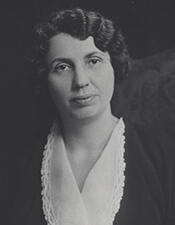
Here you will find contact information for Representative Kathryn Ellen O’Loughlin McCarthy, including email address, phone number, and mailing address.
| Name | Kathryn Ellen O’Loughlin McCarthy |
| Position | Representative |
| State | Kansas |
| District | 6 |
| Party | Democratic |
| Status | Former Representative |
| Term Start | March 9, 1933 |
| Term End | January 3, 1935 |
| Terms Served | 1 |
| Born | April 24, 1894 |
| Gender | Female |
| Bioguide ID | O000081 |
Editorial and Source Notes
Last reviewed: January 1, 2026
We prioritize official government pages and published records. Information can change after publication.
Primary records and source links are added as they are verified.
Report a correction: see our Editorial Policy.
About Representative Kathryn Ellen O’Loughlin McCarthy
Kathryn Ellen O’Loughlin McCarthy (born Kathryn Ellen O’Loughlin, April 24, 1894 – January 16, 1952) was a lawyer, state legislator, and one-term United States Representative from Kansas. A member of the Democratic Party, she was the first woman elected to Congress from Kansas and served in the U.S. House of Representatives from 1933 to 1935. After her election to Congress, she married Daniel M. McCarthy, a member of the Kansas State Senate, and thereafter served and was publicly known under the name Kathryn O’Loughlin McCarthy.
O’Loughlin was born near Hays, Ellis County, Kansas, where she attended rural public schools. She completed her secondary education at Hays High School, graduating in 1913. Pursuing a career in education and law, she attended Kansas State Teachers College, from which she graduated in 1917, and then enrolled in the law school of the University of Chicago. She received her law degree from the University of Chicago in 1920, entering a profession in which relatively few women practiced at the time.
Admitted to the bar in 1921, O’Loughlin commenced the practice of law in Chicago, Illinois. She remained in Chicago for much of the 1920s, gaining experience as an attorney before returning to her home state in 1928. That year she settled again in Hays, Kansas, where she continued the practice of law. Alongside her legal work, she became increasingly active in Democratic Party politics. She served as a delegate to the Kansas State Democratic conventions in 1930, 1931, 1932, 1934, and 1936, and later as a delegate to the Democratic National Conventions in 1940 and 1944. She also entered elective office at the state level, serving as a member of the Kansas House of Representatives in 1931 and 1932.
Building on her state legislative experience, O’Loughlin sought national office in 1932. Running as a Democrat, she was elected to the Seventy-third Congress, serving from March 4, 1933, to January 3, 1935. In securing the seat, she defeated Clyde Short in the Democratic primary and Charles I. Sparks in the general election. Her tenure in Congress coincided with the early years of President Franklin D. Roosevelt’s New Deal, a period of intense legislative activity in response to the Great Depression. As a member of the House of Representatives, Kathryn Ellen O’Loughlin McCarthy contributed to the legislative process during one term in office, participating in debates and votes on major economic and social reforms and representing the interests of her Kansas constituents during a significant period in American history.
O’Loughlin McCarthy strongly supported the New Deal, including the Agricultural Adjustment Act, a stance that proved controversial in her largely Republican home state. Her backing of Roosevelt’s program angered many Kansas Republicans, notably Governor Alf Landon, who vowed to see her defeated. In the 1934 election, public opinion in Kansas had begun to shift against certain New Deal measures, particularly those affecting agriculture. The Republican Party nominated Frank Carlson, then chair of the Kansas Republican Party and a close ally of Governor Landon, to oppose her. In a closely contested race for the Seventy-fourth Congress, McCarthy was narrowly defeated by Carlson by a margin of 51 percent to 49 percent, a difference of just under 2,800 votes. Carlson would later become one of the most influential politicians in Kansas history, serving as Governor of Kansas and subsequently as a United States Senator.
After leaving Congress, O’Loughlin McCarthy remained engaged in public affairs. In 1937, she drew statewide attention when she condemned the forced sterilization of 62 inmates of the Kansas Industrial School for Girls in Beloit, Kansas. In an article published in the Abilene Reflector, she called for a formal investigation of the institution and its practices, reflecting her continuing concern with civil liberties and the treatment of vulnerable populations. At the same time, she resumed the full-time practice of law in Hays, maintaining her professional career at the bar.
In her later years, O’Loughlin McCarthy combined her legal work with business and agricultural interests. She owned and operated a large ranch and was part owner of an automobile agency in Hays and Ellis, Kansas, activities that tied her closely to the economic life of western Kansas. She continued to be identified with the Democratic Party and with the pioneering role she had played as the first woman from Kansas elected to the United States Congress. Kathryn Ellen O’Loughlin McCarthy died in Hays, Kansas, on January 16, 1952, and was interred in St. Joseph’s Cemetery in that community.