Representative Lincoln Diaz-Balart
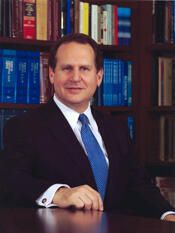
Here you will find contact information for Representative Lincoln Diaz-Balart, including email address, phone number, and mailing address.
| Name | Lincoln Diaz-Balart |
| Position | Representative |
| State | Florida |
| District | 21 |
| Party | Republican |
| Status | Former Representative |
| Term Start | January 5, 1993 |
| Term End | January 3, 2011 |
| Terms Served | 9 |
| Born | August 13, 1954 |
| Gender | Male |
| Bioguide ID | D000299 |
Editorial and Source Notes
Last reviewed: January 1, 2026
We prioritize official government pages and published records. Information can change after publication.
Primary records and source links are added as they are verified.
Report a correction: see our Editorial Policy.
About Representative Lincoln Diaz-Balart
Lincoln Rafael Díaz-Balart (born Lincoln Rafael Díaz-Balart y Caballero; August 13, 1954 – March 3, 2025) was a Cuban-American attorney and Republican politician who represented Florida in the United States House of Representatives from 1993 to 2011. Over nine consecutive terms, he served as the U.S. representative for Florida’s 21st congressional district, playing a prominent role in immigration policy, U.S.–Cuba relations, and issues affecting the Hispanic community. Before his election to Congress, he served in both the Florida House of Representatives and the Florida Senate, and later became chairman of the Congressional Hispanic Leadership Institute. After retiring from Congress, he practiced law and operated a consulting firm in Miami, Florida.
Díaz-Balart was born in Havana, Cuba, on August 13, 1954, to Cuban politician Rafael Díaz-Balart and Hilda Caballero Brunet. He came from a politically influential and historically significant Cuban family. His aunt, Mirta Díaz-Balart, was the first wife of Fidel Castro, making the late Dr. Fidel Ángel “Fidelito” Castro Díaz-Balart his cousin. His uncle, Waldo Díaz-Balart, became a noted Cuban-Spanish painter. The family left Cuba following the Cuban Revolution, and Díaz-Balart spent part of his youth abroad, including in Spain, where he attended the American School of Madrid. These early experiences, shaped by exile and Cuban politics, would later inform his staunch anti-Castro positions and his leadership within the Cuban-American community in South Florida.
Díaz-Balart pursued higher education in the United States, first attending New College of Florida, and then studying law at Case Western Reserve University, where he earned a Juris Doctor degree. After law school, he entered private legal practice in Miami, Florida. During this period, he became active in local politics and initially aligned himself with the Democratic Party. He served as president of the Dade County Young Democrats and the Florida Young Democrats and was a member of the executive committee of the Dade County Democratic Party. In 1982, he ran as a Democrat for the Florida House of Representatives from District 113, but lost to Republican Humberto Cortina. On April 24, 1985, Díaz-Balart, along with his wife and his brother Mario, changed party affiliation and registered as Republicans, marking a decisive shift in his political trajectory.
Following his party switch, Díaz-Balart was elected as a Republican to the Florida House of Representatives, where he served from 1986 to 1989. He then won election to the Florida Senate, serving from 1989 to 1992. In the state legislature he developed a reputation as a staunch anti-Castro advocate and a prominent voice for Cuban exiles, while also building the legislative experience and political base that would support his subsequent congressional career. In 1992, he ran for the newly created 21st congressional district of Florida. He defeated fellow State Senator Javier Souto in the Republican primary, and because no other party fielded a candidate, his primary victory effectively assured his election to Congress.
Díaz-Balart entered the U.S. House of Representatives in January 1993 and remained in office until his retirement in January 2011, serving nine terms during a period of significant change in American domestic and foreign policy. Throughout his congressional tenure, he represented a heavily Cuban-American and reliably Republican district in the Miami area. He was re-elected without opposition in 1994, 1996, 2000, and 2002, and in 1998 he defeated Democrat Patrick Cusack with 75 percent of the vote. In 2004 and 2006, he faced Frank J. Gonzalez—first as a Libertarian and then as a Democrat—winning with 72.8 percent of the vote in 2004 and 59.5 percent in 2006. In 2008, he was challenged by former Hialeah Mayor Raul L. Martinez in what was expected to be his most competitive race, but he was re-elected with 58 percent of the vote. When he retired from Congress in 2011, his younger brother, Mario Díaz-Balart, who had previously represented Florida’s 25th congressional district, succeeded him in the 21st district.
In Congress, Díaz-Balart served on the influential Committee on Rules, including as chairman of the Subcommittee on Rules from 2003 to 2005 and chairman of the Subcommittee on Legislative and Budget Process from 2005 to 2007. He also served on the Committee on Homeland Security and was a member of the House Republican Policy Committee. His voting record was considered moderate by Republican standards; the American Conservative Union gave him a lifetime rating of 73. In 1994, he was one of only three Republican incumbents who did not sign the “Contract with America,” objecting to welfare reform provisions that would have denied federal benefits to legal immigrants. He took several notable positions that diverged from many in his party: in 2006 he voted against the proposed Federal Marriage Amendment; in 2009 he supported the Matthew Shepard and James Byrd, Jr. Hate Crimes Prevention Act; and in December 2010 he was one of fifteen House Republicans who voted to repeal the military’s “Don’t Ask, Don’t Tell” policy on openly gay service members.
Díaz-Balart was particularly active on immigration and Cuba policy. He sponsored the DREAM Act, which sought to expand access to post-secondary education for undocumented students by allowing states to determine eligibility for in-state tuition. He played a key role in the passage of the Nicaraguan Adjustment and Central American Relief Act (NACARA) in 1997, which provided immigration relief to certain Central American and other nationals, and he was instrumental in the 1996 codification of the United States embargo against Cuba, establishing that U.S. sanctions could not be lifted until all political prisoners were freed and multi-party elections were scheduled in Cuba. He was a leading figure in the Cuban-American lobby and a member of the Congressional Cuba Democracy Caucus. He became nationally visible during the Elián González custody dispute, actively supporting the efforts of the boy’s Miami relatives to retain custody rather than return him to his father in Cuba. On broader economic issues, he opposed the Emergency Economic Stabilization Act of 2008, arguing that taxpayers should not be forced to bail out what he characterized as irresponsible behavior by Wall Street executives, and in March 2010 he denounced the Patient Protection and Affordable Care Act as “a decisive step in the weakening of the United States.”
Beyond his formal committee work, Díaz-Balart’s service in Congress coincided with major developments in U.S. domestic and foreign policy, including the post–Cold War realignment, the September 11 attacks, the wars in Afghanistan and Iraq, and contentious debates over immigration and health care reform. As a member of the House of Representatives, he participated in the legislative process and represented the interests of his South Florida constituents, particularly the Cuban exile community and broader Hispanic population. He also served as chairman of the Congressional Hispanic Leadership Institute, reflecting his broader engagement with Hispanic leadership and policy issues at the national level.
After leaving Congress in 2011, Díaz-Balart returned to private life in Miami, where he established a law practice and a consulting firm, both based in the city. He continued to be involved in public affairs and remained a respected voice on U.S.–Cuba relations, immigration, and Hispanic political participation. Lincoln Rafael Díaz-Balart died on March 3, 2025, closing a career that spanned state and national office and left a lasting imprint on Cuban-American political life and U.S. immigration and Cuba policy.