Representative Lionel Allen Sheldon
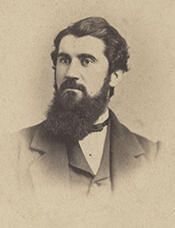
Here you will find contact information for Representative Lionel Allen Sheldon, including email address, phone number, and mailing address.
| Name | Lionel Allen Sheldon |
| Position | Representative |
| State | Louisiana |
| District | 2 |
| Party | Republican |
| Status | Former Representative |
| Term Start | March 4, 1869 |
| Term End | March 3, 1875 |
| Terms Served | 3 |
| Born | August 30, 1828 |
| Gender | Male |
| Bioguide ID | S000322 |
Editorial and Source Notes
Last reviewed: January 1, 2026
We prioritize official government pages and published records. Information can change after publication.
Primary records and source links are added as they are verified.
Report a correction: see our Editorial Policy.
About Representative Lionel Allen Sheldon
Lionel Allen Sheldon (August 30, 1828 – January 17, 1917) was an American lawyer, soldier, and public official who served as a Republican Representative from Louisiana in the United States Congress from 1869 to 1875 and later as Governor of the New Mexico Territory from 1881 to 1885. He was born in Worcester, Otsego County, New York, to Allen and Anna Marie (Des Les Dernier) Sheldon. In his youth he moved with his parents to Lagrange, Lorain County, Ohio, where he attended local district schools. He pursued higher education at Oberlin College in Oberlin, Ohio, from 1848 to 1850, and subsequently studied law at Fowler’s State and National Law School in Poughkeepsie, New York, from which he graduated in 1853.
Admitted to the bar in 1853, Sheldon commenced the practice of law in Elyria, Ohio. He quickly entered public life, serving as probate judge of Lorain County, Ohio, in 1856 and 1857. His early political activity included service as a delegate to the Republican National Convention in 1856, representing Ohio. In 1858, Governor Salmon P. Chase appointed him a brigadier general in the Ohio militia, reflecting his growing prominence in state affairs and his early involvement in military organization on the eve of the Civil War.
During the American Civil War, Sheldon served as an officer in the Union Army. He initially served as a cavalry officer with the 2nd Ohio and, drawing on his militia experience, helped raise five companies in six days. On November 27, 1861, he was mustered in as lieutenant colonel of the 42nd Ohio Volunteer Infantry Regiment. He was promoted to colonel on March 14, 1862, becoming the regiment’s second commander, succeeding his personal friend and future President James A. Garfield. Sheldon saw extensive combat, fighting in the Battle of Middle Creek, the engagement at Chickasaw Bayou, the capture of Cumberland Gap, and leading his brigade in the attack on Arkansas Post. Under Major General Ulysses S. Grant, he participated in the campaign in Mississippi, including the attack on Port Gibson and the assault on Thompson’s Hill. Wounded in the hand by a musket ball, he remained at his post and led two charges on the enemy position. During the battles of Raymond, Jackson, and Black River Bridge, he followed his regiment in an ambulance due to his injury but recovered in time to take part in the siege of Vicksburg. In recognition of his service, he was brevetted brigadier general of volunteers on March 13, 1865.
Sheldon settled in New Orleans, Louisiana, in 1864, where he practiced law until 1879. As a member of the Republican Party during the Reconstruction era, he became active in Louisiana politics. He was elected as a Republican to the Forty-first, Forty-second, and Forty-third Congresses, serving as a U.S. Representative from Louisiana from March 4, 1869, to March 3, 1875. During his three terms in Congress, he participated in the legislative process at a critical period in American history, representing the interests of his Louisiana constituents as the nation grappled with the political, social, and economic consequences of the Civil War. In the Forty-second Congress he served as chairman of the Committee on Militia, reflecting his military background and interest in the organization of state and national defense forces. He was an unsuccessful candidate for reelection in 1874 to the Forty-fourth Congress but remained a significant figure in Republican politics in the South.
On December 29, 1868, Sheldon married Mary Greene Miles, daughter of Thompson and Mary (Greene) Miles of Elyria, Ohio, thereby maintaining close ties to his native state even as his professional and political career centered in Louisiana and later in the West. After leaving Congress, he continued to practice law in New Orleans until 1879, when he returned to Ohio and took part in the presidential campaign of his former comrade, James A. Garfield. Following Garfield’s election to the presidency, Sheldon’s long-standing personal and political relationship with him contributed to his appointment as Governor of the New Mexico Territory.
Sheldon assumed the office of territorial governor on May 15, 1881, upon appointment by President James A. Garfield. His administration faced resistance from many older residents and established territorial officials who were wary of outside reformers. Despite this opposition, he was instrumental in initiating the construction of the Penitentiary of New Mexico, an important step in formalizing the territory’s penal system. As governor he devoted considerable attention to organizing and strengthening the territorial militia, both to combat lawlessness and to provide protection against raids and conflicts involving Native American tribes. His tenure coincided with a period of speculation, railroad expansion, and growing business activity in the territory. Sheldon resigned as governor in 1885, marking the end of his formal role in territorial administration.
After leaving the governorship, Sheldon remained active in legal and business affairs. He served as one of the receivers of the Texas and Pacific Railway from 1885 to 1887, a position that placed him at the intersection of law, finance, and the rapidly expanding railroad industry in the postwar West. His national political involvement continued as he served as a delegate to the Republican National Convention in 1880 from Louisiana and again in 1896 from California, having earlier served as a delegate in 1856 from Ohio—each time representing a different state and underscoring the geographic breadth of his political career.
In 1888, Sheldon and his wife moved to Los Angeles, California, where he resumed the practice of law. Later he relocated to Pasadena, California, continuing his legal work and public engagement in the rapidly growing communities of Southern California. Lionel Allen Sheldon died in Pasadena on January 17, 1917, closing a long life that spanned the antebellum era, the Civil War, Reconstruction, and the transformation of the American West.