Representative Otis Theodore Wingo
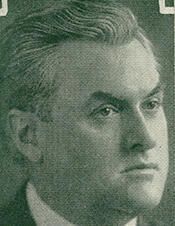
Here you will find contact information for Representative Otis Theodore Wingo, including email address, phone number, and mailing address.
| Name | Otis Theodore Wingo |
| Position | Representative |
| State | Arkansas |
| District | 4 |
| Party | Democratic |
| Status | Former Representative |
| Term Start | April 7, 1913 |
| Term End | March 3, 1931 |
| Terms Served | 9 |
| Born | June 18, 1877 |
| Gender | Male |
| Bioguide ID | W000635 |
Editorial and Source Notes
Last reviewed: January 1, 2026
We prioritize official government pages and published records. Information can change after publication.
Primary records and source links are added as they are verified.
Report a correction: see our Editorial Policy.
About Representative Otis Theodore Wingo
Otis Theodore Wingo (June 18, 1877 – October 21, 1930) was an American lawyer and Democratic politician who served as a U.S. Representative from Arkansas’s 4th congressional district from March 4, 1913, until his death in 1930. Over nine consecutive terms in the House of Representatives, he contributed to the legislative process during a significant period in American history and represented the interests of his Arkansas constituents. He was the husband of his successor in office, Effiegene Wingo.
Wingo was born on June 18, 1877, in Weakley County in northwestern Tennessee. He was educated in the public schools and pursued higher education at Bethel College in McKenzie, Tennessee, and at the former McFerrin College in Martin, Weakley County. He later attended Valparaiso University in Valparaiso, Indiana. This combination of local Tennessee institutions and an Indiana university education provided him with a broad academic foundation that preceded his legal and political career.
After completing his studies, Wingo taught school while studying law, reflecting a common professional path of the era in which teaching and legal training often overlapped. He was admitted to the bar in 1900 and soon thereafter established a law practice in De Queen, in Sevier County in southwestern Arkansas. His move to Arkansas marked the beginning of his long association with the state he would later represent in Congress, and his legal work in De Queen helped build his reputation as a community leader and advocate.
Wingo entered elective office at the state level before his service in Washington. From 1907 to 1909, he served as a member of the Arkansas State Senate. In that role, he participated in the formulation of state laws and gained legislative experience that would prove valuable in his subsequent federal career. His tenure in the state senate helped position him as a prominent Democratic figure in Arkansas politics during the early twentieth century.
In 1912, Wingo was elected as a Democrat to the Sixty-third Congress and was subsequently reelected to the eight succeeding Congresses, serving from March 4, 1913, until his death on October 21, 1930. As a member of the House of Representatives during a transformative era that encompassed World War I, the Progressive Era’s later phases, and the onset of the Great Depression, he participated in the democratic process at the national level and contributed to deliberations on federal policy affecting both Arkansas and the nation. His continuous service for nearly eighteen years reflected sustained support from his constituents in the 4th congressional district.
During his congressional career, Wingo engaged in regional development initiatives, including efforts related to conservation and tourism. In 1927, he joined fellow Arkansas Democrat U.S. Senator Joseph Taylor Robinson and Republican State Representative Osro Cobb of Montgomery County in proposing the establishment of a second national park in Arkansas. The park was envisioned for the scenic Ouachita National Forest, roughly halfway between Little Rock, Arkansas, and Shreveport, Louisiana, and was intended to be within driving distance of some 45 million Americans. Despite the bipartisan nature of the proposal and its potential economic and recreational benefits, the measure was pocket vetoed by President Calvin Coolidge and did not become law.
Wingo’s congressional service ended with his death in office. He died on October 21, 1930, in Baltimore, Maryland, while undergoing surgery. His passing created a vacancy in Arkansas’s 4th district. Republican leaders urged Osro Cobb to contest the vacant U.S. House seat in a special election, but Cobb declined to run and instead deferred to Wingo’s widow, Effiegene Wingo. She was elected to succeed him and served in Congress until 1933, continuing the representation of the district by the Wingo family. Otis Theodore Wingo and Effiegene Wingo are interred at Rock Creek Cemetery in Washington, D.C.