Representative Parker Griffith
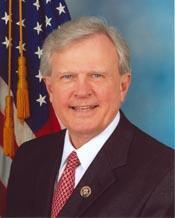
Here you will find contact information for Representative Parker Griffith, including email address, phone number, and mailing address.
| Name | Parker Griffith |
| Position | Representative |
| State | Alabama |
| District | 5 |
| Party | Republican |
| Status | Former Representative |
| Term Start | January 6, 2009 |
| Term End | January 3, 2011 |
| Terms Served | 1 |
| Born | August 6, 1942 |
| Gender | Male |
| Bioguide ID | G000557 |
Editorial and Source Notes
Last reviewed: February 17, 2026
We prioritize official government pages and published records. Information can change after publication.
Primary records and source links are added as they are verified.
Report a correction: see our Editorial Policy.
About Representative Parker Griffith
Rolf Parker Griffith Jr. (born August 6, 1942) is an American politician, entrepreneur, and physician who served as the U.S. representative for Alabama’s 5th congressional district from January 3, 2009, to January 3, 2011. Over the course of a varied career in medicine and public office, he became known both for his work as a radiation oncologist and for his shifting partisan affiliations, serving in elected office as a Democrat and later as a Republican before ultimately returning to the Democratic Party. His single term in Congress coincided with a significant period in American political history marked by contentious debates over health care, federal spending, and economic recovery.
Griffith was born in Shreveport, Louisiana, and spent his early years in that state before pursuing a career in education and medicine. Prior to entering medical school, he taught seventh-grade arithmetic for less than a year at T.H. Harris Junior High School (later Middle School) in Metairie in Jefferson Parish, a suburb of New Orleans. He was admitted to medical school at Louisiana State University and received his medical degree from the Louisiana State University Medical School in 1970. During this period, he also began military service; from 1970 to 1973 he served as a captain in the Medical Corps of the U.S. Army Reserve, continuing his medical training concurrently at the LSU Service Charity Hospital in New Orleans.
Following medical school, Griffith pursued advanced training in oncology and neurosurgery. He completed a residency at the University of Texas M. D. Anderson Cancer Center, one of the nation’s leading cancer treatment and research institutions. After service at the LSU Service Charity Hospital in New Orleans and a year of neurosurgery at the University of Texas Medical Branch in Galveston, Texas, he prepared to specialize in radiation oncology through a combined program between UTMB and M. D. Anderson Cancer Center in Houston. This training positioned him as a specialist in the use of radiation to treat and cure cancer, and it laid the foundation for his later work as a physician and medical entrepreneur.
Griffith was recruited on a “cold call” to Alabama, where he established the Huntsville Cancer Treatment Center, bringing advanced radiation oncology services to northern Alabama. As a practicing physician, he became known for providing discounted care to patients who lacked health insurance, reflecting a commitment to expanding access to cancer treatment. He conducted several clinical trials in conjunction with the University of Alabama School of Medicine and partnered with St. Jude Children’s Research Hospital in Memphis, Tennessee, to support pediatric and experimental cancer therapies. Griffith retired from the active practice of medicine in December 1992, though he continued to hold licenses to practice in both Alabama and Texas for some time thereafter; as of February 18, 2024, the Alabama Board of Medical Examiners and the Medical Licensure Commission of Alabama list no current record of a licensed Parker Griffith.
Griffith’s entry into electoral politics came in local government in Huntsville, Alabama. In 2004 he ran unsuccessfully for mayor of Huntsville against three-term incumbent Loretta Spencer. Two years later, he successfully sought state legislative office and was elected to the Alabama Senate, representing the 7th district, as a member of the Democratic Party. In that 2006 race he won approximately 66 percent of the vote to his opponent’s 34 percent. During his tenure in the Alabama Senate from 2006 to 2009, he sponsored legislation to promote investment in alternative fuels, to cut certain taxes, and to establish a Statewide Trauma Care System designed to speed access to critical emergency medical care—initiatives that reflected both his medical background and his interest in economic development.
On March 22, 2008, Griffith announced his candidacy for the open seat in Alabama’s 5th congressional district, following the decision of nine-term Democratic incumbent Bud Cramer not to seek reelection. Running as a Democrat, Griffith won the June 2008 Democratic primary with about 90 percent of the vote, defeating physicist David Maker; Cramer endorsed him in the primary. In the November 2008 general election he faced Republican Wayne Parker, a Huntsville insurance agent who had previously run unsuccessfully for the same seat in 1994 and 1996. The 5th district, which had not elected a Republican to Congress since Reconstruction, had nonetheless become reliably Republican in presidential contests, backing Republican nominees by wide margins and giving John McCain 61 percent of the vote in 2008. National forecasters rated the race a toss-up, with CQ Politics calling it “No Clear Favorite,” The Cook Political Report labeling it a “Democratic Toss-Up,” and The Rothenberg Political Report terming it a “Pure Toss-Up.” Griffith prevailed with 52 percent of the vote to Parker’s 48 percent, carrying all but one of the district’s seven counties even as McCain and Senator Jeff Sessions won every county in the district. His victory, along with that of Bobby Bright in Alabama’s 2nd district, gave the state two white Democratic congressmen for the first time since Glen Browder and Tom Bevill left the House in 1997.
Parker Griffith served as a Representative from Alabama in the United States Congress from 2009 to 2011, contributing to the legislative process during one term in office. Initially elected as a Democrat and a member of the Blue Dog Coalition of fiscally conservative Democrats, he leaned conservative on many issues, particularly fiscal policy and national defense. He described himself as a fiscal conservative and repeatedly called for reducing the national debt. Griffith was a strong supporter of NASA and of maintaining American dominance in space, a position of particular importance to his Huntsville-area district, home to significant aerospace and defense installations. In the 111th Congress he served on the House Committee on Energy and Commerce, including its Subcommittee on Communications, Technology and the Internet, the Subcommittee on Energy and Environment, and the Subcommittee on Oversight and Investigations. He also participated in caucus activities related to defense and space, including work on missile defense (where he served as co-chair), modeling and simulation, and the NASA House Action Committee.
During his term in Congress, Griffith’s voting record reflected his conservative leanings despite his initial Democratic affiliation. He voted against the Affordable Health Care for America Act, against cap-and-trade climate legislation, and against the 2009 economic stimulus act. In the summer of 2009 he publicly criticized the Democratic House leadership in the wake of contentious town hall meetings on health care in his district, stating that he would not support Nancy Pelosi for Speaker because he viewed her as “divisive and polarizing.” He also opposed the Obama administration’s decision to cancel a planned missile defense shield in Europe, a move he believed could harm Huntsville’s defense industry. These positions drew the attention of Republican leaders, who began courting him as a potential party switch.
On December 22, 2009, while still in his first term, Griffith announced that he was leaving the Democratic Party and joining the Republican Party, becoming, at that time, a member of the Republican Party in Congress. He cited the Democratic health care bill, concerns over federal spending, and disagreements on fiscal and foreign policy as principal reasons for his decision, declaring that the nation was “at a crossroads” and that he could no longer align himself with a party he believed was pursuing legislation harmful to the country and its economy. His switch was historically notable: it was the first time since Representative Michael Forbes of New York in 1999 that a member of Congress had switched from the majority party to the minority party, and it made him the first Republican to represent Alabama’s 5th congressional district since John Benton Callis, who served a single term from 1868 to 1870 during Reconstruction. The move, however, provoked internal turmoil; in January 2010 his congressional staff resigned en masse, including his chief of staff, legislative director, press secretary, and even his intern. After joining the Republican Party, Griffith became a member of the Republican Study Committee, a caucus of conservative House Republicans, and his voting record shifted sharply to the right, with his rating from the American Conservative Union rising from 56 in 2009 to 95 in 2010.
Griffith ran for reelection to the U.S. House of Representatives in 2010 as a Republican but faced strong intraparty opposition. In the June 1, 2010, Republican primary he was defeated by Madison County Commissioner Mo Brooks, who received 51 percent of the vote to Griffith’s 33 percent, with conservative activist Les Phillip taking 16 percent; Brooks’ narrow majority allowed him to avoid a runoff. Griffith’s defeat ended his congressional service on January 3, 2011. In January 2012, he filed for a rematch against Brooks in the Republican primary, arguing that voters could contrast his record in Congress with that of the incumbent and asserting that Brooks had “wandered away from many of the issues people want us to address.” In the 2012 primary, however, Brooks defeated him by a landslide margin of 71 percent to 29 percent, carrying all five counties in the district. Supporters of Griffith circulated petitions to place him on the November ballot as an independent candidate, but he ultimately decided against an independent run.
After his congressional career, Griffith continued to engage in Alabama politics and to reassess his party affiliation. A lifelong Democrat before his 2009 switch, he later returned to the Democratic Party in 2014. That same year he sought statewide office, running unsuccessfully for Governor of Alabama as a Democrat. Although he did not return to elective office, Griffith remained a figure of interest in Alabama’s political history for his unusual partisan trajectory, his role in representing a historically Democratic but increasingly Republican district during a period of national political realignment, and his earlier contributions to cancer treatment and health care delivery in northern Alabama.