Representative Phillip Hart Weaver
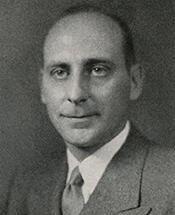
Here you will find contact information for Representative Phillip Hart Weaver, including email address, phone number, and mailing address.
| Name | Phillip Hart Weaver |
| Position | Representative |
| State | Nebraska |
| District | 1 |
| Party | Republican |
| Status | Former Representative |
| Term Start | January 5, 1955 |
| Term End | January 3, 1963 |
| Terms Served | 4 |
| Born | April 9, 1919 |
| Gender | Male |
| Bioguide ID | W000228 |
Editorial and Source Notes
Last reviewed: January 1, 2026
We prioritize official government pages and published records. Information can change after publication.
Primary records and source links are added as they are verified.
Report a correction: see our Editorial Policy.
About Representative Phillip Hart Weaver
Phillip Hart Weaver (April 9, 1919 – April 16, 1989) was a Nebraska Republican politician and four-term United States Representative from Nebraska, serving in Congress from 1955 to 1963. A member of a prominent Nebraska political family, he was the son of former Nebraska governor Arthur J. Weaver and the grandson of former U.S. Representative Archibald Jerard Weaver. His congressional service took place during a significant period in American history, and he participated actively in the legislative process while representing the interests of his Nebraska constituents.
Weaver was born in Falls City, Richardson County, Nebraska, on April 9, 1919. Raised in an environment steeped in public service and politics, he was educated in local schools before attending St. Benedict’s College in Atchison, Kansas, from 1938 to 1939. He later graduated from the University of Nebraska, further grounding himself in the civic and political life of his home state. Between 1938 and 1940, he worked as a radio announcer, gaining experience in public communication that would later prove useful in his political career.
With the onset of World War II, Weaver entered military service. On June 1, 1942, he joined the Armed Services and was assigned to command, staff, and liaison duties with the Seventeenth Airborne Division, the First Allied Airborne Army, and Headquarters, Berlin District. He saw active duty in the European theater and was discharged as a captain in March 1946. In recognition of his service, he was awarded the Combat Infantryman Badge, Glider Wings, and the Bronze Star with oak leaf cluster. After the war, he continued his association with the military through the United States Army Reserve, from which he eventually retired with the rank of lieutenant colonel.
Following his release from active duty, Weaver returned to Falls City and entered private business. From 1946 to 1949 he was engaged in the insurance and finance business and simultaneously served as director of Falls City Wholesale & Supply, Inc. Demonstrating a broad interest in commercial enterprise, he also established an automobile agency in Falls City. From 1949 to 1950, he served as civilian administrative assistant to the G-1 (personnel officer), Fifth Army, in Chicago, Illinois, combining his military background with administrative and organizational responsibilities in a civilian capacity.
Weaver’s political career at the national level began with his election as a Republican to the Eighty-fourth Congress and to the three succeeding Congresses, serving in the U.S. House of Representatives from January 3, 1955, to January 3, 1963. During his four terms in office, he contributed to the legislative process at a time marked by Cold War tensions and the emerging civil rights movement. Reflecting a willingness to support key civil rights measures, Weaver voted in favor of the Civil Rights Act of 1957, the Civil Rights Act of 1960, and the Twenty-fourth Amendment to the United States Constitution, which prohibited the poll tax in federal elections. Despite his record of service, he was unsuccessful in his bid for renomination in 1962 to the Eighty-eighth Congress, ending his tenure in the House after eight years.
After leaving Congress, Weaver continued his public service in the executive branch of the federal government, particularly in rural and agricultural policy. From 1963 to 1965 he served as a special consultant to the U.S. Department of Agriculture. In 1966 he became a deputy director in the Field Cooperations Division of the Rural Community Development Service, focusing on programs aimed at improving conditions in rural America. From 1967 to 1968 he served as regional development coordinator for the Department of Agriculture, and in 1969 he was promoted to acting administrator of the Rural Community Development Service. From 1969 to 1973 he held the position of deputy assistant to the U.S. Secretary of Agriculture, playing a role in the formulation and coordination of federal rural development initiatives during a period of significant change in American agriculture and rural policy.
In 1974, Weaver returned once again to Falls City, Nebraska, where he resumed his business interests and remained an active member of the local community. He lived in Falls City for the remainder of his life, maintaining the close connection to his hometown that had characterized both his early years and his post-congressional career. Phillip Hart Weaver died in Falls City on April 16, 1989, closing a life that combined military service, business enterprise, and nearly two decades of federal public service in both the legislative and executive branches.