Senator Quentin N. Burdick
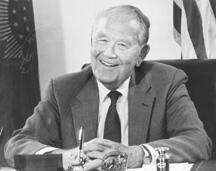
Here you will find contact information for Senator Quentin N. Burdick, including email address, phone number, and mailing address.
| Name | Quentin N. Burdick |
| Position | Senator |
| State | North Dakota |
| Party | Democratic |
| Status | Former Representative |
| Term Start | January 7, 1959 |
| Term End | January 3, 1993 |
| Terms Served | 17 |
| Born | June 19, 1908 |
| Gender | Male |
| Bioguide ID | B001077 |
Editorial and Source Notes
Last reviewed: February 17, 2026
We prioritize official government pages and published records. Information can change after publication.
Primary records and source links are added as they are verified.
Report a correction: see our Editorial Policy.
About Senator Quentin N. Burdick
Quentin Northrup Burdick (June 19, 1908 – September 8, 1992) was an American lawyer and politician who represented North Dakota in the United States Congress for more than three decades. A member of the North Dakota Democratic–Nonpartisan League Party (Democratic-NPL) and of the national Democratic Party, he served in the U.S. House of Representatives from 1959 to 1960 and in the U.S. Senate from 1960 until his death in 1992. Over the course of seven Senate terms, he contributed to the legislative process during a significant period in American history, and at the time of his death he was the third longest-serving senator among then-current members, behind Strom Thurmond and Robert Byrd.
Burdick was born in Munich, North Dakota, and was the son of Usher L. Burdick, a prominent North Dakota political figure who served multiple terms in the U.S. House of Representatives. Raised in a politically active family on the northern plains, he grew up in an environment shaped by agrarian concerns and the populist-progressive traditions that later informed the Nonpartisan League and the Democratic-NPL coalition in North Dakota. His early years in a largely rural state exposed him to the economic challenges facing farmers and small communities, experiences that would later influence his legislative priorities.
Burdick pursued higher education in the Midwest, attending North Dakota Agricultural College (now North Dakota State University) before studying law. He earned his law degree from the University of Minnesota Law School and was admitted to the bar, beginning a legal career in North Dakota. As a practicing attorney, he became familiar with the legal and economic issues affecting his home state, particularly those involving land, agriculture, and rural development. His legal background provided a foundation for his later work in Congress, where he frequently dealt with complex legislative and regulatory matters.
Burdick’s congressional career began in the U.S. House of Representatives, where he served North Dakota from 1959 to 1960. In the House, he aligned with the Democratic-NPL Party and quickly became identified with the interests of North Dakota’s farmers and rural communities. His service in Congress occurred during a transformative era in American politics, marked by the early stages of the civil rights movement, Cold War tensions, and significant debates over federal agricultural and economic policy. He participated in the democratic process as a representative of his constituents, helping to shape legislation affecting both his state and the nation.
Following the death of Senator William Langer in November 1959, Burdick sought to move from the House to the Senate. He ran in a special election held on June 28, 1960, to fill the remaining four and a half years of Langer’s term. His Republican opponent was Governor John E. Davis. During this campaign, Burdick received strong backing from the National Farmers Union and campaigned on a platform that emphasized high price supports and strict production controls on grains with high surpluses, positions that resonated with North Dakota’s wheat farmers. His campaign slogan, “Beat Benson with Burdick,” targeted Secretary of Agriculture Ezra Taft Benson, whose policies were deeply unpopular in the state. Burdick narrowly defeated Davis by 1,118 votes. On August 8, 1960, he resigned his House seat and was sworn in as a member of the U.S. Senate, beginning a Senate career that would span more than three decades.
Burdick secured a full six-year Senate term in the heavily Democratic election year of 1964, defeating Republican Thomas Kleppe. He went on to defeat Kleppe again in a rematch in 1970, another favorable year for Democrats nationally. Thereafter, he was reelected by wide margins in 1976, 1982, and 1988, reflecting his durable popularity in North Dakota and his reputation for delivering federal resources to the state. Over time, he became known as the “King of Pork,” a nickname that stemmed from his focus on directing federal funds and projects to North Dakota, which was rural, relatively poor, and less developed than many other states. His efforts helped finance infrastructure, water projects, and other federal initiatives that he argued were essential to the state’s economic development and quality of life.
Within the Senate, Burdick rose to positions of influence. In 1987, he became chairman of the Senate Environment and Public Works Committee, a key panel with jurisdiction over environmental policy, public works, and infrastructure. In that role, he played a central part in shaping legislation related to environmental protection, transportation, and public construction projects, often with an eye toward the needs of rural states like North Dakota. His voting record reflected a generally liberal Democratic orientation, and in 1990 he was one of only nine senators, all Democrats, to vote against the confirmation of David Souter as an Associate Justice of the Supreme Court of the United States, signaling his willingness to dissent from the majority on high-profile national issues.
Burdick’s personal life intersected with his public career. A widower, he married Jocelyn Birch Peterson on July 7, 1960, nine days after his special election victory. She had two children from a previous marriage, and together they had one son, Gage. The family suffered a tragedy on May 23, 1978, when Gage died at the age of 16 after receiving an electric shock from a belt sander at the family home. Despite personal loss and advancing age, Burdick continued to serve in the Senate, maintaining an active role in legislative affairs into the early 1990s.
Quentin Northrup Burdick remained in office until his death on September 8, 1992, in Washington, D.C. At the time, he was among the most senior members of the Senate, having served continuously in that body since 1960 and in Congress since 1959. His long tenure, his leadership on the Environment and Public Works Committee, and his persistent efforts to channel federal support to North Dakota left a lasting imprint on both his state and the institution of the Senate.