Representative Robin Hayes
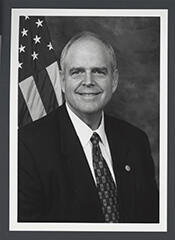
Here you will find contact information for Representative Robin Hayes, including email address, phone number, and mailing address.
| Name | Robin Hayes |
| Position | Representative |
| State | North Carolina |
| District | 8 |
| Party | Republican |
| Status | Former Representative |
| Term Start | January 6, 1999 |
| Term End | January 3, 2009 |
| Terms Served | 5 |
| Born | August 14, 1945 |
| Gender | Male |
| Bioguide ID | H001029 |
Editorial and Source Notes
Last reviewed: February 17, 2026
We prioritize official government pages and published records. Information can change after publication.
Primary records and source links are added as they are verified.
Report a correction: see our Editorial Policy.
About Representative Robin Hayes
Robert Cannon “Robin” Hayes (born August 14, 1945) is an American politician and businessman from North Carolina who served as a Republican member of the United States House of Representatives from 1999 to 2009. Representing North Carolina’s 8th congressional district for five terms, Hayes participated actively in the legislative process during a significant period in recent American history, and later served as chairman of the North Carolina Republican Party in two separate tenures. He was also the Republican nominee for Governor of North Carolina in 1996 and, in later years, became embroiled in a high-profile federal corruption investigation, ultimately receiving a presidential pardon in 2021.
Hayes was born in Concord, Cabarrus County, North Carolina, to Mariam Winslow (née Cannon) and Robert Griffith Hayes Jr. He comes from a prominent textile family; his great-grandfather, James William Cannon, founded the Cannon Mills Corporation, a major Kannapolis-based textile company that was later led by his grandfather, Charles Albert Cannon. Through his mother’s family, Hayes is also a descendant of Abraham Owen, a military officer killed at the Battle of Tippecanoe in 1811. Raised in this environment of business and civic prominence, Hayes developed early ties to the textile industry and to the economic life of his region.
Hayes attended Duke University, from which he graduated before embarking on a career in business and local public service. He became a businessman in the textile sector and owns a hosiery mill in Mount Pleasant, North Carolina, continuing the family’s long association with textile manufacturing. His business experience, particularly in an industry central to the economy of his district, later informed his positions on trade and economic policy, especially with respect to the impact of international agreements on domestic textile jobs.
Hayes entered public office at the local level, winning election to the Concord City Council in 1978. After building a base in local politics, he advanced to state office when he was elected to the North Carolina House of Representatives in 1992. He served two terms in the state legislature, where he gained experience in lawmaking and party politics. In 1996, Hayes became the Republican nominee for Governor of North Carolina, challenging Democratic incumbent Jim Hunt. In that statewide race he was decisively defeated, but the campaign elevated his profile within the state Republican Party and set the stage for his subsequent bid for Congress.
In 1998, Hayes ran for the U.S. House of Representatives from North Carolina’s 8th congressional district after 12-term Democratic incumbent Bill Hefner announced his retirement. In a closely contested race, Hayes narrowly defeated Democrat Mike Taylor, winning 51 percent to 48 percent, a margin of about 3,400 votes. He was reelected in 2000, again facing Taylor and expanding his margin to 55 percent to 44 percent. Although the 8th District included conservative-leaning eastern suburbs of Charlotte, it had long been considered marginally Democratic, particularly in its eastern portion near Fayetteville. Following the 2000 Census, the Democratic-controlled North Carolina General Assembly redrew the district to be more favorable to Democrats, shifting heavily Republican areas of Union County to the 9th District and adding a heavily Democratic tendril in Mecklenburg County stretching from northeastern Charlotte almost to Matthews. Despite this, Hayes won reelection in 2002 against Democrat Chris Kouri by 54 percent to 45 percent, and again in 2004 against Democrat Beth Troutman by 56 percent to 45 percent.
Hayes’s 2006 reelection campaign proved to be one of the closest House races in the country. He faced Democrat Larry Kissell, a social studies teacher and former textile worker from Montgomery County. Both candidates received approximately 50 percent of the vote, and after a recount Kissell conceded; Hayes officially prevailed by just 329 votes. Although he carried only three of the district’s nine counties, a margin of about 6,100 votes in his native Cabarrus County was sufficient to keep him in office. In 2008, Hayes again faced Kissell in a rematch. National political analysts rated the race highly competitive: CQ Politics labeled it “No Clear Favorite,” The Rothenberg Political Report called it “Toss-Up/Tilt Democratic,” and The Cook Political Report rated it a “Republican Toss Up.” That year, the Sunlight Foundation reported that among all 435 members of the House, Hayes held the highest level of personal investment in oil stocks. Late in the 2008 campaign he drew criticism for remarks at an October 18 rally for Republican presidential nominee John McCain, where he accused Barack Obama of “inciting class warfare” and said that “liberals hate real Americans that work and accomplish and achieve and believe in God.” Hayes initially denied making the statement and accused reporters of “irresponsible journalism,” but an audio recording confirmed the remarks. At a subsequent debate hosted by the Concord and Kannapolis Independent Tribune, he maintained that he had been disputing the context rather than the words themselves. In the November 2008 election, Kissell defeated Hayes by a margin of 55 percent to 45 percent, ending Hayes’s decade-long congressional tenure.
During his time in Congress, Hayes was known as a staunch advocate of a federal prohibition on online poker and Internet gambling. In 2006, he cosponsored H.R. 4777, the Internet Gambling Prohibition Act, reflecting his broader social conservatism. He also played pivotal roles in major trade legislation. On the Central American Free Trade Agreement (CAFTA), which came before the House in 2005, Hayes initially declared himself “flat-out, completely, horizontally opposed” on the grounds that it would further erode textile jobs in his district. In the climactic vote, he first cast a “no” vote but changed to “yes” at the last minute after intense lobbying by House Republican leaders, including Speaker Dennis Hastert, and by textile executives who supported the agreement. Hayes stated that he had secured concessions from the George W. Bush administration on textile issues. The final tally was 217–215, with Hayes’s changed vote proving decisive; a tie would have defeated the measure. He played a similar role in the passage of the Trade Act of 2002, which granted the President expanded trade promotion authority. Although he had publicly said, “We’re a definite ‘no’ until we get some help on textiles,” he was heavily lobbied by the White House and congressional leadership and ultimately voted “yes,” reportedly breaking down in tears on the House floor as he cast his vote.
Hayes also became involved in a widely publicized controversy in October 2007, sometimes referred to as the “NASCAR vaccine scare.” It emerged that House Homeland Security Committee officials had been “advised” to receive certain vaccines before attending a NASCAR race at Charlotte Motor Speedway in Concord, North Carolina, which lies within Hayes’s district. Hayes “took umbrage” at the implication that NASCAR fans or the venue posed unusual health risks and publicly defended both the speedway and NASCAR fans nationwide. The episode attracted substantial media attention and was covered by major news outlets. Throughout his congressional service, Hayes held several key committee assignments. He served on the House Agriculture Committee, including the Subcommittee on Conservation, Credit, Energy, and Research; the Subcommittee on Livestock, Dairy, and Poultry, where he was the ranking member; and the Subcommittee on Specialty Crops, Rural Development and Foreign Agriculture. He was also a member of the Armed Services Committee, serving on the Readiness Subcommittee and the Terrorism and Unconventional Threats and Capabilities Subcommittee, and on the Transportation and Infrastructure Committee, where he sat on the Subcommittees on Aviation; Highways and Transit; and Water Resources and Environment. Within the House Republican leadership and caucus structure, he served as an assistant whip, was a founding co-chairman of the Special Operations Forces Caucus, and co-chaired the Philanthropy Caucus.
After leaving Congress in January 2009, Hayes remained active in Republican Party politics in North Carolina. On January 15, 2011, he was elected chairman of the North Carolina Republican Party, completing the unexpired term of former Raleigh mayor Tom Fetzer, who had stepped down before his term ended. Hayes then served a full two-year term as state party chairman. Following the Republicans’ successful 2012 election cycle, he chose not to seek another term in 2013. In 2016, after state Republicans removed their then-chairman Hasan Harnett, party members again turned to Hayes, electing him to return as chairman of the North Carolina Republican Party. He held that position until 2019, when legal troubles arising from a federal corruption probe led him to relinquish day-to-day management of the party ahead of new officer elections.
On March 18, 2019, a federal grand jury in the Western District of North Carolina indicted Hayes on charges of conspiracy to commit honest services fraud, wire fraud, bribery, and three counts of making false statements to federal authorities. The indictment alleged that Hayes coordinated with businessman Greg Lindberg and two other individuals in an effort to bribe North Carolina Commissioner of Insurance Mike Causey in exchange for favorable regulatory treatment of Lindberg’s insurance company and the dismissal of a deputy insurance commissioner. Lindberg was later convicted and sentenced to seven years in prison. The indictment against Hayes remained under seal until April 2, 2019, when he appeared in court and pleaded not guilty. The following day, he announced that he would allow other Republican officials to assume responsibility for managing the state party until its officer elections in June, although he formally retained the title of chairman until those elections. At the party’s annual convention in June 2019, North Carolina Republicans elected Michael Whatley as the new state chairman. On October 2, 2019, Hayes pleaded guilty to one count of making false statements to the Federal Bureau of Investigation. On January 20, 2021, the final day of his term, President Donald J. Trump issued a pardon to Hayes, vacating his conviction for lying to federal authorities.