Representative Rogers Morton
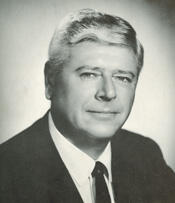
Here you will find contact information for Representative Rogers Morton, including email address, phone number, and mailing address.
| Name | Rogers Morton |
| Position | Representative |
| State | Maryland |
| District | 1 |
| Party | Republican |
| Status | Former Representative |
| Term Start | January 9, 1963 |
| Term End | January 3, 1971 |
| Terms Served | 5 |
| Born | September 19, 1914 |
| Gender | Male |
| Bioguide ID | M001021 |
Editorial and Source Notes
Last reviewed: February 17, 2026
We prioritize official government pages and published records. Information can change after publication.
Primary records and source links are added as they are verified.
Report a correction: see our Editorial Policy.
About Representative Rogers Morton
Rogers Clark Ballard Morton (September 19, 1914 – April 19, 1979) was an American politician who served as a member of the U.S. House of Representatives from Maryland and later as U.S. Secretary of the Interior and U.S. Secretary of Commerce during the administrations of Presidents Richard M. Nixon and Gerald R. Ford. A member of the Republican Party, he represented Maryland in Congress from 1963 to 1973, serving five terms and contributing to the legislative process during a significant period in American history.
Morton was born in Louisville, Kentucky, on September 19, 1914. In the early 1950s he moved to a farm on the Eastern Shore of Maryland, a relocation that would shape both his political base and his long-standing interest in environmental and regional issues. He became closely associated with the Chesapeake Bay region, later joking that his two middle initials, “C.B.,” stood for “Chesapeake Bay.” His life on Maryland’s Eastern Shore helped establish his identity as a representative of rural and coastal interests and laid the groundwork for his subsequent political career in the state.
Morton entered national politics as a Republican from Maryland and, in 1962, was elected to the U.S. House of Representatives. He took office in January 1963 and served continuously until 1973. During his five terms in the House, Morton participated actively in the democratic process and represented the interests of his constituents from Maryland’s Eastern Shore and surrounding areas. He established a generally pro-environment record, reflecting both his personal ties to the Chesapeake Bay and the emerging national concern with conservation and environmental protection in the 1960s and early 1970s. His congressional service coincided with major national debates over civil rights, the Vietnam War, and environmental legislation, and he became recognized as a significant Republican voice from Maryland.
Morton’s influence within the Republican Party expanded beyond his House service. In 1968, he played a major role in Richard Nixon’s successful campaign for president, helping to organize and promote Republican efforts at the national level. In recognition of his work and growing stature in the party, Nixon selected him in 1969 to serve as chairman of the Republican National Committee (RNC). Morton was regarded as a strong potential candidate in the 1970 elections to challenge Democratic Senator Joseph Tydings for his U.S. Senate seat from Maryland, but Morton chose instead to remain as RNC chairman, continuing to guide party strategy and organization while still serving in the House of Representatives.
In 1971, President Nixon nominated Morton to serve as Secretary of the Interior. Morton continued to serve in the House and as chairman of the RNC until his confirmation. He was unanimously approved by the United States Senate Subcommittee on the Interior, although some concerns were raised about his environmental record, notably by Phillip Berry, then president of the Sierra Club. Morton’s predecessor, Walter J. “Wally” Hickel, had been chosen over Morton for the Interior post in 1969 but was dismissed by Nixon in late 1970 after criticizing White House policy. When Morton assumed office, he became the only person from the East Coast to serve as Secretary of the Interior in the 20th century.
As Secretary of the Interior, Morton publicly pledged that he would seek to “purify the environment,” reflecting the growing prominence of environmental issues in federal policy. His tenure, however, was marked by internal administrative shifts and the reallocation of responsibilities away from the department. During the 1973 oil crisis, for example, the oil and natural gas divisions of the Interior Department were transferred to the Office of Emergency Preparedness, reducing the department’s direct control over key energy functions. Morton announced the construction of the Trans-Alaska Pipeline System, a major energy infrastructure project, though contemporary observers speculated that he did not play a central role in determining its route. As he left office in 1975, he faced criticism for overseeing what some viewed as a partial dismantling of the Interior Department, for lacking the vigor some believed necessary to lead a cabinet agency, and for failing to bring to fruition proposals for a new, stronger cabinet department that would have replaced Interior.
Following President Nixon’s resignation in August 1974 as a result of the Watergate scandal, Morton continued to serve as Secretary of the Interior under President Gerald Ford until 1975. That year, Ford nominated him to be Secretary of Commerce, and Morton shifted from overseeing natural resources and public lands to managing the department responsible for trade, economic development, and industrial policy. In addition to his cabinet responsibilities, Morton served from April to August 1976 as Ford’s campaign manager in the president’s bid for election in his own right. After Ford’s defeat in the 1976 election, Morton retired from active politics, concluding a career that had spanned congressional service, party leadership, and two cabinet posts.
Rogers Clark Ballard Morton spent his later years on the Eastern Shore of Maryland, where he had long maintained his home and personal ties. On April 19, 1979, he died of cancer at his home in Easton, on Maryland’s Eastern Shore. His career left a record of service that encompassed representation of Maryland in the House of Representatives, leadership of the Republican National Committee, and significant roles in the executive branch as Secretary of the Interior and Secretary of Commerce during a transformative era in American political and environmental history.