Representative Samuel Augustus Bridges
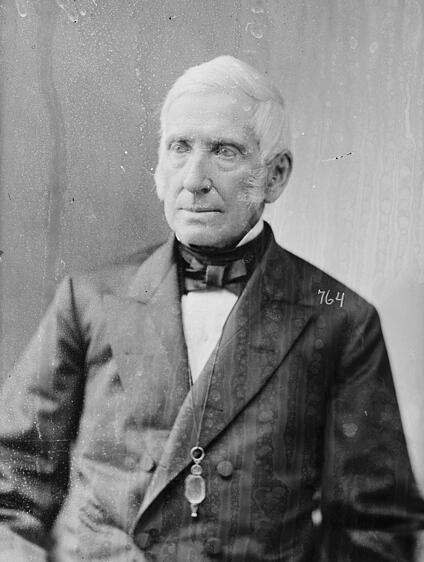
Here you will find contact information for Representative Samuel Augustus Bridges, including email address, phone number, and mailing address.
| Name | Samuel Augustus Bridges |
| Position | Representative |
| State | Pennsylvania |
| District | 10 |
| Party | Democratic |
| Status | Former Representative |
| Term Start | December 6, 1847 |
| Term End | March 3, 1879 |
| Terms Served | 3 |
| Born | January 27, 1802 |
| Gender | Male |
| Bioguide ID | B000824 |
Editorial and Source Notes
Last reviewed: January 1, 2026
We prioritize official government pages and published records. Information can change after publication.
Primary records and source links are added as they are verified.
Report a correction: see our Editorial Policy.
About Representative Samuel Augustus Bridges
Samuel Augustus Bridges (January 27, 1802 – January 14, 1884) was a Democratic member of the U.S. House of Representatives from Pennsylvania who served three nonconsecutive terms in Congress during a period of profound political and sectional change in the United States. Over the course of a long legal and political career, he represented Pennsylvania in the national legislature and was active in local public affairs in Allentown and Lehigh County.
Bridges was born in Colchester, Connecticut, on January 27, 1802. He pursued an academic course in his youth and enrolled at Williams College in Williamstown, Massachusetts. He was graduated from Williams College in 1826, receiving the classical education that was typical for aspiring professionals of his era. Following his graduation, he turned to the study of law, preparing for admission to the bar through the customary apprenticeship and independent study rather than through a formal law school, which was consistent with legal training practices in the early nineteenth century.
In 1829 Bridges was admitted to the bar and commenced the practice of law in Doylestown, Pennsylvania. The following year, in 1830, he moved to Allentown, Pennsylvania, which would remain his home for the rest of his life. In Allentown he continued the practice of law and quickly became involved in local public service. He served as town clerk from 1837 to 1842, a position that placed him at the center of municipal recordkeeping and administration during a period of growth for the community. At the same time, from 1837 to 1844, he held the office of deputy attorney general of the State for Lehigh County, Pennsylvania, acting as a local prosecuting officer and legal representative of the Commonwealth in that jurisdiction. His growing prominence in Democratic politics was reflected in his role as a delegate to the Democratic State convention in 1841.
Bridges’s congressional career began when he was elected as a Democrat to the Thirtieth Congress to fill the vacancy caused by the death of Representative John W. Hornbeck. His first term in the U.S. House of Representatives thus commenced in the late 1840s, a time marked by debates over territorial expansion and the aftermath of the Mexican–American War. Although he contributed to the legislative process as a member of the House and represented the interests of his Pennsylvania constituents, he was not a candidate for renomination in 1848 and returned to his law practice after the expiration of his term.
He reentered national politics several years later and was again elected as a Democrat to the Thirty-third Congress. Serving in the mid-1850s, he sat in the House during an era of intensifying sectional conflict over slavery and the future of the western territories. Despite his service, Bridges was an unsuccessful candidate for reelection in 1854. Following this defeat, he resumed the practice of law in Allentown, maintaining his professional standing and local influence even while out of federal office.
Bridges’s third and final period of congressional service came more than two decades after his first election. He was again elected to the U.S. House of Representatives as a Democrat, this time to the Forty-fifth Congress, serving during the late 1870s in the post–Civil War and Reconstruction era. His overall service in Congress, spanning from his initial election in the 1840s through his last term in the 1870s, placed him in the House during some of the most consequential decades in American history. Across his three terms in office, he participated in the democratic process, contributed to the legislative work of the House, and represented the interests of his Pennsylvania constituents. He was not a candidate for renomination in 1878 and once again returned to private legal practice.
In his later years, Bridges continued to practice law in Allentown, remaining a respected figure in the local bar and community. He lived there until his death on January 14, 1884. Samuel Augustus Bridges was interred in Union Cemetery in Allentown, Pennsylvania, closing a life that combined legal practice, local public service, and repeated periods of national legislative responsibility.