Representative Scott Leavitt
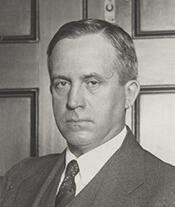
Here you will find contact information for Representative Scott Leavitt, including email address, phone number, and mailing address.
| Name | Scott Leavitt |
| Position | Representative |
| State | Montana |
| District | 2 |
| Party | Republican |
| Status | Former Representative |
| Term Start | December 3, 1923 |
| Term End | March 3, 1933 |
| Terms Served | 5 |
| Born | June 16, 1879 |
| Gender | Male |
| Bioguide ID | L000184 |
Editorial and Source Notes
Last reviewed: January 1, 2026
We prioritize official government pages and published records. Information can change after publication.
Primary records and source links are added as they are verified.
Report a correction: see our Editorial Policy.
About Representative Scott Leavitt
Scott Leavitt (June 16, 1879 – October 19, 1966) was a Republican U.S. Representative from Montana who served five consecutive terms in the United States Congress from 1923 to 1933 and became chairman of the House Committee on Indian Affairs. Over the course of his decade in the House of Representatives, he participated actively in the legislative process and represented the interests of his constituents in Montana during a significant period in American history.
Leavitt was born in Elk Rapids, Michigan, on June 16, 1879, to Roswell Leavitt and Anna C. (Lawrence) Leavitt. His father, Roswell, was an attorney and a native of Turner, Maine, who had enlisted in the 17th Maine Volunteer Infantry Regiment during the Civil War and later served in the Maine House of Representatives and as a Michigan state senator. In 1881 the family moved to Bellaire, Michigan, where Roswell Leavitt served as prosecuting attorney and circuit court commissioner. Scott Leavitt attended the public schools in Bellaire and, while still in high school, enlisted in the Thirty-third Regiment, Michigan Volunteer Infantry during the Spanish–American War. He served in the campaign at Santiago, Cuba, an experience that later connected him to veterans’ organizations and national service.
After his military service in the Spanish–American War, Leavitt attended the University of Michigan at Ann Arbor. In 1901 he moved west to Oregon, where he began homesteading in the Coast Range Mountains near Falls City. During this period he embarked on a career in education, working as a school principal in several Oregon communities, including Falls City, North Yamhill, Dayton, and Lakeview, between 1901 and 1907. In 1907 he entered the United States Forest Service as a ranger at the Fremont National Forest in Oregon, marking the beginning of a long association with federal land management. He later served in the Forest Service in Minnesota and Montana, continuing in that capacity until 1917 and gaining familiarity with the public lands and rural communities that would later form much of his congressional constituency.
Leavitt’s political career at the national level began when Montana Congressman Carl W. Riddick chose in 1922 to run for the United States Senate rather than seek re-election to the House. That year, Leavitt ran as the Republican candidate to succeed him in Montana’s 2nd congressional district. He defeated the Democratic nominee, Preston B. Moss, by a wide margin and entered the Sixty-eighth Congress on March 4, 1923. He was re-elected in 1924 by a landslide over Joseph Kirschwing, again in 1926 against Harry B. Mitchell, overwhelmingly in 1928 over B. A. Taylor, and in 1930 over former Representative Tom Stout, thus serving five consecutive terms through March 3, 1933. During these years he contributed to the legislative process on behalf of Montana and the Republican Party at a time that spanned the prosperity of the 1920s and the onset of the Great Depression.
Within the House of Representatives, Leavitt became particularly prominent in matters relating to Native American policy. From the 69th United States Congress through the 71st United States Congress, he served as chairman of the House Committee on Indian Affairs. In that capacity he was involved in oversight and legislation affecting tribal nations and federal Indian policy. On March 5, 1932, he took to the House floor to deliver a formal eulogy for Chief Plenty Coups of the Crow Nation, whom he described as having “graced the history of my state of Montana.” Leavitt characterized Plenty Coups’s life as “a symbol of the absorption of the American Indian into the citizenship of the United States” and praised him as one of the finest characters he had ever known, stating that his service was so outstanding that it was fitting for Congress to pause to do him reverence.
Leavitt sought re-election in 1932 but was defeated by Democrat Roy E. Ayers in a year marked by a national Democratic landslide that cost Republicans more than one hundred seats in the House of Representatives. Two years later, in 1934, he attempted to continue his congressional career in the United States Senate. He entered the Republican primary in the special election called to fill the seat of Senator Thomas J. Walsh, who had died in office. Leavitt won the Republican nomination, defeating former Montana Attorney General Wellington D. Rankin, but lost the general election by a wide margin to Democrat James E. Murray, reflecting the continuing strength of the Democratic Party during the New Deal era.
Following his defeat in the 1934 Senate race, Leavitt returned to his earlier profession with the United States Forest Service. He worked for the agency in Milwaukee, Wisconsin, resuming his involvement in federal land and resource management. At the same time, his earlier military service in the Spanish–American War led to leadership within veterans’ organizations, and from 1936 to 1937 he served as Commander-in-Chief of the United Spanish War Veterans, representing and advocating for those who had served in that conflict. He retired from the Forest Service in 1941 and subsequently moved to Newberg, Oregon.
In retirement, Leavitt remained a respected figure in his community and among former colleagues in both public service and veterans’ circles. He lived in Newberg, Oregon, until his death there on October 19, 1966. He was interred with military honors in Willamette National Cemetery near Portland, Oregon, reflecting both his congressional service and his status as a veteran. In recognition of his contributions as a congressman and forest ranger, Scott Leavitt Park in Newberg was named in his honor, commemorating his long career in public life and his service to Montana and the nation.