Senator Scott Wike Lucas
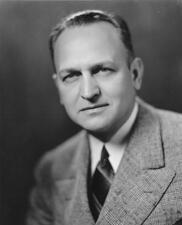
Here you will find contact information for Senator Scott Wike Lucas, including email address, phone number, and mailing address.
| Name | Scott Wike Lucas |
| Position | Senator |
| State | Illinois |
| Party | Democratic |
| Status | Former Representative |
| Term Start | January 3, 1935 |
| Term End | January 3, 1951 |
| Terms Served | 4 |
| Born | February 19, 1892 |
| Gender | Male |
| Bioguide ID | L000493 |
Editorial and Source Notes
Last reviewed: January 1, 2026
We prioritize official government pages and published records. Information can change after publication.
Primary records and source links are added as they are verified.
Report a correction: see our Editorial Policy.
About Senator Scott Wike Lucas
Scott Wike Lucas (February 19, 1892 – February 22, 1968) was an American attorney and Democratic politician who represented Illinois in the U.S. House of Representatives from 1935 to 1939 and in the U.S. Senate from 1939 to 1951. Over four terms in Congress—one in the House and two in the Senate—he played a significant role in national legislative affairs and served as Senate Majority Leader from 1949 to 1951. His congressional service spanned the New Deal, World War II, and the early Cold War, during which he participated actively in the democratic process and represented the interests of his Illinois constituents.
Lucas was born on a tenant farm near Chandlerville in Cass County, Illinois, the youngest of six children of William Douglas Lucas and Sarah Catherine (née Underbrink) Lucas. His parents named him after Scott Wike, a Democrat who had represented Illinois in the U.S. House of Representatives from 1875 to 1877 and again from 1889 to 1893. Raised in rural Illinois, Lucas attended local public schools before pursuing higher education. His family background and the example of his namesake helped shape his early interest in public service and Democratic Party politics.
After completing his public schooling, Lucas enrolled at Illinois Wesleyan University, where he studied law and was notably active in athletics. He lettered in football, basketball, and baseball, and during summer breaks he played semiprofessional baseball in the Three-I League. Lucas graduated from Illinois Wesleyan with a law degree in 1914 and was admitted to the bar in 1915. Before entering full-time legal practice, he worked as a schoolteacher, then established a private law practice in Havana, Illinois. During World War I, he served in the United States Army, rising to the rank of lieutenant, and returned to Havana after the war to resume his legal career. His nephew, Allen T. Lucas, later practiced law with him and went on to serve in the Illinois General Assembly.
Lucas’s early public career developed at the local and state levels. From 1920 to 1925 he served as state’s attorney for Mason County, Illinois, building a reputation as a capable prosecutor. He was also active in veterans’ affairs, serving as a commander of the Illinois Department of the American Legion. In 1932 he sought higher office, running for the Democratic nomination for a U.S. Senate seat from Illinois, but was defeated in the primary by William H. Dieterich, who went on to challenge Republican incumbent Otis F. Glenn. Despite this setback, Lucas remained an influential figure in state politics. Governor Henry Horner appointed him chairman of the Illinois State Tax Commission, a position he held from 1933 to 1935, where he gained further experience in public finance and administration.
Lucas entered national office in 1934, following the death of Speaker of the House Henry Thomas Rainey. He was elected as a Democrat to the U.S. House of Representatives from Illinois’s 20th congressional district and served from 1935 to 1939. In the House, he quickly established himself as a strong supporter of President Franklin D. Roosevelt’s New Deal. He worked for the passage of key agricultural and economic measures, including the Soil Conservation and Domestic Allotment Act of 1936 and the Agricultural Adjustment Act of 1938, which were particularly important to his largely rural constituency. Although generally aligned with Roosevelt, Lucas broke with the president over the 1937 proposal to expand the Supreme Court, denouncing the court-packing plan as “useless, selfish, and futile,” a stance that demonstrated his independence within the Democratic ranks.
In 1938, after William Dieterich declined to seek re-election, Lucas ran for the U.S. Senate and won, defeating Republican Richard J. Lyons by a margin of 51 percent to 48 percent. He took office in 1939 and was re-elected in 1944. As a senator, Lucas focused on civil rights, labor, foreign policy, and agriculture. He supported anti-lynching legislation, opposed the poll tax, and advocated desegregation measures. He played a major role in the passage of the Fair Labor Standards Act of 1938, which established a federal minimum wage, set maximum hours, and required overtime pay under specified conditions. Lucas backed Roosevelt’s principal foreign policy initiatives, including the Lend-Lease Act of 1941, providing military aid to Allied nations, and he supported the creation of the United Nations. He remained a strong proponent of New Deal farm programs, especially the Agricultural Adjustment Act of 1938, which enjoyed broad support among farmers in Illinois.
Lucas’s prominence within the Democratic Party grew during the 1940s. At the 1944 Democratic National Convention, he was a “favorite son” candidate and one of twelve individuals formally placed in nomination for the vice presidency as Franklin D. Roosevelt’s running mate. In 1946, with the support of Senator Harry S. Truman, he was elected Democratic whip in the Senate. A political moderate, Lucas drew support from both the conservative and liberal wings of his party. During the 1948 presidential campaign, he assumed responsibility for directing President Truman’s Midwest campaign and was widely credited with helping secure Truman’s upset victory and contributing to the election of nine additional Democratic senators. When Senator Alben W. Barkley became vice president in 1949 and vacated his Senate leadership post, Lucas was chosen by his colleagues to serve as Senate Majority Leader. In that role, he worked to advance President Truman’s domestic Fair Deal proposals and to support the administration’s foreign policy agenda in the early Cold War.
As Senate Majority Leader from 1949 to 1951, Lucas faced the emerging anticommunist climate and growing partisan tensions. His leadership coincided with the onset of the McCarthy era, which complicated efforts to build bipartisan consensus. By 1950, he had become a central target of Republican criticism, particularly as the GOP sought to regain power after years of Democratic control of both Congress and the White House. In his 1950 re-election campaign, Lucas faced Republican Representative Everett M. Dirksen. Wisconsin Senator Joseph McCarthy campaigned actively in Illinois on Dirksen’s behalf, accusing Lucas of being “soft on communism.” Burdened by the demands of his national leadership responsibilities, Lucas was frequently away from Illinois, while Dirksen was able to campaign intensively across the state, often debating Lucas’s surrogates and emphasizing the majority leader’s absence. In the general election, Dirksen defeated Lucas by a decisive margin of 54 percent to 46 percent. Dirksen later privately attributed his victory in part to Lucas’s preoccupation with Senate leadership duties at the expense of local campaigning.
After leaving the Senate in January 1951, Lucas returned to the practice of law and remained engaged in public affairs, drawing on his extensive legislative experience and national contacts. He continued to be recognized as a significant figure in mid-twentieth-century Democratic politics, particularly for his role in advancing New Deal and Fair Deal legislation and for his leadership during a turbulent period in Congress. Scott Wike Lucas died on February 22, 1968, three days after his seventy-sixth birthday. His career, spanning local prosecution, state administration, and sixteen years in Congress, reflected both the opportunities and the challenges of Democratic leadership in an era marked by economic crisis, global war, and the early Cold War.