Representative Sherwood Boehlert
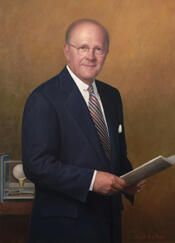
Here you will find contact information for Representative Sherwood Boehlert, including email address, phone number, and mailing address.
| Name | Sherwood Boehlert |
| Position | Representative |
| State | New York |
| District | 24 |
| Party | Republican |
| Status | Former Representative |
| Term Start | January 3, 1983 |
| Term End | January 3, 2007 |
| Terms Served | 12 |
| Born | September 28, 1936 |
| Gender | Male |
| Bioguide ID | B000586 |
Editorial and Source Notes
Last reviewed: February 17, 2026
We prioritize official government pages and published records. Information can change after publication.
Primary records and source links are added as they are verified.
Report a correction: see our Editorial Policy.
About Representative Sherwood Boehlert
Sherwood Louis Boehlert (September 28, 1936 – September 20, 2021) was an American politician from New York who served as a Republican member of the United States House of Representatives from 1983 to 2007. Over 12 consecutive terms in Congress, he represented a large swath of central New York and became known nationally as a leading moderate Republican and a prominent voice on environmental and science policy. His congressional service occurred during a significant period in American history, and he consistently emphasized bipartisan cooperation and pragmatic problem-solving while representing the interests of his constituents.
Boehlert was born in Utica, New York, on September 28, 1936. He grew up in the Mohawk Valley region, an area whose industrial base and small cities would later shape his legislative priorities in transportation, economic development, and scientific research. Details of his early schooling and family life are less widely documented in public sources, but his formative years in central New York rooted him deeply in the communities he would later represent in Congress.
Before entering Congress, Boehlert pursued a career in public service and politics in New York. He worked on the staff of Representative Alexander Pirnie of New York and later served as chief of staff to Representative Donald J. Mitchell, gaining extensive experience in legislative procedure, constituent service, and federal policy. He also served in local and regional roles that connected him closely to issues of transportation, infrastructure, and economic revitalization in upstate New York. This early career in congressional offices and regional affairs provided him with a detailed understanding of both the workings of the House of Representatives and the needs of central New York communities.
Boehlert was elected to the U.S. House of Representatives in 1982 and took office in January 1983, beginning a congressional career that would span 24 years. A member of the Republican Party, he quickly established himself as part of the party’s moderate wing, often working across the aisle on complex national issues. He participated actively in the legislative process, serving on key committees and subcommittees and building a reputation as a diligent, policy-focused lawmaker. Over the course of his 12 terms, he became recognized as one of the House’s most effective members, with Congressional Quarterly naming him among the 50 most effective Members of Congress and Time magazine identifying him as a “power center” on Capitol Hill.
Boehlert is best known for his work on environmental policy. Beginning in the 1980s with the national debate over acid rain, he emerged as a leading Republican advocate for environmental protection. He was a major contributor to the acid rain provisions of the Clean Air Act Amendments of 1990, helping to craft market-based mechanisms to reduce sulfur dioxide emissions and address cross-border pollution affecting the Northeast. He continually pushed to increase Corporate Average Fuel Economy (CAFE) standards for light trucks and automobiles and served as the lead Republican sponsor of numerous CAFE amendments, often putting him at odds with his party’s leadership. Because of his persistent efforts on environmental legislation, National Journal dubbed him the “Green Hornet” and listed him among a dozen “key players” in the House of Representatives. He was also active in national moderate Republican organizations, including the Republican Main Street Partnership and the Ripon Society, reflecting his centrist approach to governance.
In addition to his environmental work, Boehlert played a central role in shaping federal science and technology policy. He served on the House Science Committee for many years and was Chairman of the committee from 2001 to 2006. In that capacity, he championed increased investments in the National Science Foundation, science and mathematics education programs, and the Department of Energy’s Office of Science. Following the September 11, 2001 terrorist attacks and the subsequent anthrax incidents, he led efforts to strengthen the nation’s scientific and technological capacity to respond to new security threats. He crafted legislation establishing a Science and Technology Directorate within the newly created Department of Homeland Security, designed to oversee the development of technologies to secure the United States against terrorist attacks. The homeland security science and technology bill reported out of the Science Committee under his leadership was ultimately accepted by congressional leaders and President George W. Bush and enacted as part of the Homeland Security Act of 2002. He was also among the first members of Congress to call for a comprehensive competitiveness agenda, helping to spur the National Academy of Sciences report “Rising Above the Gathering Storm” on maintaining U.S. leadership in science and engineering and contributing to the development of the American Competitiveness Initiative announced by President Bush in 2006.
Boehlert’s legislative interests extended to public safety and first responders. He was an active promoter of legislation to support firefighters and emergency personnel and was an original member and later Chairman of the Congressional Fire Services Caucus. In this role, he advocated for improved training, equipment, and federal support for volunteer and professional fire services, reflecting both his concern for homeland security and his longstanding ties to local communities. His work on transportation and infrastructure also left a visible mark in his district. Several important landmarks in central New York were named in his honor, including the renovated Union Station in Utica and new science facilities at the Air Force Research Laboratory’s Information Directorate in Rome, New York, underscoring his contributions to regional development and federal investment in research.
On March 17, 2006, Boehlert announced at a press conference that he would not seek a thirteenth term in office, bringing his congressional career to a close at the end of the 109th Congress in January 2007. His decision marked the end of more than two decades of service in the House of Representatives, during which he had become one of the most prominent moderate Republicans in Congress and a leading advocate for environmental protection, scientific research, and bipartisan policymaking. Sherwood Louis Boehlert died on September 20, 2021, just days before his eighty-fifth birthday, leaving a legacy as a central New York representative whose influence extended across national environmental, science, and security policy.