Representative Standish Thompson
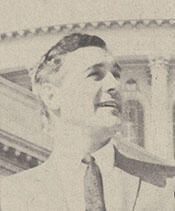
Here you will find contact information for Representative Standish Thompson, including email address, phone number, and mailing address.
| Name | Standish Thompson |
| Position | Representative |
| State | Georgia |
| District | 5 |
| Party | Republican |
| Status | Former Representative |
| Term Start | January 10, 1967 |
| Term End | January 3, 1973 |
| Terms Served | 3 |
| Born | February 5, 1925 |
| Gender | Male |
| Bioguide ID | T000217 |
Editorial and Source Notes
Last reviewed: February 17, 2026
We prioritize official government pages and published records. Information can change after publication.
Primary records and source links are added as they are verified.
Report a correction: see our Editorial Policy.
About Representative Standish Thompson
Standish Fletcher Thompson (February 5, 1925 – September 13, 2022) was an American lawyer, World War II veteran, and Republican politician who served as a member of the United States House of Representatives from 1967 to 1973, representing Georgia’s 5th Congressional District. A member of the Republican Party, he contributed to the legislative process during three terms in office and became the first Republican since the Reconstruction era to represent Atlanta and the 5th District in Congress.
Thompson was born near Atlanta in College Park, Fulton County, Georgia. He grew up in the Atlanta area and graduated from Russell High School in East Point, Georgia. During his time at Russell High School, he demonstrated early leadership and an interest in aviation by serving as president of the Model Airplane Club. His youth in metropolitan Atlanta would later shape his political focus on regional transportation and urban issues.
During World War II, Thompson entered military service and completed Basic Training with the 90th Infantry Division before being transferred to the Aviation Cadet Training Program in Wichita Falls, Texas. He qualified both as a pilot and as a navigator, but a growing need for Army Air Corps navigators led to his assignment as a navigator with the 6th Emergency Air-Sea Rescue Squadron. Over the course of his wartime service in the Asiatic–Pacific theater, he earned seven service stars along with the Asiatic–Pacific Campaign Medal. After demobilization, he attended Emory University, a Methodist-affiliated institution in Atlanta, from which he graduated in 1949. During the Korean War, he re-enlisted in the United States Air Force, this time serving as a pilot, further deepening his experience in aviation and military service.
Following his return from South Korea, Thompson pursued legal studies and graduated in 1957 from the Woodrow Wilson College of Law in Atlanta, an institution that has since closed. He was admitted to the Georgia bar in 1958 and established a law firm in East Point, Georgia, building a practice that anchored his professional life for decades. In addition to his legal work, he served as president of an aviation insurance firm, combining his legal training with his extensive aviation background. These professional roles positioned him as a prominent figure in both the legal and business communities of the Atlanta metropolitan area.
Thompson entered elective politics amid the shifting partisan landscape of the 1960s South. In the general election of November 3, 1964, the same election in which Republican presidential nominee Barry M. Goldwater of Arizona became the first Republican to win Georgia’s electoral votes, Thompson was elected to the Georgia State Senate. He defeated senior Democratic State Senator Charlie Brown in District 34 and became one of only four Republican members of the upper chamber of the Georgia legislature at that time. Despite the overwhelming Democratic majority, he was selected by Democratic leaders to represent Fulton County in the drafting and sponsorship of the Metropolitan Rapid Transit Authority Act, a foundational measure for what became the Atlanta-area rapid transit system, reflecting his early engagement with regional transportation policy.
In 1966, Thompson ran for the U.S. House of Representatives from Georgia’s 5th Congressional District. The Democratic Executive Committee selected Archie Lindsey, then chairman of the Fulton County Commission, as his opponent, but Lindsey had only three weeks to mount a campaign. Thompson prevailed decisively, winning 55,423 votes (60.1 percent) to Lindsey’s 36,751 (39.9 percent), and notably receiving about 30 percent of the Black vote. He thus became the first Republican since Reconstruction to represent Atlanta and the 5th District in the U.S. House. Thompson was re-elected in 1968 and 1970, serving three consecutive terms from 1967 to 1973. His service in Congress occurred during a significant period in American history, marked by the civil rights movement, the Vietnam War, and major social and political realignments. As a member of the House of Representatives, he participated in the democratic process and represented the interests of his constituents in metropolitan Atlanta. On civil rights legislation, he voted for the initial House resolution of the Civil Rights Act of 1968 but opposed the final Senate amendments to the Act. In 1968, he was the only Southern congressman to attend the funeral of Martin Luther King Jr. in Atlanta, an act of respect that drew backlash from some of his constituents but underscored his willingness to cross regional and partisan lines on matters of national importance.
In 1972, rather than seek another House term, Thompson ran for the United States Senate from Georgia. The Democratic primary produced Sam Nunn as the nominee after Nunn defeated incumbent Senator David H. Gambrell, who had been appointed by Governor Jimmy Carter to succeed the late Senator Richard B. Russell Jr. In the general election, Thompson lost to Nunn, receiving 362,501 votes (46.5 percent) to Nunn’s 404,890 (52 percent). After this defeat, Thompson’s tenure in Congress ended in January 1973, and in the subsequent 1972 election under revised district lines, civil rights leader Andrew Young was elected to succeed him in representing Georgia’s 5th Congressional District.
After leaving the U.S. House of Representatives, Thompson returned to his law firm in the Atlanta area and resumed his legal practice. He remained active in regional affairs and, in 1985, was appointed a member of the Atlanta Regional Commission, where he contributed to long-range planning and policy discussions affecting metropolitan Atlanta. Later in life, he maintained close ties to the veteran community. From 2009 until 2011, he served as Commander of the Atlanta World War II Roundtable, an organization founded in 1986 to hear and record the experiences of World War II veterans and to preserve for posterity the knowledge of the war and the human and material costs borne by the United States and its allies in the defense of freedom.
Thompson’s personal life was closely tied to Georgia and to his wartime generation. In 1946 he married Kathryn Cochran, with whom he had two children, Charles and Deborah. Their marriage endured for more than seven decades until her death in early 2022, seven months before his own. Standish Fletcher Thompson died on September 13, 2022, at the age of 97, closing a life that spanned service in two wars, a legal and business career, and a consequential role in the political transformation of Georgia and the American South.