Representative Thomas Dunn English
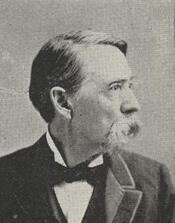
Here you will find contact information for Representative Thomas Dunn English, including email address, phone number, and mailing address.
| Name | Thomas Dunn English |
| Position | Representative |
| State | New Jersey |
| District | 6 |
| Party | Democratic |
| Status | Former Representative |
| Term Start | December 7, 1891 |
| Term End | March 3, 1895 |
| Terms Served | 2 |
| Born | June 29, 1819 |
| Gender | Male |
| Bioguide ID | E000188 |
Editorial and Source Notes
Last reviewed: January 1, 2026
We prioritize official government pages and published records. Information can change after publication.
Primary records and source links are added as they are verified.
Report a correction: see our Editorial Policy.
About Representative Thomas Dunn English
Thomas Dunn English (June 29, 1819 – April 1, 1902) was an American Democratic Party politician, physician, lawyer, journalist, and author from New Jersey who represented the state’s 6th congressional district in the United States House of Representatives from March 4, 1891, to March 3, 1895. A member of the Democratic Party, he served two terms in Congress and chaired the House Committee on Alcoholic Liquor Traffic during the Fifty-third Congress. In addition to his political career, he achieved national prominence as a poet and songwriter, most notably for the ballad “Ben Bolt,” and was long remembered for his bitter and widely publicized feud with Edgar Allan Poe. Along with Waitman T. Barbe and Danske Dandridge, English was regarded as a major West Virginia poet of the mid-nineteenth century.
English was born in Philadelphia, Pennsylvania, on June 29, 1819. He attended the Friends Academy in Burlington, New Jersey, receiving a Quaker-influenced education that preceded his professional training. He then enrolled at the University of Pennsylvania School of Medicine, from which he graduated in 1839. His medical graduation thesis was on the then-fashionable subject of phrenology, reflecting contemporary scientific and pseudoscientific interests. After completing his medical studies, English broadened his professional qualifications by studying law, and he was admitted to the Philadelphia bar in 1842, establishing himself as both a physician and an attorney early in adult life.
Even as he trained for the professions of medicine and law, English developed a parallel career as a writer and journalist. By the early 1840s his literary work was already well underway. He wrote scores of poems, plays, stories, and novels, but his reputation as a writer rested chiefly on the ballad “Ben Bolt,” first published in 1843 in Nathaniel Parker Willis’s New-York Mirror. The piece was soon set to music and became immensely popular, inspiring the naming of a ship, a steamboat, and a racehorse in its honor; its cultural resonance endured into the twentieth century, when American opera singer Eleonora de Cisneros recorded it on an Edison Blue Amberol cylinder in 1912. English’s other notable works included the temperance novel “Walter Woolfe, or the Doom of the Drinker” (1842), the political romance “MDCCCXLII. or the Power of the S. F.” (1846), and later “Gasology: A Satire” (1877). He was the founding editor of the monthly journal The Aristidean in New York, which issued its first number in February 1845, and he subsequently edited several other periodicals, including the humorous magazine The John Donkey, American Review: A Whig Journal, Sartain’s Magazine, and later The Old Guard. In 1858 he was a founding member of the American Numismatic Society, reflecting his broader intellectual and antiquarian interests.
English’s literary life became inextricably linked with that of Edgar Allan Poe through a friendship that deteriorated into one of the most notorious feuds in nineteenth-century American letters. Initially on cordial terms, the two became embroiled in the public scandal involving Poe and the writers Frances Sargent Osgood and Elizabeth F. Ellet. After rumors arose that Ellet’s letters to Poe contained indiscreet material, Ellet’s brother confronted Poe, who in turn asked English for a pistol to defend himself. English doubted Poe’s account and urged him to end the controversy by retracting what he called “unfounded charges” against Ellet. The dispute escalated into a physical altercation in which Poe reportedly pushed English, and English’s ring cut Poe’s face. Poe later claimed he had given English “a flogging which he will remember to the day of his death,” a characterization English denied; in any event, the incident ended their friendship and fueled further gossip. Poe then attacked English’s abilities in his “Literati of New York” series in Godey’s Lady’s Book, dismissing him as “a man without the commonest school education” and ridiculing his work on The Aristidean. English retaliated in print, and one of his letters, published in the New York Mirror on July 23, 1846, led Poe to sue the paper’s editors for libel; Poe prevailed and was awarded damages and court costs. That same year English published the novel “1844, or, The Power of the S.F.,” a work about secret societies and revenge that included a thinly veiled caricature of Poe as Marmaduke Hammerhead, author of “The Black Crow,” who repeats phrases such as “Nevermore” and “lost Lenore” and is depicted as a drunkard, liar, and domestic abuser. Poe’s tale “The Cask of Amontillado” is widely regarded as a literary response to English’s novel, and his story “Hop-Frog” may also allude to their conflict. Decades later, when English edited The Old Guard in 1870, he continued to engage the controversy by publishing an anti-Poe article and another defending Poe’s detractor Rufus Wilmot Griswold.
English’s first significant foray into politics came as an advocate of the annexation of Texas in the 1840s, aligning him with expansionist currents in American public life. In 1852 he moved to what is now Logan, West Virginia, where he continued to write and gained recognition as a regional poet. He relocated to New York City in 1857 and then, in 1858, settled in Newark, New Jersey, which became his long-term home and political base. His public service in New Jersey began with his election to the New Jersey General Assembly, where he served in 1863 and 1864 during the Civil War, participating in state legislative deliberations at a time of national crisis. Throughout these years he maintained his literary and journalistic activities, contributing to the cultural as well as political life of his adopted state.
English was elected as a Democrat to the Fifty-second and Fifty-third Congresses, representing New Jersey’s 6th congressional district in the United States House of Representatives from March 4, 1891, to March 3, 1895. His service in Congress occurred during a significant period in American history marked by industrial expansion, labor unrest, and debates over monetary policy and regulation. As a member of the House of Representatives, he participated in the legislative process and represented the interests of his New Jersey constituents. During the Fifty-third Congress he served as chairman of the Committee on Alcoholic Liquor Traffic, a position that reflected both his long-standing interest in temperance issues, evident from his earlier novel “Walter Woolfe, or the Doom of the Drinker,” and broader national concerns about the regulation of alcohol. He was an unsuccessful candidate for reelection in 1894 to the Fifty-fourth Congress, thereby concluding his formal congressional career after two terms in office.
After leaving Congress, English returned to Newark and resumed his literary pursuits. He continued to write prose and verse and to reflect on his long involvement in American letters. In 1896 he published “Reminiscences of Poe,” a work that revisited his earlier association and conflict with Edgar Allan Poe. While the volume hinted at various scandals without extensive detail, English notably defended Poe against persistent allegations of drug use, asserting that, as both a physician and an observant acquaintance who had seen Poe frequently before 1846, he had never observed signs of an opium habit and believed such charges to be “a baseless slander.” His later years were thus marked by a combination of literary production, retrospective commentary on his contemporaries, and continued residence in Newark.
Thomas Dunn English died in Newark, New Jersey, on April 1, 1902. He was interred in Fairmount Cemetery in Newark, where his monument commemorates him as the “Author of Ben Bolt,” underscoring the enduring association of his name with the celebrated ballad that secured his place in American popular culture. His multifaceted career—as physician, lawyer, journalist, editor, poet, novelist, songwriter, and public official—left a distinctive imprint on nineteenth-century American political and literary history.