Representative Thomas Albert Jenkins
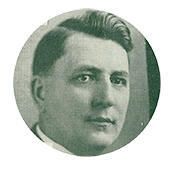
Here you will find contact information for Representative Thomas Albert Jenkins, including email address, phone number, and mailing address.
| Name | Thomas Albert Jenkins |
| Position | Representative |
| State | Ohio |
| District | 10 |
| Party | Republican |
| Status | Former Representative |
| Term Start | December 7, 1925 |
| Term End | January 3, 1959 |
| Terms Served | 17 |
| Born | October 28, 1880 |
| Gender | Male |
| Bioguide ID | J000088 |
Editorial and Source Notes
Last reviewed: January 1, 2026
We prioritize official government pages and published records. Information can change after publication.
Primary records and source links are added as they are verified.
Report a correction: see our Editorial Policy.
About Representative Thomas Albert Jenkins
Thomas Albert Jenkins (October 28, 1880 – December 21, 1959) was an American lawyer, state legislator, and long-serving Republican member of the United States House of Representatives from Ohio’s 10th Congressional District, serving seventeen consecutive terms from 1925 to 1959. He was born in Oak Hill, Jackson County, Ohio, where he spent his early years before embarking on a career in law and public service that would span more than four decades.
Jenkins received his early education in his native region and graduated from Providence College in Oak Hill, Ohio, in 1901. He subsequently pursued legal studies at Ohio State University in Columbus, earning his law degree in 1907. That same year he was admitted to the bar and commenced the practice of law in Ironton, Lawrence County, Ohio. His legal training and early professional experience in Ironton provided the foundation for his entry into public office and his later prominence in state and national politics.
Jenkins first held elective office at the county level. From 1916 to 1920 he served as prosecuting attorney of Lawrence County, Ohio, gaining recognition as a capable lawyer and public official. His work as prosecutor brought him into closer contact with the Republican Party organization in the state, and he soon advanced to legislative service. He was elected to the Ohio State Senate, serving in 1923 and 1924. During this period he also participated actively in party affairs, serving as a delegate to the Republican State convention in 1920 and again in 1924, which helped establish his reputation within the party and positioned him for national office.
In 1924, Jenkins was elected as a Republican to the Sixty-ninth Congress and took his seat in the U.S. House of Representatives on March 4, 1925. He was subsequently reelected to the sixteen succeeding Congresses, serving continuously until January 3, 1959. Representing Ohio’s 10th District, he contributed to the legislative process over seventeen terms in office, participating in debates and votes during a period that encompassed the late 1920s, the Great Depression, World War II, the early Cold War, and the beginnings of the modern civil rights era. As a member of the House of Representatives, he took part in the democratic process and represented the interests of his constituents in southern Ohio.
Jenkins’s congressional service occurred during a particularly significant period in American and world history, and he became especially noted for his foreign policy views in the years leading up to and during World War II. After the Dunkirk evacuation and during the Battle of Britain, he spoke out forcefully in favor of providing aid to the United Kingdom and campaigned against isolationism at a time when many Americans were reluctant to become involved in European conflicts. His outspoken support for Britain was so pronounced that in the 1940 election his opponent, isolationist Democrat John P. Kelso, derided him as the “Congressman from London.” Jenkins replied by calling Kelso a “craven stooge for Herr Hitler,” underscoring the intensity of the foreign policy debate of the era. In March 1941, when newsreels in the United States reported on the British commando raid on Norway known as Operation Claymore, Jenkins publicly cited the operation as evidence that Britain could prevail against Nazi Germany if given sufficient American assistance.
During his long tenure in Congress, Jenkins also played a role in shaping postwar policy. In 1947 he served on the Herter Committee, a special House committee chaired by Representative Christian Herter that studied conditions in Europe and helped lay the groundwork for the Marshall Plan and broader U.S. engagement in European recovery after World War II. He was a delegate from Ohio to the Republican National Conventions in 1940 and 1944, participating in the nomination of the party’s presidential candidates and contributing to the formulation of national Republican platforms. On domestic issues, he aligned with key civil rights legislation of the 1950s, voting in favor of the Civil Rights Act of 1957, the first major federal civil rights law enacted since Reconstruction.
After more than three decades in the House, Jenkins chose not to be a candidate for renomination in 1958, bringing his congressional career to a close at the end of the Eighty-fifth Congress on January 3, 1959. His retirement marked the conclusion of one of the longer continuous tenures in the House from Ohio during the twentieth century. He returned to private life in Ohio following his departure from Congress.
Thomas Albert Jenkins died on December 21, 1959. He was interred at Woodland Cemetery in Ironton, Ohio, the community where he had begun his legal career more than half a century earlier. His life and career reflected sustained service at the county, state, and national levels, and his seventeen terms in the U.S. House of Representatives placed him among the more enduring congressional figures of his generation from Ohio.