Representative Thomas Baldwin Peddie
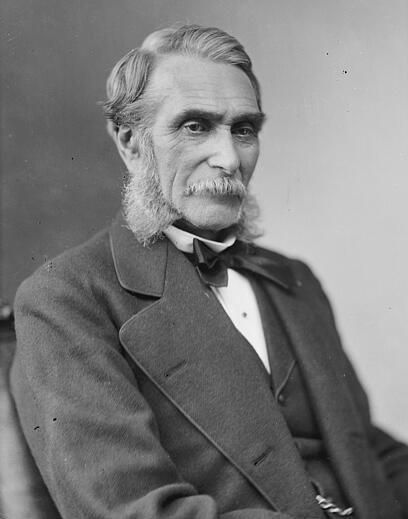
Here you will find contact information for Representative Thomas Baldwin Peddie, including email address, phone number, and mailing address.
| Name | Thomas Baldwin Peddie |
| Position | Representative |
| State | New Jersey |
| District | 6 |
| Party | Republican |
| Status | Former Representative |
| Term Start | October 15, 1877 |
| Term End | March 3, 1879 |
| Terms Served | 1 |
| Born | February 11, 1808 |
| Gender | Male |
| Bioguide ID | P000181 |
Editorial and Source Notes
Last reviewed: January 1, 2026
We prioritize official government pages and published records. Information can change after publication.
Primary records and source links are added as they are verified.
Report a correction: see our Editorial Policy.
About Representative Thomas Baldwin Peddie
Thomas Baldwin Peddie (February 11, 1808 – February 16, 1889) was an American Republican politician and businessman who represented New Jersey’s 6th congressional district in the United States House of Representatives from 1877 to 1879. He served one term in Congress as a member of the Republican Party, contributing to the legislative process during a significant period in American history and representing the interests of his New Jersey constituents. Before his service in the national legislature, he held important offices in state and local government, including membership in the New Jersey General Assembly from 1864 to 1865 and the mayoralty of Newark, New Jersey, from 1866 to 1869.
Peddie was born on February 11, 1808, in Edinburgh, Scotland. He grew up in modest circumstances and was apprenticed as a trunk maker, learning a trade that would later form the basis of his business career. As a young man he emigrated to the United States, arriving in Newark, New Jersey, where he initially worked as a journeyman in his craft. He came to the city, as he later described it, “a poor young man,” and his early years in Newark were marked by hard work and gradual advancement in his chosen line of business.
Through industry and careful management, Peddie established his own trunk and leather goods manufacturing enterprise in Newark. Over time, his business prospered and expanded, and he became one of the city’s leading manufacturers. His success in commerce brought him both financial security and prominence in the community. Reflecting on his rise, he noted that “everything I’ve touched has seemed to prosper,” and he attributed this prosperity not merely to his own efforts but to what he regarded as divine favor. He developed a reputation as a civic-minded businessman and was widely respected for his integrity and public spirit.
Peddie’s religious life was closely tied to the First Baptist Church of Newark, where he was a devoted member for many years. He credited his “religious convictions to the fellowship” he enjoyed in that congregation and believed that his material success had come to him from God. In an expression of this faith, he undertook the building of a church as an act of thanksgiving, explaining that he was “building this church simply to express my gratitude to God.” Although he preferred that his name not be emphasized in connection with this gift, the project reflected his deep personal piety and his desire to contribute tangibly to the religious life of his community.
Peddie’s standing as a successful manufacturer and respected community leader led naturally to involvement in public affairs. He entered state politics as a member of the New Jersey General Assembly, serving from 1864 to 1865 during the closing years of the Civil War. In the legislature he aligned with the Republican Party, which at that time was leading the Union war effort and shaping the early contours of Reconstruction policy. His legislative service helped establish his credentials as a capable public servant and broadened his influence beyond the business community of Newark.
In 1866 Peddie was elected Mayor of Newark, serving in that office from 1866 to 1869. His mayoralty coincided with the immediate post–Civil War period, a time of economic adjustment and urban growth. As mayor, he oversaw municipal affairs in a rapidly developing industrial city, addressing issues of infrastructure, public order, and civic improvement. His administration reflected the same practical, orderly approach that had characterized his business career, and his leadership further solidified his reputation as one of Newark’s foremost citizens.
Building on his local and state experience, Peddie was elected as a Republican to the United States House of Representatives, representing New Jersey’s 6th congressional district in the Forty-fifth Congress. He served from 1877 to 1879, a single term that fell in the aftermath of Reconstruction and during a period of significant national debate over economic policy, civil service, and the role of the federal government. As a member of the House of Representatives, he participated in the democratic process at the national level and worked to represent the interests of his New Jersey constituents, bringing to Congress the perspective of a self-made industrialist and experienced municipal leader.
After leaving Congress in 1879, Peddie returned to private life in Newark. He remained a figure of considerable stature in the city, known for his long record of public service, his contributions to local industry, and his philanthropic and religious commitments. He continued to be associated with the First Baptist Church and with various civic endeavors, embodying the values of diligence, faith, and public responsibility that had marked his entire career. Thomas Baldwin Peddie died in Newark on February 16, 1889, five days after his eighty-first birthday, leaving a legacy as a prominent businessman, dedicated churchman, and influential Republican officeholder in New Jersey’s political history.