Representative Vespasian Warner
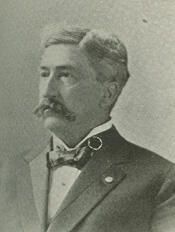
Here you will find contact information for Representative Vespasian Warner, including email address, phone number, and mailing address.
| Name | Vespasian Warner |
| Position | Representative |
| State | Illinois |
| District | 19 |
| Party | Republican |
| Status | Former Representative |
| Term Start | December 2, 1895 |
| Term End | March 3, 1905 |
| Terms Served | 5 |
| Born | April 23, 1842 |
| Gender | Male |
| Bioguide ID | W000158 |
Editorial and Source Notes
Last reviewed: January 1, 2026
We prioritize official government pages and published records. Information can change after publication.
Primary records and source links are added as they are verified.
Report a correction: see our Editorial Policy.
About Representative Vespasian Warner
Vespasian Warner (April 23, 1842 – March 31, 1925) was a U.S. Representative from Illinois and a member of the Republican Party who served five consecutive terms in Congress from 1895 to 1905. He was born in Mount Pleasant (now Farmer City), De Witt County, Illinois, and in 1843 moved with his parents to Clinton, Illinois, which remained his principal home for the rest of his life.
Warner attended the public schools in Clinton and later pursued higher education at Lombard College in Galesburg, Illinois. He subsequently studied law in Clinton, laying the foundation for a legal career that would follow his military service. With the outbreak of the Civil War, he enlisted as a private in Company E, 12th Regiment, Illinois Volunteer Infantry on June 13, 1861. He advanced rapidly through the ranks, being promoted to sergeant on June 23, 1861, to second lieutenant on February 4, 1862, and to captain and commissary of subsistence on February 10, 1865. In recognition of his service, he was brevetted major on March 13, 1865, and was mustered out of the Army on July 13, 1866.
After leaving military service, Warner continued his education in law at the national level. He enrolled in the law department of Harvard University and graduated in 1868. That same year he returned to Clinton, Illinois, where he was admitted to the bar and commenced the practice of law. He entered into partnership with his father-in-law, Clifton H. Moore, a prominent local attorney and noted book collector. Through this partnership, Warner became firmly established in the legal and civic life of his community.
Warner’s public career reached its height in the national legislature. A Republican, he was elected to the Fifty-fourth Congress and to the four succeeding Congresses, serving in the U.S. House of Representatives from March 4, 1895, to March 3, 1905, as a Representative from Illinois. His decade in Congress coincided with a significant period in American history marked by industrial expansion, the Spanish–American War, and the early stirrings of the Progressive Era. As a member of the House of Representatives, he participated in the legislative process and represented the interests of his Illinois constituents. During his tenure, he served as chairman of the Committee on Revision of the Laws in the Fifty-fifth, Fifty-sixth, Fifty-seventh, and Fifty-eighth Congresses, overseeing important work in organizing and clarifying federal statutes.
In 1904, Warner sought higher office within his home state and became a candidate for the Republican nomination for Governor of Illinois. He was unsuccessful in securing the nomination, which went instead to Charles S. Deneen, who subsequently won the general election. Following this gubernatorial contest, President Theodore Roosevelt recognized Warner’s long record of public service and nominated him to serve as United States Commissioner of Pensions, heading an agency within the Department of the Interior that administered benefits for veterans and their dependents, a role roughly equivalent to that of today’s Department of Veterans Affairs. Warner held this post from March 4, 1905, until November 25, 1909, overseeing pension administration during a period when Civil War veterans and their families remained a major focus of federal benefits policy.
After leaving federal office, Warner returned to Clinton, Illinois, where he engaged in business as a banker and as a realty owner and agent. He remained an influential figure in local affairs and continued the civic-minded legacy associated with his family. His father-in-law, Clifton H. Moore, had amassed a large and valuable collection of books and stipulated in his will that the collection be given to the city of Clinton if a suitable library building could be provided. In 1906, Warner donated $25,000 and a plot of land to the city for the construction of a public library to house Moore’s collection. The resulting institution, the Vespasian Warner Public Library, opened to the public in 1908 and has continued in operation, serving as a lasting testament to his commitment to public education and culture.
Vespasian Warner spent his later years in Clinton, remaining active in business and community life until his death. He died in Clinton, Illinois, on March 31, 1925. He was interred in Woodlawn Cemetery in Clinton, leaving behind a record of military service, legal practice, congressional leadership, federal administration, and local philanthropy that linked his name closely with both national service and the civic development of his hometown.