Representative Walter Flowers
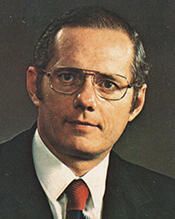
Here you will find contact information for Representative Walter Flowers, including email address, phone number, and mailing address.
| Name | Walter Flowers |
| Position | Representative |
| State | Alabama |
| District | 7 |
| Party | Democratic |
| Status | Former Representative |
| Term Start | January 3, 1969 |
| Term End | January 3, 1979 |
| Terms Served | 5 |
| Born | April 12, 1933 |
| Gender | Male |
| Bioguide ID | F000218 |
Editorial and Source Notes
Last reviewed: February 17, 2026
We prioritize official government pages and published records. Information can change after publication.
Primary records and source links are added as they are verified.
Report a correction: see our Editorial Policy.
About Representative Walter Flowers
Walter Winkler Flowers, Jr. (April 12, 1933 – April 12, 1984) was an American Democratic politician who represented Alabama’s 5th congressional district and Alabama’s 7th congressional district in the United States House of Representatives from January 1969 to January 1979. A member of the Democratic Party, he served five successive terms in Congress during a significant period in American history, contributing to the legislative process and representing the interests of his Alabama constituents.
Flowers was a native of Greenville, Alabama, in Butler County. He attended public schools in Tuscaloosa, Alabama, before enrolling at the University of Alabama. There he earned degrees in 1955 and 1957, laying the academic foundation for his later legal and political career. Demonstrating an early interest in international affairs and the law, he continued his graduate studies in international law as a fellow at the University of London during 1957–1958.
Following his formal education, Flowers held a commission as a Reserve Lieutenant Officer in the United States Army in Military Intelligence. After his military service, he returned to Alabama and practiced law, establishing himself professionally before entering electoral politics. His legal background and military experience helped shape his approach to public service and legislative work.
On November 5, 1968, Flowers was elected to the first of five successive terms in the U.S. House of Representatives. He took office in January 1969 and served until January 1979, during which time he represented first Alabama’s 5th congressional district and later its 7th congressional district. As a member of the House of Representatives, he participated actively in the democratic process, working on legislation and advocating for the needs and interests of his constituents in Alabama. His decade in Congress coincided with the Vietnam War era, the civil rights movement’s continuing impact, and the constitutional crisis of Watergate.
Flowers played a particularly notable role as a member of the House Judiciary Committee during the Watergate scandal. In 1974, the committee voted on whether to refer articles of impeachment against President Richard M. Nixon to the full House of Representatives. Flowers, a conservative Democrat from a state that had strongly supported Nixon in the 1972 presidential election, was initially considered to be leaning against impeachment. After a long personal and political struggle, he ultimately voted in favor of impeachment. Explaining his decision, he stated, “I felt that if we didn’t impeach, we’d just ingrain and stamp in our highest office a standard of conduct that’s just unacceptable.” Recognized as influential even with some Republicans on the committee, he urged undecided members by saying, “This is something we just cannot walk away from. It happened, and now we’ve got to deal with it.”
Throughout his political career, Flowers was influenced by former Alabama Governor George C. Wallace. He campaigned for Wallace and served as his national campaign chairman during Wallace’s 1972 run for president. Wallace later recounted that during the Watergate hearings he attempted to shield Flowers from increased pressure by refusing to forward a request from President Nixon that Flowers vote against impeachment. This relationship underscored Flowers’s position within Alabama’s Democratic politics and the broader Southern political landscape of the era.
In 1978, Flowers sought higher office by running for the Democratic nomination for the United States Senate from Alabama. He was defeated in the primary by Howell Heflin, who subsequently went on to serve three terms in the Senate. After this loss, Flowers did not seek political office again. He retired from active politics and settled in McLean, Virginia, while maintaining his connections to Alabama and his legacy as a former congressman.
Flowers died of a heart attack on April 12, 1984, his fifty-first birthday, while playing tennis near his home in McLean, Virginia. At the time of his death, he was living in McLean and had withdrawn from public office. He was buried at Arlington National Cemetery, where his service as a public official and military officer is commemorated.