Senator William Henry Barnum
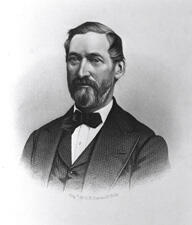
Here you will find contact information for Senator William Henry Barnum, including email address, phone number, and mailing address.
| Name | William Henry Barnum |
| Position | Senator |
| State | Connecticut |
| Party | Democratic |
| Status | Former Representative |
| Term Start | March 4, 1867 |
| Term End | March 3, 1879 |
| Terms Served | 5 |
| Born | September 17, 1818 |
| Gender | Male |
| Bioguide ID | B000166 |
Editorial and Source Notes
Last reviewed: January 1, 2026
We prioritize official government pages and published records. Information can change after publication.
Primary records and source links are added as they are verified.
Report a correction: see our Editorial Policy.
About Senator William Henry Barnum
William Henry Barnum (September 17, 1818 – April 30, 1889) was an American politician and industrialist who served as a state representative, congressman, United States senator from Connecticut, and chairman of the Democratic National Committee. A member of the Democratic Party, he was also known by the nickname “Seven Mule Barnum.” Over the course of his public career he served in the Connecticut House of Representatives, the U.S. House of Representatives, and the U.S. Senate, and later became one of the longest-serving chairs of the Democratic National Committee.
Barnum was born on September 17, 1818, in Berkshire County, Massachusetts, the son of Milo Barnum and Laura (Tibbals) Barnum. In his youth he moved to Lime Rock, in the town of Salisbury, Connecticut, which became his lifelong home and the center of his business and political activities. Although detailed records of his formal education are sparse, his subsequent prominence in both industry and politics reflected the practical training and experience he acquired in the rapidly developing iron and railroad economy of northwestern Connecticut.
Barnum’s political career began at the state level. He represented Lime Rock in the Connecticut House of Representatives from 1851 to 1852, marking his entry into public life. His service in the state legislature helped establish his reputation as a Democratic leader in a region that was often politically divided, and it provided him with legislative experience that would later inform his work in Congress.
In national politics, Barnum first served in the United States House of Representatives as the representative from Connecticut’s 4th Congressional District. He entered the House on March 4, 1867, during the Reconstruction era following the Civil War, and served until his resignation on May 18, 1876. During these years he contributed to the legislative process in a period of intense national debate over reconstruction, civil rights, and economic development. Among his notable political achievements was his defeat of his third cousin, the famed showman Phineas Taylor (P. T.) Barnum, in a congressional race, a contest that drew wide public attention.
Following his House service, Barnum was elected to the United States Senate from Connecticut. He served as a senator from 1867 to 1879, with his formal Senate term running from his election in 1876 until March 3, 1879. As a member of the Senate, William Henry Barnum participated in the democratic process and represented the interests of his Connecticut constituents during a significant period in American history marked by postwar economic expansion and political realignment. Over what was described as five terms in office across his House and Senate service, he played a continuing role in national legislative affairs.
Barnum also rose to national prominence within the Democratic Party organization. He became chairman of the Democratic National Committee in 1877 and held that position until his death in 1889, making him notably the longest-serving chair of the DNC up to that time. In this role he helped guide the party through closely contested presidential elections and shifting regional coalitions in the late nineteenth century, serving as a key strategist and fundraiser for Democratic candidates and causes.
Parallel to his political career, Barnum was a major industrial figure. He was a founder and chief executive of the Barnum Richardson Company of Lime Rock, Connecticut, and Chicago, Illinois. Headquartered in Lime Rock (now a neighborhood of Lakeville), the company became the leading enterprise in the Salisbury iron district, owning or controlling iron mines, charcoal production resources, limestone quarries, and rail transportation. Under his leadership, Barnum Richardson grew to immense profitability and industrial volume and became one of the foremost metal products manufacturers in the world, particularly noted as a preeminent manufacturer of railroad car wheels at a time when the railroad industry occupied a central place in the American economy. In 1872 he partnered with railroad magnate Collis P. Huntington to finance the Ensign Manufacturing Company, a railroad freight car manufacturer that produced, among other equipment, some of the largest wooden hopper cars for the Central Pacific Railroad and high-capacity wooden boxcars for the Southern Pacific Railroad. Ensign later became one of the thirteen companies that merged in 1899 to form the American Car and Foundry Company.
Barnum’s family and business connections extended into broader circles of finance and industry. His nephew, Milo Barnum Richardson, was a leader in New York City finance and insurance, serving as a founder of the New York City branch of the Caledonian Life Insurance Company of Scotland and as president of the Barnum & Richardson Company. Through the marriage of his sister to Connecticut industrialist and financier Leonard Richardson, Barnum was collaterally related to the Jacob Bunn and John Whitfield Bunn industrial and financial family of Springfield and Chicago, Illinois, further linking him to major networks of nineteenth-century American enterprise.
In his personal and community life, Barnum was known as a pioneer in religious tolerance. An Episcopalian, he was the principal donor for the construction of Trinity Episcopal Church in Lime Rock and served as chairman of its incorporators. At the same time, he refused to participate in the anti-Catholic prejudices common in New England during his era. According to contemporary reports in the New York Times in 1883, he contributed around $6,000 to St. Mary’s Roman Catholic Church in Lakeville and later gave $500 toward the construction of a new Roman Catholic church in Cornwall Bridge. When local residents protested the raising of a crucifix by a Catholic priest and demanded that Barnum dismiss his Catholic workers, he declined to do so, thereby affirming his commitment to religious pluralism in his community.
William Henry Barnum remained active in both politics and business until the end of his life. He died in Lime Rock, Connecticut, on April 30, 1889. He was buried in Lime Rock Cemetery, leaving a legacy as a significant Democratic political leader, a United States senator from Connecticut, and a leading industrialist in the nation’s iron and railroad industries.