Representative William Darrah Kelley
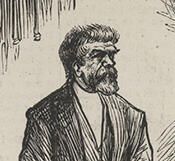
Here you will find contact information for Representative William Darrah Kelley, including email address, phone number, and mailing address.
| Name | William Darrah Kelley |
| Position | Representative |
| State | Pennsylvania |
| District | 4 |
| Party | Republican |
| Status | Former Representative |
| Term Start | July 4, 1861 |
| Term End | March 3, 1891 |
| Terms Served | 15 |
| Born | April 12, 1814 |
| Gender | Male |
| Bioguide ID | K000062 |
Editorial and Source Notes
Last reviewed: January 1, 2026
We prioritize official government pages and published records. Information can change after publication.
Primary records and source links are added as they are verified.
Report a correction: see our Editorial Policy.
About Representative William Darrah Kelley
William Darrah Kelley (April 12, 1814 – January 9, 1890) was an American politician and jurist from Philadelphia, Pennsylvania, who became a prominent Republican member of the United States House of Representatives. Representing Pennsylvania’s 4th congressional district, he served continuously in Congress from March 4, 1861, until his death in 1890, encompassing 15 terms in office. A committed abolitionist and an early organizer of the Republican Party in 1854, he was closely associated with President Abraham Lincoln and became widely known for his advocacy of protective tariffs and civil rights for African Americans.
Kelley was born in Philadelphia, where he spent his early years in modest circumstances following the early death of his father. As a boy he was apprenticed to a jeweler, and he worked in that trade for several years, gaining firsthand experience with industrial labor and the urban working class that would later shape his political and economic views. Largely self-educated, he developed a strong interest in literature, law, and public affairs, reading extensively while supporting himself through manual and clerical work.
Pursuing a legal career, Kelley studied law in Philadelphia and was admitted to the bar in 1841. He quickly established himself as a capable lawyer and entered public service as a judge of the Court of Common Pleas of Philadelphia, a position to which he was appointed in 1846. He served on that court until 1856. During his judicial tenure he became increasingly outspoken against slavery and the extension of slaveholding interests, views that aligned him with the emerging anti-slavery coalition that would coalesce into the Republican Party. By the mid‑1850s he was recognized as one of the founders of the Republican Party in Pennsylvania.
Kelley’s national political career began with his election as a Republican to the Thirty-seventh Congress, taking his seat in the U.S. House of Representatives on March 4, 1861. He would remain in the House through successive reelections until his death on January 9, 1890, making his service one of the longest continuous tenures of his era. As a member of the House of Representatives from Pennsylvania’s 4th congressional district, he participated in the legislative process during a transformative period in American history, including the Civil War, Reconstruction, and the rapid industrialization of the late nineteenth century. He represented the interests of his Philadelphia constituents while also becoming a national spokesman on issues of industry, labor, and civil rights.
During the Civil War, Kelley emerged as a vigorous abolitionist voice in Congress and a close ally and friend of President Abraham Lincoln. He strongly supported the Union war effort and was an early and persistent advocate for the recruitment of Black troops into the Union Army, arguing that African Americans should be allowed and encouraged to fight for their own freedom. After the war, he pressed for the extension of voting rights and broader civil and political equality for African Americans, aligning himself with the Radical Republicans during Reconstruction. His efforts contributed to the broader congressional push for constitutional amendments and legislation aimed at securing citizenship and suffrage for formerly enslaved people.
Economically, Kelley was best known as an ardent proponent of protective tariffs, a position that earned him the nickname “Pig-Iron Kelley” because of his staunch defense of the iron and steel industries. He believed that high tariffs were essential to fostering American manufacturing, protecting domestic labor, and building national economic strength. His commitment to protectionism was so intense that he reportedly refused to wear a single imported garment, a personal practice meant to underscore his belief in supporting American industry. Over his long congressional career he served on, and at times helped lead, key committees dealing with finance, industry, and taxation, where he consistently promoted policies favorable to American manufacturers and workers.
Kelley continued to serve in Congress into the late 1880s, remaining an influential figure in Republican politics and industrial policy. His health declined in his later years, but he retained his seat and continued to participate in debates and votes until shortly before his death. William Darrah Kelley died in office on January 9, 1890, in Washington, D.C., bringing to a close nearly three decades of continuous service in the House of Representatives. He was interred in Philadelphia, the city of his birth and the base of his long public career, leaving a legacy as a leading abolitionist, a founder of the Republican Party, and one of the most persistent advocates of protective tariffs in nineteenth-century American politics.