Representative William Madison Whittington
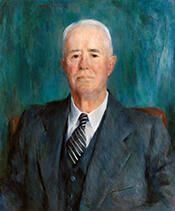
Here you will find contact information for Representative William Madison Whittington, including email address, phone number, and mailing address.
| Name | William Madison Whittington |
| Position | Representative |
| State | Mississippi |
| District | 3 |
| Party | Democratic |
| Status | Former Representative |
| Term Start | December 7, 1925 |
| Term End | January 3, 1951 |
| Terms Served | 13 |
| Born | May 4, 1878 |
| Gender | Male |
| Bioguide ID | W000430 |
Editorial and Source Notes
Last reviewed: January 1, 2026
We prioritize official government pages and published records. Information can change after publication.
Primary records and source links are added as they are verified.
Report a correction: see our Editorial Policy.
About Representative William Madison Whittington
William Madison Whittington (May 4, 1878 – August 20, 1962) was an American politician and attorney from Mississippi who served as a Democratic Representative in the United States House of Representatives from 1925 to 1951. Over the course of 13 consecutive terms, from the 69th Congress in 1925 through the 81st Congress ending January 3, 1951, he became a central figure in national flood control policy and was widely known in Congress by the nickname “Mr. Flood Control.”
Whittington was born on May 4, 1878, in Little Springs, Franklin County, Mississippi, the son of Alexander Madison Whittington, a farmer, and Margaret Isaphene McGehee. He attended the public schools of Franklin County before enrolling at Mississippi College in Clinton, from which he graduated in 1898. He then studied law at the University of Mississippi, earning his law degree in 1899. While at the University of Mississippi, he was a member of St. Anthony Hall, also known as the Fraternity of Delta Psi, an association that reflected his early engagement with professional and social networks that would later support his legal and political career.
Admitted to the bar in 1899, Whittington began his professional life in education and law. On January 1, 1901, he moved to Roxie, Mississippi, where he served as principal of a school while simultaneously starting his law practice. He also entered local public service as a member of the board of aldermen in Roxie. In January 1904, he relocated to Greenwood, Mississippi, where he continued practicing law and took up cotton farming. His standing in the community grew, and he served as a local commissioner for Greenwood from January 1, 1907, to January 1, 1911. In 1914, he established his own private law practice, consolidating his position as a leading attorney in the region.
Whittington’s state-level political career began with his election to the Mississippi State Senate from the 27th District. He served his first term from January 1, 1916, to January 1, 1920. A committed prohibitionist, he authored Mississippi’s first “Bone Dry Law,” reflecting the strong temperance sentiment of the era. He was reelected to the State Senate in 1923 for a four-year term and served from January 1, 1924, until his resignation on August 16, 1924, when he left the legislature to pursue national office. In addition to his legislative service, he was active in party politics and served as a delegate to the Democratic National Convention in 1920, an early indication of his growing influence within the Democratic Party.
In August 1924, Whittington accepted the Democratic nomination for Representative in the United States Congress. In the context of Jim Crow laws that severely restricted the electorate, he was elected to the House of Representatives by approximately 4,000 voters in a district with a population of about 435,000. He took his seat in the 69th Congress on March 4, 1925, and was subsequently reelected to the twelve succeeding Congresses, serving continuously until January 3, 1951. During this period, he represented his Mississippi constituency through the late 1920s, the Great Depression, the New Deal era, World War II, and the early postwar years, participating actively in the legislative process and the broader democratic governance of the nation.
Whittington’s most enduring legacy in Congress arose from his leadership on flood control and public works. After the catastrophic Great Flood of 1927, he authored and successfully advanced the Flood Control Act of 1928, landmark legislation that reshaped federal responsibility for managing the Mississippi River and other waterways. He served on the Committee on Public Works; the Reclamation Committee; the Roads Committee; the Committee on Expenditures in the Executive Departments; and, most notably, the Flood Control Committee, which he chaired beginning in 1936 and continued to lead for the next twelve years. Between 1928 and 1951, virtually all major federal legislation on flood control bore his imprint, earning him the sobriquet “Mr. Flood Control” among his colleagues. He also remained a significant figure within the Democratic Party nationally, serving as a delegate to the Democratic National Conventions of 1928, 1936, 1940, and 1948. On more than one occasion, notably in 1940 and again in 1941, he considered seeking a seat in the United States Senate but was dissuaded by friends and advisers.
Beyond his public career, Whittington maintained an active family, religious, and civic life. He married Lena May McGehee on September 7, 1904; the couple had no children, and she died in September 1907. On July 20, 1910, he married Anna Ward Aven of Clinton, Mississippi, the first woman to graduate from Mississippi College and the daughter of the college’s president. They had three children: Charles Aven Whittington, Mary Whittington, and William Madison Whittington Jr. A devoted Baptist, he taught Sunday school and became president of the Mississippi State Baptist Convention in 1910. He was also active in numerous fraternal and civic organizations, including the Elks, the Kiwanis Club, and the Shriners, and he attained the rank of 33rd degree Mason.
After retiring from Congress in 1951, Whittington returned to Greenwood, Mississippi, where he resumed the practice of law, this time in partnership with his son, William Madison Whittington Jr. He remained engaged in professional circles as a member of the American Bar Association, the Leflore County Bar Association, and the Mississippi State Bar Association. His later years were marked by declining health; he lost most of his eyesight and had difficulty climbing stairs, but he continued to be regarded as an elder statesman in his community and state.
Whittington received numerous honors in recognition of his public service and philanthropy. Mississippi College conferred upon him an honorary Doctor of Laws degree, named him Alumni of the Year, and designated Whittington Hall in his honor. He and his wife contributed significantly to the college, including the gift of the Aven Fine Arts Building. In Greenwood, he donated 40 acres of land for a public park and built a pavilion there; the facility, known as Whittington Park (sometimes spelled Whittinton Park), commemorates his generosity. His personal and legislative papers are archived at the University of Mississippi, preserving a record of his long career in lawmaking and public service.
In his final years, Whittington continued to reside in Greenwood, where he died at his home on August 20, 1962, at the age of 84. He was buried in Odd Fellows Cemetery in Greenwood, Mississippi. His life and career, spanning local office, the Mississippi State Senate, and more than a quarter-century in the United States House of Representatives, left a lasting imprint on Mississippi politics and on the development of federal flood control policy in the United States.