Representative Willis Winter Bradley
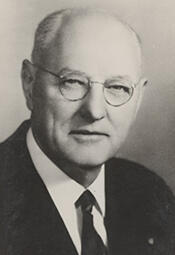
Here you will find contact information for Representative Willis Winter Bradley, including email address, phone number, and mailing address.
| Name | Willis Winter Bradley |
| Position | Representative |
| State | California |
| District | 18 |
| Party | Republican |
| Status | Former Representative |
| Term Start | January 3, 1947 |
| Term End | January 3, 1949 |
| Terms Served | 1 |
| Born | June 28, 1884 |
| Gender | Male |
| Bioguide ID | B000750 |
Editorial and Source Notes
Last reviewed: January 1, 2026
We prioritize official government pages and published records. Information can change after publication.
Primary records and source links are added as they are verified.
Report a correction: see our Editorial Policy.
About Representative Willis Winter Bradley
Willis Winter Bradley Jr. (June 28, 1884 – August 27, 1954) was an American naval officer, Medal of Honor recipient, Naval Governor of Guam, and Republican U.S. Representative from California. He served one term in the United States House of Representatives from 1947 to 1949, representing California’s 18th congressional district during a significant period in mid‑20th‑century American history. Over the course of his career he rose to the rank of commander in the U.S. Navy, played a prominent role in the development of naval ordnance and administration, and later held elective office at both the federal and state levels.
Bradley was born in Ransomville, Niagara County, New York, on June 28, 1884. In July 1884, shortly after his birth, he moved with his parents to Milnor, North Dakota, and in 1891 the family relocated again to Forman, North Dakota. He attended public schools in North Dakota and later studied at Hamline University in St. Paul, Minnesota. Early in his working life he served as deputy registrar of deeds of Sargent County, North Dakota, in 1902 and 1903. On October 16, 1907, in Baltimore, Maryland, he married Sue Worthington Cox, establishing a family life that would accompany his long naval and public service career.
Bradley entered the United States Naval Academy and graduated on September 12, 1906, as a member of the class of 1907, a class that included future senior naval leaders such as Patrick N. L. Bellinger, Henry K. Hewitt, George M. Courts, Claud A. Jones, and Raymond A. Spruance. Following graduation he went to sea in the battleship USS Virginia (BB‑13). After two years at sea as a passed midshipman, he received his commission as an ensign on September 13, 1908. From the fall of 1908 to October 1910 he served in the stores ship USS Culgoa (AF‑3). During this tour Culgoa was dispatched to aid survivors of the devastating 1908 Messina earthquake in Italy; Bradley worked tirelessly in rescue efforts and in clearing bodies and debris, and for this humanitarian work he later received a medal from the Pope. He subsequently helped to fit out and commission the destroyer USS Perkins (DD‑26) and served in her until March 1911. From then until September 1912 he saw duty in the transport USS Hancock and the battleship USS South Carolina. He next commanded the torpedo boat USS Biddle (TB‑26) and the Reserve Torpedo Group at Annapolis, Maryland, gaining early experience in command and in the emerging field of torpedo warfare.
In September 1913 Bradley began specialized study in ordnance and explosives at the Naval Postgraduate School in Annapolis, Maryland, and then at George Washington University in Washington, D.C. He continued advanced technical training at the Naval Proving Ground in Indian Head, Maryland, at Bausch & Lomb, and at the Midvale Steel Company in Pittsburgh, Pennsylvania. In July 1915 he returned to sea in command of the destroyer USS Stewart, and in December 1915 he was transferred to command of USS Hull and the Reserve Torpedo Division, Pacific Fleet. After service in the armored cruiser USS San Diego between September 1916 and February 1917, he became gunnery officer of the armored cruiser USS Pittsburgh. It was in this capacity that he performed the act of heroism for which he received the Medal of Honor. On July 23, 1917, during World War I, an accidental explosion of saluting cartridges occurred in one of Pittsburgh’s casemates. Bradley, then a lieutenant about to enter the compartment, was blown back and rendered momentarily unconscious by the blast. While still dazed, he crawled into the burning casemate to extinguish materials in dangerous proximity to a considerable quantity of powder, thereby preventing further explosions and saving lives. For this extraordinary heroism and devotion to duty he was awarded the Medal of Honor, having been appointed to the Navy from North Dakota.
In January 1918 Bradley was assigned ashore to head the Explosives, Fuses, and Primers Section of the Bureau of Ordnance, placing him at the center of the Navy’s wartime munitions work. In August 1919 he went to the Naval Torpedo Station in Keyport, Washington, as a naval inspector. Returning to sea in June 1920, he served as gunnery officer in the battleship USS Texas (BB‑35) until May 1921, when he reported to the Mare Island Navy Yard in California to assist in fitting out and commissioning the new battleship USS California (BB‑44). After California was commissioned on August 10, 1921, he served as her gunnery officer. In May 1922 he returned to Keyport for two years as Naval Inspector in Charge at the Naval Torpedo Station, further consolidating his expertise in naval ordnance. From July 1924 to November 1926 he commanded the cargo ship USS Gold Star (AK‑12), which served as the station ship at Guam in the Mariana Islands, giving him his first extended exposure to the administration of that American possession. Between late 1926 and mid‑1929 he served in the Naval Reserve Section of the Bureau of Navigation in Washington, D.C., in a staff role overseeing reserve affairs.
In June 1929 Bradley was appointed Naval Governor of Guam. During his tenure he pursued policies that reflected his reputation as a Progressive Republican and civil libertarian. He issued Guam’s first Bill of Rights, sought United States citizenship for the indigenous Chamorro people, and proclaimed them citizens of Guam. He reorganized the Guam Congress and made possible the first free elections of village commissioners, thereby expanding local self‑government. On April 8, 1930, he created the only official government‑run local postal service on the island, known as “Guam Guard Mail.” This service, which used overprinted Philippine stamps for its first, third, and fourth issues and a locally printed stamp for its second issue, was established because the U.S. Post Office did not deliver mail to individual homes or businesses on Guam. “Guam Guard Mail” operated for about a year, after which the U.S. Post Office assumed responsibility for mail delivery on the northern half of Guam on January 1, 1931, and on the southern half on April 9, 1931.
After completing his gubernatorial service, Bradley resumed sea duty in July 1931 in command of the stores ship USS Bridge (AF‑1). Two years later he became Captain of the Yard at the Pearl Harbor Navy Yard, a key administrative and logistical post in the growing Pacific Fleet base. After six months he was transferred to command the heavy cruiser USS Portland (CA‑33), a major combatant ship, and he remained in that command until June 1937. He then attended the Naval War College in Newport, Rhode Island, as a student, furthering his professional military education. Beginning in May 1938 he served with the Pacific coast section of the Board of Inspection and Survey, responsible for evaluating the readiness and material condition of naval vessels. He subsequently commanded Destroyer Squadron 31 (DesRon 31), Battle Force, based in San Diego, for a year, and then returned to duty with the Board of Inspection and Survey on the West Coast. He continued in this billet through the end of World War II, overseeing inspection and survey work during a period of massive naval expansion, and remained in that position until his retirement from active duty on August 1, 1946.
Following his retirement from the Navy, Bradley entered electoral politics in California. A member of the Republican Party, he was elected to the Eightieth Congress as a Representative from California’s 18th congressional district, serving from January 3, 1947, to January 3, 1949. His single term in the U.S. House of Representatives coincided with the early Cold War period and the immediate post‑World War II transition, during which he contributed to the legislative process and represented the interests of his constituents in Southern California. In the 1948 election he was defeated for re‑election in a rematch by Democrat Clyde Doyle, the former congressman whom Bradley had unseated in 1946.
After leaving Congress, Bradley remained active in business and state politics. From 1949 to 1952 he served as assistant to the president of the Pacific Coast Steamship Company, drawing on his extensive maritime and administrative experience. He then returned to elective office as a member of the California State Assembly, in which he served from 1952 until his death in 1954, continuing his public service at the state level.
Willis Winter Bradley Jr. died on August 27, 1954, in Santa Barbara, California. He was interred with military honors at Fort Rosecrans National Cemetery in San Diego, California. In recognition of his distinguished naval service and heroism, the U.S. Navy named the frigate USS Bradley (FF‑1041) in his honor, commemorating his career as a Medal of Honor recipient, naval commander, territorial governor, and legislator.